Protecting Your SSI Benefits: Navigating the $2,000 Asset Cap
Advertisements
SSI asset limits are an important consideration for Americans receiving Supplemental Security Income. In 2026, the individual resource limit remains $2,000, while the limit for an eligible couple is $3,000.
Understanding which financial resources count toward these thresholds can help beneficiaries avoid interruptions. Bank accounts, investments, and certain property may affect eligibility.
This guide explains resource exclusions, ABLE accounts, Special Needs Trusts, and reporting responsibilities. Learn how to manage financial changes while following Social Security Administration rules.
Understanding SSI Asset Limits: The Core Requirement
The Supplemental Security Income program provides financial assistance to eligible people with limited income and resources. It serves qualifying older adults and individuals with disabilities or blindness.
In 2026, SSI asset limits remain at $2,000 for an individual and $3,000 for an eligible couple. These thresholds apply to countable resources rather than every possession.
The Social Security Administration generally evaluates available resources at the beginning of each month. Exceeding the applicable threshold can affect eligibility for that month.
How the Monthly Resource Test Works
SSI resource eligibility is generally determined using countable resources held at the first moment of the month. This timing matters when account balances change.
For individuals monitoring SSI asset limits, income received during one month may become a countable resource in the following month if retained.
Different rules and exclusions can apply to particular payments or assets. Beneficiaries should verify unusual transactions with the Social Security Administration.
What Counts as an Asset and What Doesn't?
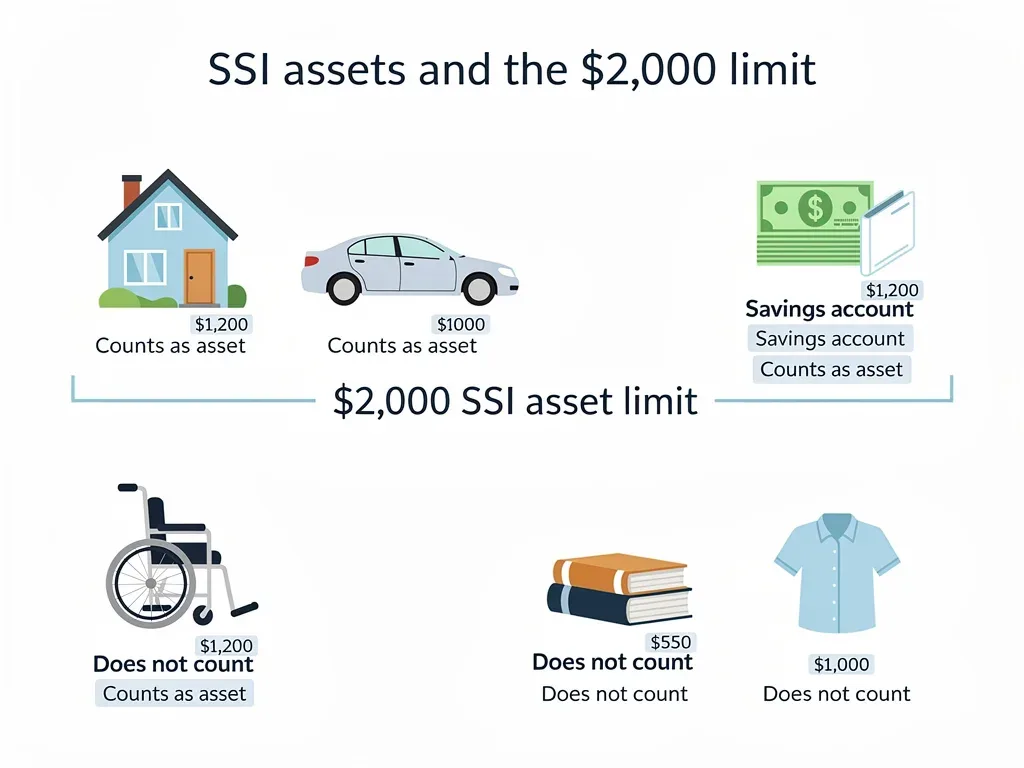
Understanding SSI asset limits begins with distinguishing countable resources from excluded property. Cash and financial accounts are commonly included in the calculation.
However, the SSA excludes certain belongings and resources under specific conditions. A primary residence, household goods, and one qualifying vehicle are common examples.
Ownership arrangements and asset accessibility can affect how resources are evaluated. Some trusts and jointly held accounts require a more detailed assessment.
Common Countable Assets
Countable resources generally include money and property that can be used or converted into cash. Their value helps determine whether an applicant satisfies the financial requirement.
When reviewing SSI asset limits, beneficiaries should examine checking accounts, savings accounts, and investments. Certain additional properties may also be included.
Resource classification depends on specific SSA rules. An item that appears valuable may be excluded, while another asset may count despite limited everyday use.
Cash: Money held personally or available in financial accounts.
Bank Accounts: Checking and savings balances, subject to ownership and exclusion rules.
Investments: Stocks, bonds, and certain other financial holdings.
Additional Property: Real estate beyond an excluded home and vehicles that do not qualify for an exclusion.
Certain Trust Interests: Assets that count under applicable trust and accessibility rules.
Strategies for Managing Assets Below the $2,000 Cap
Managing resources responsibly can help beneficiaries maintain eligibility without unnecessary financial hardship. The first step is identifying which assets actually count.
People approaching SSI asset limits may review legitimate expenses, outstanding debts, and available resource exclusions. Financial decisions should reflect real needs.
Transferring or giving away assets simply to qualify for benefits can create serious problems. Beneficiaries should understand the applicable rules before making significant transactions.
Permissible Spend-Down Options
Spending countable resources on legitimate goods and services may reduce the amount held at the relevant eligibility date. The nature of each transaction matters.
For those approaching SSI asset limits, paying valid debts or purchasing necessary household items may be appropriate. However, spending must comply with program requirements.
Keeping receipts and account records can help explain transactions during an SSA review. Complex situations should be discussed with a qualified benefits specialist.
Debt Payments: Paying legitimate outstanding obligations, such as medical bills or credit card balances.
Home Maintenance: Funding appropriate repairs to an excluded primary residence.
Essential Purchases: Buying necessary household goods and personal items.
Qualified ABLE Contributions: Depositing eligible funds into an ABLE account when account and contribution requirements are satisfied.
Why Giving Away Assets Can Create Problems
SSI rules address transfers of resources for less than fair market value. Giving away cash or property can trigger an eligibility review.
Someone attempting to meet SSI asset limits through an improper transfer may face a period of ineligibility. The penalty can extend up to 36 months.
Exceptions and specific rules may apply to particular transfers. Before transferring substantial assets, seek guidance from a qualified professional familiar with SSI regulations.
Excluded Assets: Maximizing Your Allowances
Not every resource owned by an SSI beneficiary counts toward the program's financial threshold. Federal rules exclude several categories of property.
These exclusions are important when evaluating SSI asset limits. Beneficiaries may be able to retain essential belongings without affecting their countable resource total.
However, exclusions have eligibility conditions and may require documentation. Understanding these details helps avoid incorrect assumptions about financial qualification.
Key Non-Countable Assets
The home a beneficiary lives in and the land associated with it are generally excluded. One vehicle used for transportation can also qualify for an exclusion.
For SSI asset limits, household goods and personal effects are normally excluded. Certain burial arrangements and life insurance policies also have specific treatment.
Eligible ABLE account balances may receive separate resource protections. Their treatment differs from ordinary checking, savings, and investment accounts.
The home where the beneficiary lives and the land it occupies.
One vehicle used for transportation by the beneficiary or a household member.
Household goods and personal effects.
Qualifying burial spaces and certain designated burial funds.
Certain life insurance policies with a total face value of $1,500 or less.
Eligible ABLE account funds within the applicable federal exclusion limits.
The Role of ABLE Accounts in Asset Protection
Achieving a Better Life Experience accounts allow eligible individuals with disabilities to save and invest money under special rules. They offer advantages for certain benefit recipients.
For SSI asset limits, up to $100,000 held in an eligible ABLE account is generally excluded from countable resources. Additional balances can affect SSI eligibility.
ABLE accounts have contribution limits and qualified expense requirements. Their value depends on eligibility, account terms, and how funds are used.
ABLE Eligibility Changes in 2026
Beginning January 1, 2026, ABLE eligibility expanded to people whose qualifying disability began before age 46. Previously, the onset threshold was before age 26.
This change can help additional individuals manage savings while considering SSI asset limits. The person opening the account does not need to be younger than 46.
Other medical and eligibility conditions still apply. Individuals should review the requirements of their chosen state ABLE program before enrolling.
Benefits of ABLE Accounts
ABLE accounts can support qualified disability expenses, including housing, education, transportation, and certain healthcare needs. The rules define which withdrawals receive favorable treatment.
When evaluating SSI asset limits, it is important to understand that account balances and distributions may receive different treatment. Housing-related withdrawals require particular attention.
Program fees, investment choices, and state provisions vary. Beneficiaries should consult official ABLE guidance rather than assuming that general savings account rules apply.
Resource Protection: Up to $100,000 in an eligible ABLE account is generally excluded for SSI purposes.
Tax Advantages: Qualified distributions may receive favorable federal tax treatment.
Eligible Expenses: Funds may support qualifying disability-related needs.
Expanded Access: Disabilities beginning before age 46 can satisfy the age-of-onset requirement in 2026.
Financial Planning: Account features may provide more flexibility for eligible beneficiaries.
Special Needs Trusts: A Comprehensive Solution
Special Needs Trusts can help certain individuals with disabilities manage funds while preserving eligibility for means-tested benefits. Their legal structure is especially important.
When planning around SSI asset limits, properly established trusts may protect qualifying assets from being counted as personal resources. However, not every trust qualifies.
Trust arrangements involving inheritances or settlements can be complex. Their funding sources, distribution provisions, and administration may affect SSI and Medicaid eligibility.
Types of Special Needs Trusts
Different Special Needs Trusts serve different purposes. First-party trusts involve the beneficiary's own assets, while third-party trusts are funded by others.
For people concerned about SSI asset limits, the type of trust determines which legal requirements apply. Proper drafting and administration are essential.
Trust payments can sometimes affect SSI benefits even when the principal is excluded. Professional guidance is particularly valuable before establishing or funding a trust.
First-Party Special Needs Trusts: Funded with the beneficiary's assets and generally subject to applicable Medicaid reimbursement provisions.
Third-Party Special Needs Trusts: Funded by another person and structured to support the beneficiary under applicable rules.
Pooled Special Needs Trusts: Managed by qualifying nonprofit organizations with separate accounting for beneficiaries.
When Professional Trust Planning Matters
Trust planning may be particularly important when a beneficiary expects an inheritance, legal settlement, or other substantial payment. These events can affect financial eligibility.
Understanding SSI asset limits before receiving or transferring funds helps identify potential complications. Legal advice may prevent mistakes that are difficult to reverse.
A qualified special needs attorney can assess whether a trust meets federal and applicable state requirements. Beneficiaries should avoid relying on generic trust documents.
Reporting Changes and Avoiding Penalties
SSI beneficiaries must report changes that can affect their income, resources, household circumstances, or eligibility. Accurate reporting helps the SSA calculate benefits correctly.
When approaching SSI asset limits, reporting changes promptly is especially important. Bank balances, financial gifts, inheritances, and other events may require attention.
The SSA generally requires reporting as soon as possible and no later than 10 days after the end of the month in which the change occurred.
Key Changes to Report
Changes in employment, income, and financial resources can affect SSI payments. Living arrangements and marital status may also influence eligibility or benefit amounts.
For beneficiaries monitoring SSI asset limits, significant account changes should be documented. Transactions involving gifts or lump-sum payments deserve particular care.
Reporting does not automatically mean benefits will stop. The SSA evaluates the circumstances and applies the appropriate income and resource rules.
Changes in wages, employment, or other income.
Changes involving countable resources or financial accounts.
Receipt of gifts, inheritances, or settlement payments.
Changes in marital status or living arrangements.
Other circumstances the SSA identifies as reportable.
Consequences of Late or Incorrect Reporting
Failing to report changes can cause incorrect benefit payments. The SSA may later determine that money must be repaid.
Violations involving SSI asset limits or other program rules can also lead to eligibility interruptions. Penalties depend on the circumstances and applicable regulations.
Beneficiaries should retain copies of submitted reports and relevant financial documents. Clear records can help resolve questions about when information was provided.
Seeking Professional Guidance for SSI Asset Management
SSI financial rules can become complicated when beneficiaries own property, receive inheritances, or maintain special accounts. Professional assistance may help clarify available options.
Understanding SSI asset limits is especially important before making irreversible financial decisions. Legal and benefits professionals can review individual circumstances.
The SSA remains the official authority for federal SSI eligibility determinations. Independent advisors can provide guidance but cannot guarantee benefit approval or continuation.
Where to Find Assistance
Local Social Security offices can explain program requirements and provide information about reporting responsibilities. Official agency resources are a useful starting point.
Beneficiaries concerned about SSI asset limits may also seek assistance from qualified benefits counselors or attorneys experienced in public benefit planning.
When selecting an advisor, consider relevant experience and potential fees. Complex trust or inheritance questions generally warrant specialized legal advice.
Social Security Administration: Official information about SSI eligibility and reporting.
Benefits Counselors: Guidance on how financial changes may affect public benefits.
Special Needs Attorneys: Assistance with trusts, inheritances, and complex resource issues.
Nonprofit Organizations: Support services for eligible individuals with disabilities.
Practical Monthly Steps for Protecting SSI Eligibility
Monitoring financial resources regularly can help beneficiaries identify potential eligibility problems. Reviewing account activity before the beginning of a new month is useful.
For people close to SSI asset limits, maintaining accurate information about countable and excluded resources is important. Documentation supports future benefit reviews.
Financial planning should focus on legitimate needs and compliance with program rules. Avoid rushed transfers or purchases made without understanding their consequences.
Creating a Simple Resource Tracking Routine

Start by listing checking accounts, savings accounts, cash, and other potentially countable resources. Record important transactions and retain relevant statements.
When calculating SSI asset limits, separate excluded resources from those that count. Verify uncertain items through official SSA guidance.
Review changes after receiving unusual payments or acquiring property. Seek individualized advice when ownership or eligibility rules are unclear.
Review financial account balances and recent transactions.
Identify resources that may qualify for exclusions.
Keep records of legitimate spending and asset transactions.
Report relevant changes within SSA deadlines.
Consult qualified professionals before complex transfers or trust arrangements.
Conclusion
Understanding SSI asset limits helps beneficiaries make informed decisions about financial resources. In 2026, the federal limits remain $2,000 for individuals and $3,000 for couples.
Resource exclusions, eligible ABLE accounts, and properly structured trusts may provide important planning options. Each arrangement has conditions that must be followed.
Maintaining accurate records and reporting changes promptly can reduce avoidable benefit problems. When financial circumstances are complex, professional guidance can be valuable.
Key Point | Brief Description |
|---|---|
Asset Cap | Federal countable resource limits remain $2,000 for an individual and $3,000 for an eligible couple in 2026. |
Excluded Assets | Certain homes, vehicles, household goods, and qualifying ABLE funds may be excluded. |
Spend-Down | Legitimate expenditures may reduce countable resources, while improper transfers can trigger penalties. |
Special Needs Trusts | Properly established trusts may protect qualifying funds under specific federal and state rules. |
Frequently Asked Questions About SSI Asset Protection
What is the individual asset limit for SSI benefits?▼
In 2026, the federal SSI countable resource limit is $2,000 for an individual and $3,000 for an eligible couple. The SSA generally evaluates countable resources at the beginning of the month. Exceeding the applicable limit can result in ineligibility for that month.
What types of assets are typically excluded from SSI calculations?▼
Common exclusions include the home where you live, one vehicle used for transportation, household goods, and certain burial arrangements. Up to $100,000 held in an eligible ABLE account is generally excluded from SSI resource calculations. Specific conditions apply to each exclusion.
Can I spend down my assets to stay below the $2,000 cap?▼
Legitimate spending on debts, necessary goods, or qualifying expenses may reduce countable resources. However, giving away money or transferring property for less than fair market value can cause a period of SSI ineligibility. Keep financial records and seek advice before complex transactions.
How do Special Needs Trusts help protect SSI benefits?▼
Properly structured Special Needs Trusts can allow qualifying assets to be managed for a beneficiary without automatically counting as personal SSI resources. The rules depend on the trust type, funding source, and distributions. Legal guidance is recommended before creating or funding a trust.
What happens if I fail to report a change in my assets to the SSA?▼
Late or incorrect reporting may lead to overpayments, repayment obligations, or penalties. The SSA generally requires changes to be reported as soon as possible and within the first 10 days of the following month. Deliberate misreporting can have more serious consequences.
What This Means for SSI Beneficiaries
Protecting monthly benefits requires understanding SSI asset limits and the resources that count toward eligibility. Small changes in financial circumstances may have meaningful consequences.
The expansion of ABLE eligibility in 2026 provides additional planning opportunities for qualifying individuals. However, account rules and financial restrictions still require attention.
Beneficiaries should prioritize official guidance, accurate reporting, and individualized financial planning. For general information on related savings topics, this health savings and investment article discusses a different financial account type and should not be used as guidance on SSI or ABLE eligibility.