HSAs in 2026: Limits & 3 Smart Investment Strategies
Advertisements
Health Savings Accounts (HSAs) in 2026 offer a triple tax advantage for healthcare costs and retirement, with updated contribution limits and strategic investment opportunities crucial for maximizing long-term financial growth and security.
Are you looking to optimize your healthcare savings and investment strategy for the future? Understanding Health Savings Accounts (HSAs) in 2026: Contribution Limits and 3 Smart Investment Strategies is more crucial than ever. These powerful financial tools offer a unique triple tax advantage, making them an indispensable component of sound financial planning for eligible individuals.
Understanding Health Savings Accounts (HSAs) in 2026
Health Savings Accounts (HSAs) are more than just a savings vehicle for medical expenses; they are a cornerstone of modern financial planning, offering unparalleled tax advantages. As we look towards 2026, the strategic importance of HSAs continues to grow, particularly for those enrolled in high-deductible health plans (HDHPs).
The primary appeal of an HSA lies in its triple tax benefits: contributions are tax-deductible, earnings grow tax-free, and withdrawals for qualified medical expenses are tax-free. This trifecta makes HSAs incredibly powerful, not just for immediate healthcare costs but also as a long-term investment and retirement savings tool. Unlike a Flexible Spending Account (FSA), HSA funds roll over year after year, never expiring, which allows for significant accumulation over time.
Eligibility and the High-Deductible Health Plan Requirement
To be eligible for an HSA, an individual must be covered under a high-deductible health plan (HDHP) and not be enrolled in Medicare, nor be claimed as a dependent on someone else’s tax return. The IRS defines the minimum deductible and maximum out-of-pocket expenses for HDHPs annually, ensuring that these plans meet specific criteria.
- Minimum Deductible: For 2026, these thresholds are expected to continue their upward trend, requiring individuals to have a higher deductible before their health plan begins to pay.
- Maximum Out-of-Pocket: Conversely, there are limits to how much an individual can pay out-of-pocket annually, providing a safety net despite the high deductible.
- No Other Health Coverage: Generally, you cannot have any other health coverage, such as a spouse’s non-HDHP plan, Medicare, or TRICARE, to contribute to an HSA.
Understanding these eligibility requirements is the first critical step in leveraging an HSA. Without an eligible HDHP, you cannot contribute to an HSA, missing out on its considerable benefits. It’s essential to review your health insurance plan annually to confirm its status as an HDHP and your continued eligibility.
The Evolution of HSAs as an Investment Tool
Initially perceived mainly as a savings account for healthcare, HSAs have increasingly been recognized for their potential as a robust investment vehicle. Many HSA providers now offer a range of investment options, from mutual funds to exchange-traded funds (ETFs), allowing account holders to grow their health savings much like a 401(k) or IRA.
This shift in perception highlights the importance of not just contributing to your HSA, but actively investing those funds once a comfortable cash reserve is established. The long-term growth potential, especially when coupled with the tax advantages, can significantly augment your financial security in retirement, particularly for healthcare costs, which often increase with age.
In conclusion, HSAs in 2026 are poised to remain a vital component of smart financial planning. Their unique tax benefits, combined with the ability to invest funds, make them an indispensable tool for managing current and future healthcare expenses while simultaneously building long-term wealth. Eligibility hinges on specific HDHP criteria, making careful plan selection paramount.
Projected HSA Contribution Limits for 2026
Staying informed about the annual adjustments to HSA contribution limits is crucial for maximizing your savings. While the official numbers for 2026 are typically released later in the year, we can anticipate these figures based on historical trends and inflationary adjustments. These limits dictate how much you can contribute on a tax-deductible basis, impacting your overall financial strategy.
The Internal Revenue Service (IRS) adjusts these limits annually to account for inflation, ensuring that the purchasing power of your healthcare savings is maintained over time. These adjustments are a key factor in financial planning, as they determine the maximum amount you can shield from taxes while growing your healthcare nest egg. Understanding these projections allows for proactive financial planning.
Individual and Family Plan Projections
Based on past adjustments, we can project the potential contribution limits for 2026. These figures usually see a modest increase year over year, reflecting economic conditions and inflation rates. It’s important to note that these are projections and the final numbers will be confirmed by the IRS.
- Individual Coverage: For those with self-only HDHP coverage, the projected limit for 2026 is expected to be around $4,300 to $4,400. This increase from previous years allows individuals to save more for their healthcare needs.
- Family Coverage: For individuals with family HDHP coverage, the projected limit for 2026 is anticipated to be in the range of $8,500 to $8,700. This higher limit acknowledges the increased healthcare costs associated with covering multiple family members.
- Catch-Up Contributions: Individuals aged 55 and older are eligible for an additional catch-up contribution. This amount, which has historically been $1,000, is expected to remain constant or see a slight increase, providing a significant boost for pre-retirees.
These projected limits serve as a guideline for your 2026 financial planning. Once the official numbers are released, it will be important to adjust your contribution strategy accordingly to ensure you are maximizing your tax-advantaged savings.
Impact of Inflation on Contribution Limits
Inflation plays a significant role in the annual adjustment of HSA contribution limits. The IRS uses specific metrics to determine these increases, aiming to keep pace with the rising cost of living and healthcare expenses. This mechanism ensures that HSAs remain a relevant and effective tool for managing healthcare costs in the long run.
While the increases might seem modest on a yearly basis, their cumulative effect over several years can be substantial, allowing individuals to accumulate a considerable sum for future medical needs or retirement. This consistent growth underscores the importance of contributing the maximum allowed amount each year, if feasible.
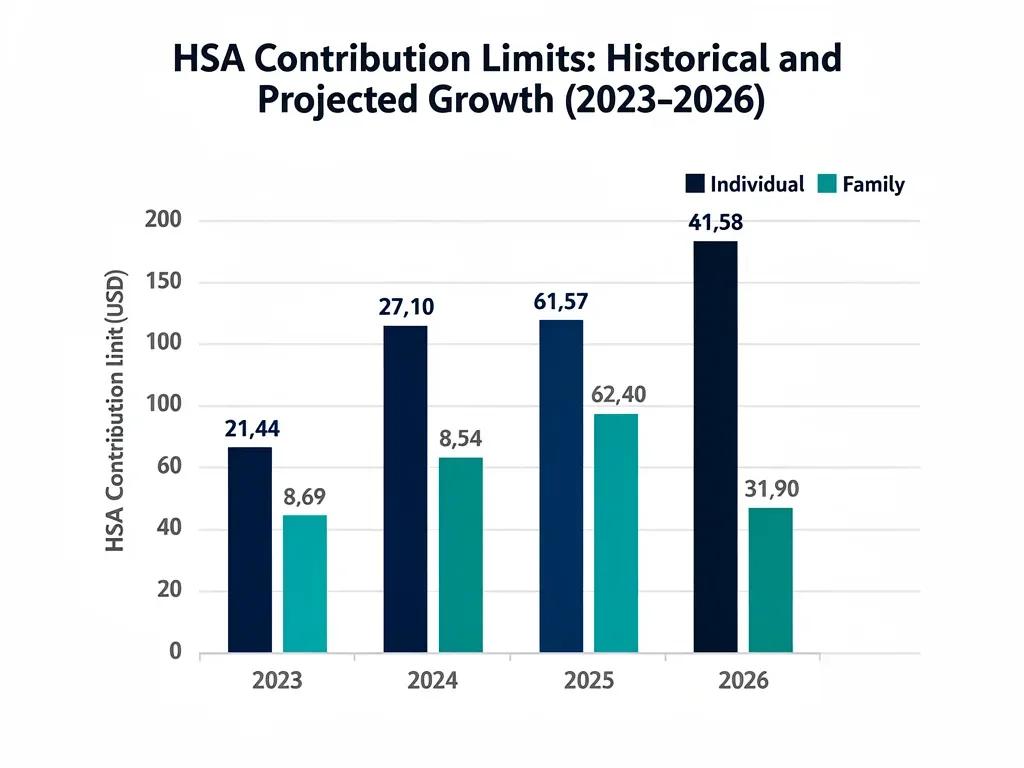
In summary, while the exact HSA contribution limits for 2026 are pending official release, projections indicate a continued upward trend for both individual and family coverage, alongside the consistent catch-up contribution. These adjustments are vital for effectively planning your healthcare savings and leveraging the full tax advantages that HSAs offer, emphasizing the need for ongoing monitoring of IRS announcements.
Strategy 1: Maximize Contributions and Invest Early
The first and arguably most crucial strategy for leveraging your HSA in 2026 is to maximize your contributions and begin investing those funds as early as possible. The power of compounding interest, combined with the HSA’s triple tax advantage, makes this a remarkably effective long-term wealth-building tactic. Treating your HSA as an investment vehicle, rather than just a spending account, can lead to substantial financial benefits.
Many individuals make the mistake of only contributing enough to cover their anticipated annual medical expenses, or worse, leaving their HSA funds in a low-interest cash account. While having an emergency cash reserve within your HSA is prudent, any funds beyond that should ideally be invested to capitalize on tax-free growth. The earlier you start, the more time your investments have to grow.
The Power of Compounding and Tax-Free Growth
Investing your HSA funds allows them to grow exponentially over time, thanks to the magic of compounding. This means your earnings generate their own earnings, accelerating your wealth accumulation. When this is combined with the HSA’s tax-free growth, the results can be truly remarkable.
- Tax-Deductible Contributions: Each dollar you contribute reduces your taxable income in the year you contribute it.
- Tax-Free Growth: Your investments grow without being subject to capital gains taxes or dividend taxes.
- Tax-Free Withdrawals: When you withdraw funds for qualified medical expenses, those withdrawals are also tax-free.
This triple tax advantage is virtually unmatched by any other investment vehicle, making the HSA an incredibly efficient tool for both healthcare and retirement planning. By consistently contributing the maximum allowed amount and investing those funds, you are setting yourself up for significant financial security.
Automating Contributions for Consistency
One of the simplest ways to ensure you maximize your HSA contributions is to automate them. Setting up regular, automatic contributions from your paycheck or bank account ensures consistency and helps you reach the annual limit without having to think about it constantly. This ‘set it and forget it’ approach is highly effective.
Review your contribution amounts at the beginning of each year, especially after the IRS announces the new limits. Adjust your automated contributions to hit the maximum for individual or family coverage, plus any applicable catch-up contributions if you’re over 55. This proactive step ensures you capture all available tax benefits and maximize your investment potential.
In essence, maximizing contributions and investing early within your HSA is foundational. It capitalizes on the unparalleled triple tax advantage and the power of compounding, transforming your HSA from a mere savings account into a robust investment engine for your future healthcare needs and retirement. Automation is key to maintaining this disciplined approach.
Strategy 2: Diversify Your HSA Investment Portfolio
Once you’ve committed to maximizing your HSA contributions, the next critical step is to diversify your investment portfolio within the account. Just like with any other investment, a well-diversified HSA portfolio can help mitigate risk and enhance long-term growth potential. Relying too heavily on a single asset class or investment type can expose your funds to unnecessary volatility and limit your overall returns.
Many HSA providers offer a range of investment options, from conservative money market funds to more aggressive stock and bond funds. The key is to select a mix that aligns with your risk tolerance, time horizon, and financial goals. For those with a long time horizon before retirement, a more aggressive, growth-oriented strategy might be appropriate, while those closer to retirement might opt for a more balanced approach.
Choosing the Right Investment Vehicles
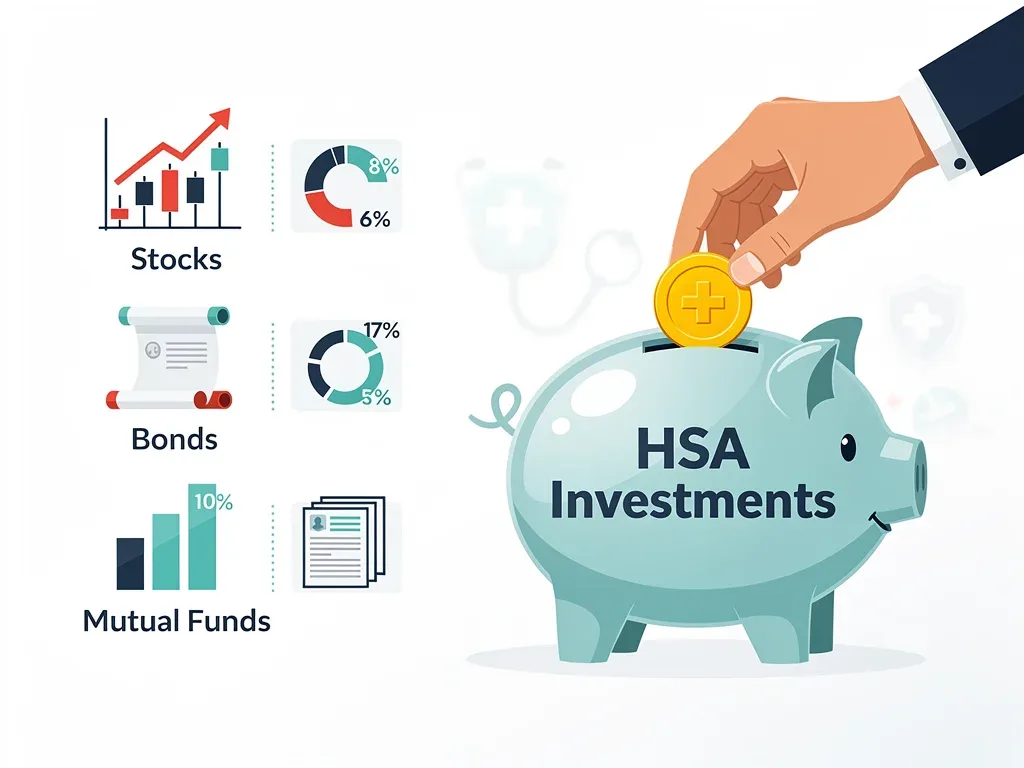
The investment options available through HSA providers vary, but typically include a selection of mutual funds and exchange-traded funds (ETFs). Understanding the characteristics of these vehicles is important for building a diversified portfolio.
- Mutual Funds: These are professionally managed portfolios of stocks, bonds, or other securities. They offer diversification across many individual securities, but often come with management fees.
- Exchange-Traded Funds (ETFs): Similar to mutual funds, but they trade like stocks on an exchange. ETFs often have lower expense ratios and can offer greater flexibility in trading.
- Individual Stocks/Bonds: Some HSA providers might offer the option to invest directly in individual stocks or bonds, though this is less common and generally advised for more experienced investors.
Consider your personal financial situation and consult with a financial advisor if you are unsure about which investment vehicles are best suited for your HSA. The goal is to create a portfolio that can grow steadily while managing risk effectively.
Balancing Risk and Return for Long-Term Growth
Diversification is not just about choosing different types of funds; it’s also about balancing your risk and return. For younger individuals with decades until retirement, a portfolio heavily weighted towards equities might be appropriate, as they have the time to recover from market downturns.
As you approach retirement, it generally makes sense to gradually shift your asset allocation towards more conservative investments, such as bonds or cash equivalents, to protect your accumulated capital. This strategy, often referred to as ‘glide path’ investing, helps preserve your wealth as your time horizon shortens.
In conclusion, diversifying your HSA investment portfolio is paramount for long-term success. By selecting a mix of investment vehicles that align with your risk profile and time horizon, you can effectively manage risk while maximizing the potential for tax-free growth, ensuring your HSA serves as a robust financial asset for years to come.
Strategy 3: Utilize HSA for Retirement Healthcare Costs
Perhaps one of the most powerful, yet often overlooked, strategies for an HSA is its potential as a supplementary retirement account, specifically for healthcare costs in retirement. After age 65, HSA withdrawals for any purpose become tax-free, just like traditional retirement accounts, even if they aren’t for medical expenses. This flexibility, combined with the triple tax advantage, makes the HSA an ideal vehicle for funding what can be one of the largest expenses in retirement: healthcare.
By consistently contributing to and investing your HSA throughout your working years, you can build a substantial fund that can cover Medicare premiums, deductibles, co-pays, and even long-term care expenses, all tax-free. This approach frees up other retirement savings, like 401(k)s or IRAs, for other living expenses, providing greater financial flexibility in your golden years.
The HSA as a ‘Stealth IRA’
Many financial experts refer to the HSA as a ‘stealth IRA’ or ‘super 401(k)’ due to its unique tax advantages. While traditional IRAs and 401(k)s offer tax-deferred growth (you pay taxes upon withdrawal in retirement), HSAs offer tax-free growth and tax-free withdrawals for qualified medical expenses, making them potentially superior for healthcare savings.
After age 65, if you use HSA funds for non-medical expenses, they are taxed as ordinary income, similar to a traditional IRA or 401(k). However, you avoid the 20% penalty that applies to non-qualified withdrawals before age 65. This dual functionality provides incredible flexibility, allowing you to use the funds for healthcare if needed, or as a general retirement income stream if your healthcare costs are lower than anticipated.
Planning for Future Medical Expenses in Retirement
Healthcare costs in retirement can be substantial and are often underestimated. According to various studies, a couple retiring at age 65 in 2023 might need hundreds of thousands of dollars to cover healthcare expenses throughout retirement. An HSA can be a vital tool in preparing for these costs.
- Medicare Premiums: HSA funds can be used to pay for Medicare Part B, Part D, and Medicare Advantage plan premiums, but not Medigap premiums.
- Deductibles and Co-pays: These out-of-pocket expenses can quickly add up, and having a dedicated HSA fund to cover them can provide significant peace of mind.
- Long-Term Care: Premiums for qualified long-term care insurance can also be paid from an HSA, offering another layer of financial protection in retirement.
By consciously earmarking your HSA for future retirement healthcare costs, you are making a strategic decision to insulate your other retirement savings from these potentially large expenses. This forward-thinking approach ensures a more secure and comfortable retirement.
Ultimately, utilizing your HSA for retirement healthcare costs is a brilliant long-term strategy. Its tax-free growth and withdrawal benefits, coupled with the flexibility to use funds for non-medical expenses after age 65, position it as a powerful, dedicated savings vehicle for what can be one of life’s most significant financial burdens.
Comparing HSAs with Other Retirement Accounts
While HSAs offer unique advantages, it’s beneficial to understand how they compare to other popular retirement accounts like 401(k)s and IRAs. Each account type has its own set of rules, contribution limits, and tax implications, and a comprehensive financial strategy often involves utilizing a combination of these vehicles. The goal is to create a diversified savings plan that maximizes tax efficiency and meets your specific financial objectives.
The core difference often lies in the tax treatment of contributions, growth, and withdrawals, as well as the specific purpose each account is designed to serve. Understanding these nuances is crucial for making informed decisions about where to allocate your hard-earned money and how to prioritize your savings.
HSA vs. 401(k) and IRA: Tax Advantages
The primary distinction between these accounts lies in their tax structure. While all offer tax advantages, the timing and nature of these benefits vary significantly:
- HSA (Health Savings Account): Offers a triple tax advantage – tax-deductible contributions, tax-free growth, and tax-free withdrawals for qualified medical expenses. After age 65, non-medical withdrawals are taxed as ordinary income, without penalty.
- Traditional 401(k)/IRA: Contributions are often tax-deductible (or pre-tax), growth is tax-deferred, and withdrawals in retirement are taxed as ordinary income. You get a tax break upfront, but pay taxes later.
- Roth 401(k)/IRA: Contributions are made with after-tax dollars, growth is tax-free, and qualified withdrawals in retirement are also tax-free. You pay taxes upfront, but enjoy tax-free income later.
The HSA’s unique ability to provide tax-free withdrawals for a common and significant expense (healthcare) sets it apart, making it a compelling choice for those eligible.
Prioritizing Your Savings Strategy
Given the various options, a common question arises: how should I prioritize my savings? While individual circumstances vary, a general hierarchy often recommended by financial advisors is:
- 401(k) Match: Contribute enough to your 401(k) to receive the full employer match, as this is essentially free money.
- HSA Max-Out: Max out your HSA contributions, especially if you can afford to invest the funds and pay for current medical expenses out-of-pocket. This leverages the triple tax advantage.
- Roth IRA/401(k): If eligible, contribute to a Roth IRA or Roth 401(k) for tax-free growth and withdrawals in retirement, providing tax diversification.
- Traditional 401(k)/IRA: Continue contributing to your 401(k) or traditional IRA beyond the match, up to the maximum limits.
This prioritization ensures you capture employer benefits, maximize healthcare savings with unparalleled tax efficiency, and then diversify your retirement income streams. It’s a comprehensive approach to building long-term financial security.
In conclusion, while 401(k)s and IRAs are essential retirement tools, the HSA stands out for its unique triple tax advantage, particularly for healthcare expenses. Strategically integrating an HSA into your overall financial plan, often by prioritizing it after employer 401(k) matches, can significantly enhance your long-term financial well-being and provide robust protection against rising healthcare costs in retirement.
Choosing the Right HSA Provider and Investment Options
Selecting the appropriate HSA provider and understanding their investment offerings is a critical step in maximizing the potential of your Health Savings Account. Not all HSA providers are created equal; they vary significantly in terms of fees, investment options, and user-friendliness. A thoughtful selection process can have a substantial impact on the long-term growth and accessibility of your funds.
Many people stick with the HSA provider offered by their employer, which can be convenient, but not always the most cost-effective or feature-rich option. It’s important to research and compare different providers to ensure you are getting the best value and the investment choices that align with your financial goals.
Key Factors When Evaluating HSA Providers
When comparing HSA providers, several factors should weigh heavily in your decision-making process. These elements directly affect the performance and management of your HSA funds.
- Fees: Look for providers with low or no monthly maintenance fees, investment fees, or transaction fees. High fees can erode your returns over time.
- Investment Options: Evaluate the range and quality of investment options. Does the provider offer a diversified selection of mutual funds, ETFs, or other assets that suit your risk tolerance?
- Minimum Investment Thresholds: Some providers require a minimum cash balance before you can invest, or minimums for specific funds. Understand these requirements.
- User Interface and Customer Service: A user-friendly online platform and responsive customer service can make managing your HSA much easier.
- Portability: While all HSAs are portable, some providers make it easier to transfer funds than others.
Taking the time to research these factors will help you select a provider that best supports your investment strategy and minimizes unnecessary costs.
Strategies for Managing Your HSA Investments
Once you’ve chosen a provider, actively managing your HSA investments is crucial. This involves periodically reviewing your portfolio and making adjustments as needed. It’s not a ‘set it and forget it’ situation entirely, especially as your financial situation or market conditions change.
Consider setting a target cash balance within your HSA – an amount you keep readily available for immediate medical expenses. Funds exceeding this cash cushion can then be invested. Regularly rebalance your portfolio to maintain your desired asset allocation, ensuring it remains aligned with your risk tolerance and long-term objectives. As you approach retirement, gradually shift towards more conservative investments to protect your gains.
In conclusion, thoughtfully choosing an HSA provider and actively managing your investments are critical for maximizing the benefits of your account. By focusing on low fees, diverse investment options, and regular portfolio reviews, you can ensure your HSA effectively serves as a powerful tool for both healthcare savings and long-term financial growth.
Common Pitfalls to Avoid with HSAs in 2026
While Health Savings Accounts offer significant advantages, there are common pitfalls that individuals often encounter. Avoiding these mistakes can help ensure you fully leverage your HSA’s potential and prevent unnecessary complications or missed opportunities. Being aware of these traps is just as important as understanding the benefits, allowing for a more robust and effective financial strategy.
From misunderstanding eligibility rules to neglecting the investment aspect, these errors can diminish the long-term value of your HSA. Proactive awareness and careful management are key to navigating these challenges and optimizing your health savings account for 2026 and beyond.
Failing to Maximize Contributions
One of the most frequent mistakes is not contributing the maximum allowed amount to the HSA each year. Every dollar contributed up to the limit is tax-deductible, and missing out on these contributions means missing out on immediate tax savings and the long-term tax-free growth potential.
Even if you can’t contribute the full amount, contribute as much as you comfortably can. Any amount saved and invested in an HSA is better than none. Regularly review the annual contribution limits (individual, family, and catch-up) and adjust your contributions accordingly to ensure you’re not leaving money on the table.
Leaving Funds Uninvested
Another significant pitfall is leaving HSA funds in a low-interest cash account. While it’s wise to keep a certain amount in cash for immediate medical expenses, any funds beyond that should ideally be invested. The power of tax-free growth is only realized when your money is actively working for you in the market.
- Missed Growth: Cash accounts offer minimal returns, meaning your funds won’t keep pace with inflation or generate significant wealth.
- Inflation Erosion: The purchasing power of uninvested cash can be eroded over time by inflation, making it less effective for future medical costs.
- Lost Opportunity: The opportunity to benefit from compounding interest is lost when funds are not invested, severely limiting the HSA’s long-term potential.
Establish a comfort level for your cash reserve, and then invest the rest. Even a conservative investment strategy can yield far greater returns than leaving funds entirely in cash.
Improper Use of Funds and Record Keeping
Using HSA funds for non-qualified medical expenses before age 65 can result in ordinary income tax plus a 20% penalty. This penalty can significantly diminish your savings. It’s crucial to understand what constitutes a qualified medical expense.
Furthermore, maintaining meticulous records of all your medical expenses is vital. Even if you don’t reimburse yourself immediately, keeping receipts allows you to withdraw funds tax-free in the future, even decades later. This strategy, known as the ‘HSA shoebox’ method, allows your investments to grow longer.
In conclusion, avoiding common HSA pitfalls, such as under-contributing, failing to invest, and improper fund usage, is essential for maximizing its benefits. By staying informed about limits, actively investing, and maintaining diligent records, you can ensure your HSA remains a powerful and tax-efficient tool for your healthcare and retirement planning.
| Key Aspect | Brief Description |
|---|---|
| 2026 Contribution Limits | Projected to increase for individuals (approx. $4,300-$4,400) and families (approx. $8,500-$8,700), plus $1,000 catch-up for those 55+. |
| Maximize & Invest Early | Leverage triple tax advantage by contributing the maximum and investing funds early to benefit from compounding growth. |
| Diversify Portfolio | Select a mix of investment vehicles (mutual funds, ETFs) aligned with your risk tolerance for balanced long-term growth. |
| Retirement Healthcare | Utilize HSA as a ‘stealth IRA’ after age 65, paying for Medicare premiums and other medical costs tax-free. |
Frequently Asked Questions About HSAs in 2026
What are the projected HSA contribution limits for 2026?▼For 2026, individual HSA contribution limits are projected around $4,300-$4,400, and family limits near $8,500-$8,700. Those aged 55 and over can also make an additional $1,000 catch-up contribution. These figures are subject to final IRS confirmation later in the year, but reflect anticipated inflationary adjustments.
Can I invest my HSA funds, and why should I?▼Yes, you can invest HSA funds, and you absolutely should. Investing allows your money to grow tax-free, leveraging the power of compounding. This transforms your HSA from a simple savings account into a robust investment vehicle, helping you accumulate significant wealth for future healthcare expenses or retirement, far beyond what uninvested cash could achieve.
What are the tax advantages of an HSA?▼HSAs offer a unique triple tax advantage: contributions are tax-deductible (reducing your taxable income), earnings grow tax-free, and withdrawals for qualified medical expenses are also tax-free. This combination makes the HSA an incredibly efficient financial tool, unmatched by most other savings or investment accounts for healthcare purposes.
How does an HSA function as a retirement account?▼After age 65, HSA funds can be withdrawn for any purpose without the 20% penalty, although non-medical withdrawals will be taxed as ordinary income. This flexibility allows it to act as a supplementary retirement account, particularly useful for covering substantial healthcare costs in retirement, including Medicare premiums, tax-free. It’s often called a ‘stealth IRA.’
What should I look for in an HSA provider?▼When choosing an HSA provider, prioritize low fees (monthly, investment, transaction), a wide range of diverse investment options (mutual funds, ETFs), user-friendly online platforms, and responsive customer service. Ensure the provider’s offerings align with your investment strategy and minimize unnecessary costs to maximize your HSA’s long-term growth potential.
Conclusion
Navigating the landscape of healthcare savings and investments in 2026 requires a strategic approach, and Health Savings Accounts (HSAs) stand out as an exceptionally powerful tool. By understanding the projected contribution limits, actively maximizing your contributions, and implementing smart investment strategies, you can transform your HSA from a simple savings vehicle into a robust component of your long-term financial security. The triple tax advantage—tax-deductible contributions, tax-free growth, and tax-free withdrawals for qualified medical expenses—makes HSAs almost unparalleled in their efficiency. Furthermore, their potential to serve as a ‘stealth IRA’ for retirement healthcare costs offers a layer of financial flexibility that is increasingly vital. By avoiding common pitfalls and carefully selecting a provider, individuals can ensure their HSA effectively supports both their immediate health needs and their ambitious financial aspirations for the future. Proactive management and consistent contributions are the cornerstones of harnessing the full power of your HSA.