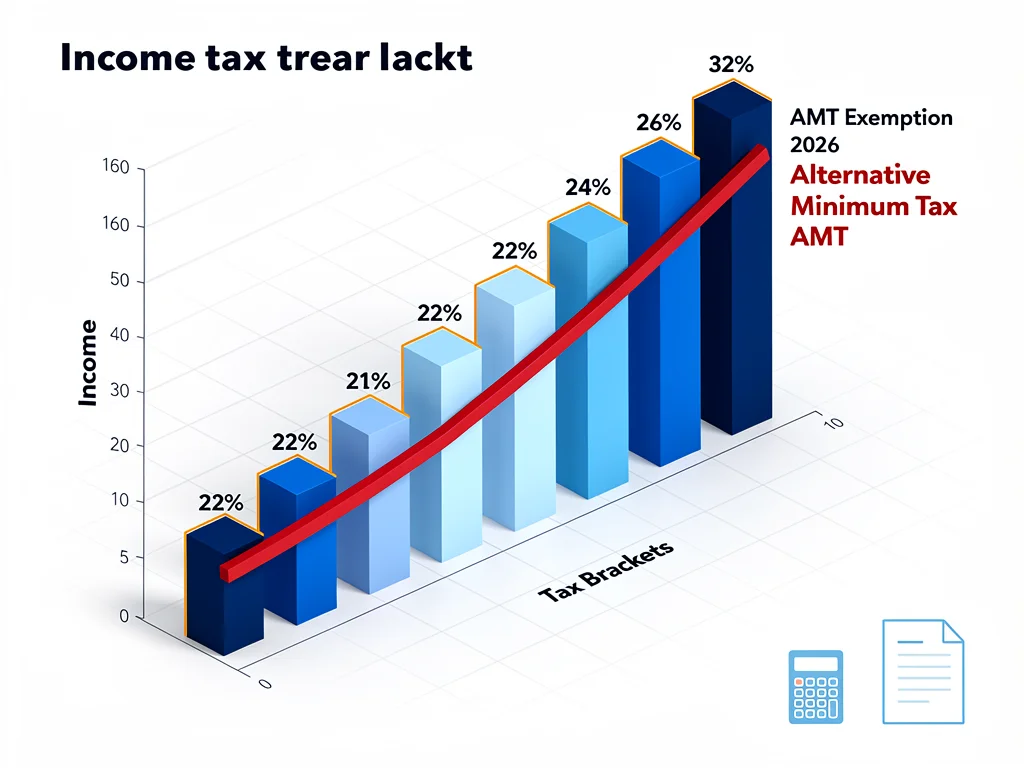
The 2026 Alternative Minimum Tax (AMT) exemption thresholds are crucial for taxpayers, with a significant $85,700 exemption impacting high-income individuals and families in the United States.
The 2026 Alternative Minimum Tax (AMT) exemption thresholds are crucial for taxpayers, with a significant $85,700 exemption impacting high-income individuals and families in the United States.
Navigating the complexities of the U.S. tax system can often feel like deciphering a secret code, especially when it comes to less common yet impactful provisions like the Alternative Minimum Tax (AMT). For 2026, understanding the AMT exemption thresholds 2026 is more critical than ever, particularly with the projected $85,700 exemption amount playing a pivotal role in many taxpayers’ financial strategies. This guide aims to demystify the AMT, providing clarity on who it affects, how it’s calculated, and why these specific thresholds are so important for your financial planning.
The Genesis of the Alternative Minimum Tax (AMT)
The Alternative Minimum Tax (AMT) was initially introduced in the late 1960s to ensure that high-income taxpayers, who might otherwise avoid significant tax liability through various deductions and credits, still paid a minimum amount of tax. It operates as a parallel tax system, running alongside the regular income tax, designed to prevent those with substantial incomes from using too many tax breaks to reduce their tax bill to zero or near-zero.
Over the decades, the AMT has undergone several modifications, often expanding its reach beyond the ultra-wealthy it was originally intended to target. This evolution has made it a concern for a broader segment of the population, particularly those in states with high local and property taxes, or individuals with significant capital gains or incentive stock options. Understanding its historical context helps contextualize its current structure and impact.
Why the AMT Matters for Middle-to-High Earners
While the AMT was designed for the very rich, its parameters have often meant that many middle-to-high income earners, especially those with certain deductions, found themselves unexpectedly subject to it. This is because some deductions allowed under the regular tax system are not permitted under the AMT, effectively increasing taxable income for AMT purposes.
State and Local Taxes (SALT): Historically, a major trigger for the AMT.
Incentive Stock Options (ISOs): The bargain element of ISOs is often an AMT adjustment.
Depreciation: Certain accelerated depreciation methods can trigger AMT.
The AMT essentially re-calculates your tax liability using a different set of rules. If your AMT liability is higher than your regular tax liability, you pay the higher amount. This dual calculation adds complexity and often necessitates professional tax advice to navigate effectively.
Decoding the $85,700 Exemption for 2026
One of the most critical components of the AMT calculation is the exemption amount. This figure represents the portion of your income that is exempt from the AMT. For 2026, the projected individual exemption is set at a substantial $85,700. This exemption is not static; it is annually adjusted for inflation, reflecting economic changes and aiming to prevent the AMT from affecting an ever-growing number of taxpayers due to inflation alone.
However, this exemption begins to phase out for higher-income individuals, meaning its benefit diminishes as income rises. This phase-out mechanism is crucial for understanding how the AMT ultimately impacts your specific financial situation. The exemption amount is designed to protect lower and middle-income taxpayers from the AMT, ensuring it primarily targets those with higher incomes.
How the Exemption Phase-Out Works
The AMT exemption is not a blanket deduction for all high earners. For single filers, the exemption begins to phase out once their Alternative Minimum Taxable Income (AMTI) exceeds a certain threshold. For married couples filing jointly, this phase-out threshold is typically double that of single filers. The exemption is reduced by $0.25 for every dollar of AMTI above the phase-out threshold.
Single Filers: Phase-out begins at a specific AMTI level.
Married Filing Jointly: A higher AMTI level before phase-out starts.
Exemption Reduction: Each dollar above the threshold reduces the exemption by 25 cents.
This phase-out can significantly reduce or even eliminate the benefit of the exemption for very high-income individuals, making careful tax planning essential. It’s a progressive design element, ensuring that the AMT maintains its focus on those with the highest incomes.
Who is Most Likely to Be Affected by the AMT in 2026?
While the $85,700 exemption aims to shield many taxpayers, certain groups remain particularly susceptible to the AMT. These often include individuals with a high number of itemized deductions that are disallowed under AMT rules, or those who realize significant gains from specific financial transactions. Understanding these profiles can help individuals proactively plan to mitigate their AMT exposure.
The Tax Cuts and Jobs Act (TCJA) of 2017 significantly reduced the number of taxpayers subject to AMT by increasing exemption amounts and their phase-out thresholds, and by eliminating certain AMT adjustments, notably the deduction for state and local taxes. However, it still remains a concern for many, especially as income levels continue to rise and specific financial activities trigger its application.
Key Triggers for AMT Liability
Several factors can increase your likelihood of owing AMT. Being aware of these potential triggers allows for strategic financial decisions throughout the year.
Large Itemized Deductions: Especially those for state and local taxes (SALT) before TCJA, and now, certain medical expense deductions or miscellaneous itemized deductions not allowed for AMT.
Incentive Stock Options (ISOs): Exercising and holding ISOs can create a large AMT adjustment if the stock appreciates significantly.
Accelerated Depreciation: Using certain depreciation methods for business assets can lead to an AMT adjustment.
Tax-Exempt Interest from Private Activity Bonds: While generally tax-free, interest from these bonds can be included in AMTI.
These elements, when combined with a higher income, can push taxpayers into AMT territory, even with the generous exemption. It’s a delicate balance that requires a thorough understanding of one’s financial activities and their tax implications.
Calculating Your Potential AMT Liability
Determining whether you owe AMT involves a multi-step calculation that compares your regular tax liability with your AMT liability. It’s a complex process that often requires specialized software or the assistance of a tax professional. However, understanding the basic framework can provide valuable insight into your potential exposure.
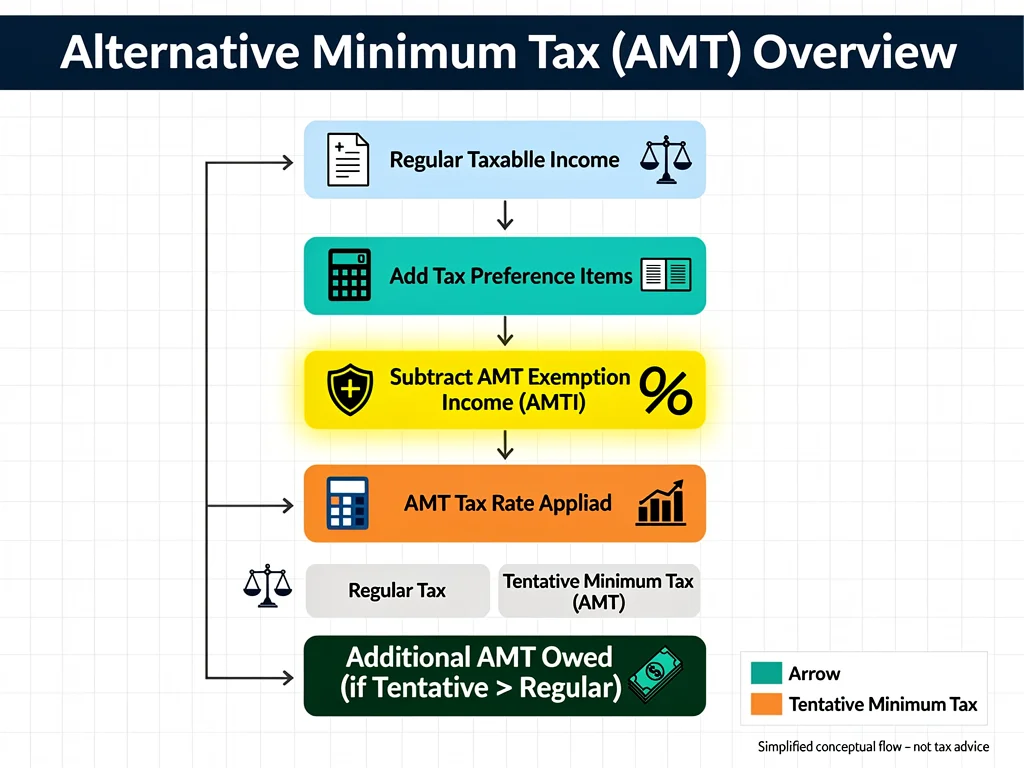
The first step is to calculate your taxable income under the regular tax system. Then, you adjust this income by adding back certain deductions and preferences that are allowed for regular tax but disallowed for AMT. This adjusted figure is your Alternative Minimum Taxable Income (AMTI), which is then reduced by the AMT exemption amount (if applicable) to arrive at your net AMTI. This net AMTI is then taxed at AMT rates.
Steps in the AMT Calculation Process
The calculation is methodical, ensuring all adjustments are properly accounted for:
Calculate Regular Taxable Income: Start with your income as determined by regular tax rules.
Add Back AMT Preferences and Adjustments: These include items like state and local taxes, certain depreciation, and the bargain element of ISOs. This yields your AMTI.
Subtract the AMT Exemption: Apply the applicable exemption amount (e.g., $85,700 for single filers in 2026), factoring in any phase-out.
Apply AMT Rates: The resulting figure is taxed at AMT rates (typically 26% and 28%).
Compare and Pay Higher Amount: If the AMT liability is greater than your regular tax liability, you pay the AMT amount.
Each step is crucial, and errors can lead to incorrect tax payments. This complexity underscores why many taxpayers seek professional help to ensure accuracy and optimize their tax position.
Strategies for Mitigating Your AMT Exposure
While the AMT can seem daunting, there are various strategies taxpayers can employ to potentially reduce or avoid its impact. Proactive tax planning is key, as many decisions made throughout the year can influence your AMT liability. These strategies often involve timing income and deductions, or making specific investment choices.
One common approach is to carefully time the exercise of incentive stock options, spreading them out over several years to avoid a large AMT adjustment in a single year. Another strategy involves managing deductible expenses that are disallowed for AMT purposes. For example, if you have control over when certain deductions are taken, you might adjust their timing to minimize AMT exposure.
Effective Tax Planning Techniques
Consider these actions to potentially lower your AMT burden:
Strategic Timing of ISO Exercises: Avoid exercising and holding large amounts of ISOs in a single year.
Manage Deductions: Be aware of deductions that are disallowed for AMT and plan their timing accordingly.
Tax-Efficient Investments: Be cautious with private activity bonds if you are close to AMT thresholds.
Utilize AMT Credits: If you paid AMT in prior years, you might be eligible for an AMT credit in future years when you are not subject to AMT.
A comprehensive financial review with a tax professional can help identify the most effective strategies tailored to your unique financial situation. This personalized approach is often the most successful way to navigate the intricacies of the AMT.
The Future of AMT: What to Expect Beyond 2026
The tax landscape is constantly evolving, and the Alternative Minimum Tax is no exception. While the Tax Cuts and Jobs Act of 2017 significantly scaled back the AMT’s reach, its future remains a subject of ongoing debate and potential legislative changes. Understanding potential shifts can help taxpayers prepare for what lies ahead.
As provisions from the TCJA are set to expire in 2025, there is considerable uncertainty regarding what tax laws will look like in 2026 and beyond. This could lead to further adjustments in AMT exemption amounts, phase-out thresholds, or even a complete overhaul of the AMT system. Staying informed about legislative developments is crucial for long-term financial planning.
Potential Legislative Changes and Their Impact
Future tax legislation could bring several changes to the AMT:
Expiration of TCJA Provisions: Could revert AMT to pre-2018 rules, affecting more taxpayers.
Further Adjustments to Exemption Amounts: Congress might decide to increase or decrease exemptions based on economic conditions or policy goals.
Changes to AMT Rates: The current 26% and 28% rates could be modified.
Elimination or Reform: While less likely, a complete elimination or significant reform of the AMT remains a possibility.
These potential changes highlight the dynamic nature of tax law and the importance of continuous monitoring and adaptive financial planning. Consulting with a tax professional who stays abreast of legislative shifts is invaluable for navigating this uncertain future.
Key Aspect
Brief Description
2026 Exemption Amount
Projected at $85,700 for individuals, shielding a portion of income from AMT.
Exemption Phase-Out
The exemption gradually reduces for higher income levels, typically by $0.25 for every dollar over a set threshold.
Common AMT Triggers
Includes large itemized deductions, incentive stock options (ISOs), and certain accelerated depreciation.
Mitigation Strategies
Strategic timing of income/deductions and professional tax planning can help reduce AMT impact.
Frequently Asked Questions About AMT in 2026
What is the primary purpose of the Alternative Minimum Tax (AMT)?▼
The AMT’s primary purpose is to ensure that high-income individuals and corporations pay a minimum amount of tax, even if they have numerous deductions or credits that would otherwise significantly reduce their regular tax liability. It acts as a parallel tax system.
How does the $85,700 AMT exemption for 2026 impact taxpayers?▼
The $85,700 exemption for 2026 reduces the income subject to AMT, effectively protecting a significant portion of earnings from this parallel tax. However, it phases out for higher incomes, diminishing its benefit for very wealthy individuals.
Which types of income or deductions commonly trigger the AMT?▼
Common triggers include the bargain element of incentive stock options (ISOs), certain accelerated depreciation, and historically, large state and local tax deductions. These items are treated differently under AMT rules, increasing taxable income.
Can I avoid paying the AMT, or at least reduce my liability?▼
Yes, strategic tax planning can help. This includes carefully timing the exercise of ISOs, managing deductible expenses, and utilizing any available AMT credits from prior years. Consulting a tax professional is highly recommended for personalized strategies.
What is the outlook for the AMT beyond 2026?▼
The future of AMT is uncertain, especially with the expiration of many Tax Cuts and Jobs Act provisions in 2025. This could lead to legislative changes, potentially altering exemption amounts, phase-out thresholds, or even a significant reform of the entire system.
Conclusion
The Alternative Minimum Tax, with its specific exemption thresholds like the projected $85,700 for 2026, remains a critical element of the U.S. tax code. While designed to ensure tax fairness among high-income earners, its complexities necessitate careful attention and proactive planning from a broader range of taxpayers. Understanding its origins, how the exemption functions, who it affects, and how to mitigate its impact is paramount for sound financial health. As the tax landscape continues to evolve, staying informed and engaging with qualified tax professionals will be indispensable for navigating the nuances of the AMT and optimizing your financial outcomes. The goal is not just to comply, but to strategically manage your tax burden, ensuring you retain more of your hard-earned income within the framework of current and future tax laws.
I'm a content creator fueled by the idea that the right words can open doors and spark real change. I write with intention, seeking to motivate, connect, and empower readers to grow and make confident choices in their journey.