HSA Contribution Limits 2026: Maximize Your Healthcare Savings
Understanding the 2026 HSA contribution limits is crucial for maximizing tax-advantaged savings for healthcare expenses, offering a powerful tool to reduce out-of-pocket costs and build a robust financial future.
HSA Contribution Limits 2026: Maximize Your Healthcare Savings
Understanding the 2026 HSA contribution limits is crucial for maximizing tax-advantaged savings for healthcare expenses, offering a powerful tool to reduce out-of-pocket costs and build a robust financial future.
Navigating the complexities of healthcare costs can be daunting, but a Health Savings Account (HSA) offers a powerful solution. For 2026, understanding the updated HSA contribution limits for 2026 is essential to fully leverage this incredible financial tool and potentially save an extra $3,850 on healthcare costs, securing your financial well-being against unforeseen medical expenses.
Understanding the Health Savings Account (HSA) Landscape
A Health Savings Account (HSA) is more than just a savings account; it’s a powerful, tax-advantaged financial tool designed to help individuals with high-deductible health plans (HDHPs) save for qualified medical expenses. The benefits extend beyond immediate tax deductions, offering a triple tax advantage that makes it unique among savings vehicles. It’s a strategy that astute individuals employ to manage current healthcare costs while simultaneously building a robust nest egg for future medical needs, including those in retirement.
The Triple Tax Advantage of HSAs
The allure of an HSA lies in its triple tax benefits, a feature that distinguishes it from many other savings accounts. These benefits combine to create a highly efficient way to manage and save for healthcare expenses, making every dollar contributed work harder for you.
Tax-Deductible Contributions: Money you contribute to an HSA is tax-deductible, reducing your taxable income in the year you make the contribution. This is an immediate benefit that lowers your current tax burden.
Tax-Free Growth: The funds in your HSA grow tax-free. Any interest, dividends, or investment gains earned within the account are not subject to taxes, allowing your savings to compound more effectively over time.
Tax-Free Withdrawals: When you withdraw funds from your HSA to pay for qualified medical expenses, those withdrawals are completely tax-free. This means you never pay taxes on the money, provided it’s used for eligible healthcare costs.
This powerful combination of tax advantages makes the HSA an indispensable tool for long-term financial planning, particularly for those looking to mitigate the rising costs of healthcare. It’s not just about saving for a doctor’s visit next month; it’s about preparing for decades of potential medical needs.
Eligibility Requirements for an HSA
To open and contribute to an HSA, you must be covered by a high-deductible health plan (HDHP). This is a foundational requirement set by the IRS. Understanding what constitutes an HDHP is crucial for determining your eligibility.
High-Deductible Health Plan (HDHP): An HDHP is a health insurance plan with a higher deductible than traditional insurance plans. For 2026, the specific deductible and out-of-pocket maximum thresholds will be announced, but they typically increase annually to account for inflation.
No Other Health Coverage: Generally, you cannot be covered by any other health insurance plan that is not an HDHP. There are some exceptions, such as specific disease insurance and accident coverage, but broad, non-HDHP coverage disqualifies you.
Not Enrolled in Medicare: If you are enrolled in Medicare, you are not eligible to contribute to an HSA. However, you can still use existing HSA funds to pay for qualified medical expenses.
Not Claimed as a Dependent: You cannot be claimed as a dependent on someone else’s tax return.
Meeting these eligibility criteria is the first step towards unlocking the significant financial advantages that an HSA provides. It’s a key component of a proactive approach to managing healthcare finances.
In essence, an HSA serves as a personal medical savings account that offers unparalleled tax benefits. By understanding its fundamental principles and eligibility, individuals can begin to harness its power to save for healthcare expenses in a strategically advantageous way, laying a strong foundation for financial health.
Projected HSA Contribution Limits for 2026
While the official HSA contribution limits for 2026 are typically announced later in the year by the IRS, we can make informed projections based on historical trends and inflation adjustments. These limits are critical for individuals and families planning their healthcare savings strategies, as they dictate the maximum amount you can contribute and, consequently, the maximum tax benefits you can receive. Staying ahead of these projections allows for better financial foresight and optimization of your HSA.
Estimating Individual and Family Contribution Maximums
The IRS adjusts HSA contribution limits annually to account for inflation, using a specific formula. Based on recent trends, we anticipate a continued increase in these limits for 2026. These projections are vital for anyone looking to maximize their contributions and leverage the full potential of their HSA.
Individual Coverage: For those with self-only HDHP coverage, the projected limit for 2026 is expected to be around $4,300. This is an increase from previous years and allows for substantial individual savings.
Family Coverage: For individuals with family HDHP coverage, the projected limit for 2026 is expected to be approximately $8,550. This higher limit reflects the increased healthcare costs associated with covering multiple family members.
These figures represent the maximum amounts that can be contributed to an HSA for the year. It’s important to note that these are projections, and the official numbers will be released by the IRS. However, planning around these estimates can help you prepare your financial strategy effectively.
The Catch-Up Contribution for Those 55 and Older
A significant advantage for older individuals is the HSA catch-up contribution. This provision allows those aged 55 and over to contribute an additional amount each year, recognizing that healthcare costs often increase as people age and that they may have less time to save.
Additional Contribution: Individuals who are 55 or older by the end of the tax year can contribute an extra $1,000 to their HSA. This catch-up contribution remains constant and is not subject to inflation adjustments like the regular limits.
Per Individual: If both spouses are 55 or older and covered under a family HDHP, each spouse can make a separate $1,000 catch-up contribution, provided they have their own HSA accounts. This means a couple could potentially contribute an additional $2,000 on top of the family limit.
The catch-up contribution is a crucial element for those nearing retirement or already in their later working years, providing an excellent opportunity to bolster their healthcare savings and prepare for the significant medical expenses often encountered in retirement.
By staying informed about these projected HSA contribution limits for 2026, individuals and families can proactively adjust their savings strategies. Maximizing contributions within these limits is a cornerstone of effective financial planning, especially when it comes to managing the ever-increasing burden of healthcare costs.
How to Save an Extra $3,850 on Healthcare Costs with an HSA
The potential to save an extra $3,850 on healthcare costs through an HSA for 2026 is not merely a theoretical advantage; it’s a tangible benefit derived from maximizing your contributions and strategically utilizing the account’s tax advantages. This significant saving comes from a combination of tax deductions, tax-free growth, and tax-free withdrawals for qualified medical expenses, effectively reducing your overall healthcare burden.
Maximizing Your Contributions to Reach the Potential Savings
To realize the full $3,850 in potential savings, the primary strategy involves contributing the maximum allowable amount to your HSA. This ensures you benefit from the highest possible tax deduction and accumulate the largest pool of tax-free funds for medical expenses. The example of saving $3,850 is often based on specific assumptions regarding tax brackets and investment growth, highlighting the power of consistent, maximum contributions.
Full Contribution: Aim to contribute the projected maximums for 2026: around $4,300 for individuals and $8,550 for families. If you are 55 or older, remember to add the $1,000 catch-up contribution.
Tax Bracket Impact: The tax savings are directly proportional to your marginal tax bracket. For example, if you are in a 24% federal tax bracket, contributing $8,550 to a family HSA could result in an immediate federal tax saving of approximately $2,052 (24% of $8,550). State tax savings would be additional.
Investment Growth: The $3,850 figure also often incorporates the long-term tax-free growth of your investments within the HSA. Over many years, even modest returns can lead to substantial additional savings compared to a taxable account.
The key is consistency and commitment to contributing as much as you can, as early as you can, to take full advantage of the compounding effect and the tax benefits.
Strategic Use of HSA Funds for Qualified Expenses
Beyond simply contributing, strategically utilizing your HSA funds for qualified medical expenses is crucial for maximizing savings. This involves understanding what expenses are eligible and when to use your HSA versus other payment methods.
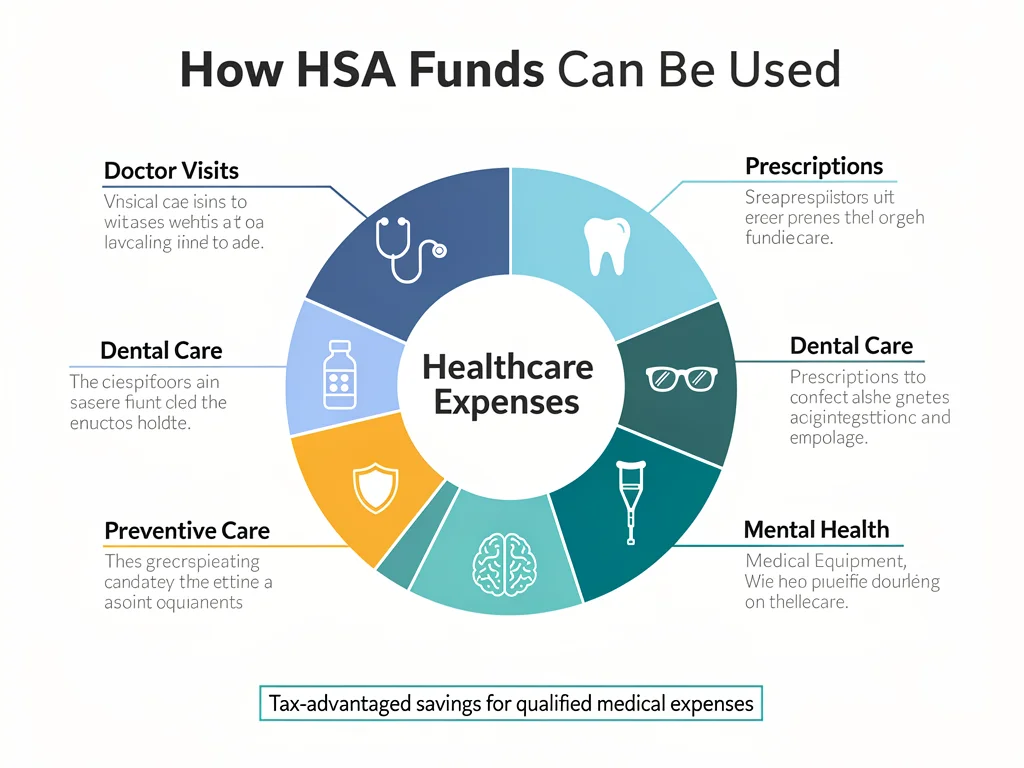
Broad Definition of Qualified Expenses: HSA funds can be used for a wide array of medical, dental, and vision expenses, including deductibles, co-payments, prescriptions, and even certain over-the-counter medications. This broad coverage means you can pay for most routine and unexpected medical costs tax-free.
Receipt Management: Keeping meticulous records of all qualified medical expenses is vital. Even if you pay for smaller expenses out-of-pocket now and reimburse yourself years later, the tax-free withdrawal relies on having those receipts. This strategy allows your HSA investments to grow for longer.
Understanding What’s Qualified: Regularly review IRS Publication 502, Medical and Dental Expenses, to stay updated on what constitutes a qualified medical expense. This ensures you’re only making tax-free withdrawals for eligible items and services.
By combining maximum contributions with a smart strategy for using and investing your HSA funds, the potential to save an extra $3,850, or even more, on healthcare costs becomes a very achievable reality. It transforms healthcare from a constant drain on your finances into a manageable and even advantageous aspect of your financial plan.
The Long-Term Investment Potential of HSAs
While HSAs are primarily known for managing current healthcare expenses, their true power often lies in their long-term investment potential. Unlike Flexible Spending Accounts (FSAs), HSA funds roll over year after year, never expiring. This feature, combined with the triple tax advantage, makes HSAs an excellent retirement savings vehicle, particularly for future medical costs, which are notoriously high in later life. Viewing your HSA as an investment account, rather than just a spending account, can significantly alter your financial trajectory.
HSA as a Retirement Savings Vehicle
Many financial advisors refer to the HSA as the “triple tax-advantaged retirement account” for a good reason. Its unique structure makes it potentially more powerful than even a 401(k) or IRA for certain types of expenses.
No “Use It or Lose It” Rule: Unlike FSAs, HSA funds do not expire. This means you can contribute money today, invest it, let it grow for decades, and then withdraw it tax-free for qualified medical expenses in retirement.
Investment Options: Many HSA providers offer a range of investment options, similar to a 401(k) or IRA. You can often choose from mutual funds, ETFs, and other assets to grow your funds over the long term.
Post-65 Flexibility: After age 65, you can withdraw HSA funds for any purpose without penalty, though non-medical withdrawals will be subject to income tax, similar to a traditional IRA. This provides incredible flexibility in retirement.
This long-term perspective is what truly sets HSAs apart, turning them into a critical component of a comprehensive retirement strategy. It’s a way to plan for one of the most unpredictable and expensive aspects of retirement: healthcare.
Compounding Returns and Tax-Free Growth
The power of compounding is amplified within an HSA due to its tax-free growth. Every dollar invested grows without being diminished by annual taxes, allowing your money to multiply at a much faster rate than in a taxable account. This effect becomes incredibly significant over several decades.
Consider an example: if you consistently contribute the maximum family amount to your HSA and invest it, even with conservative returns, the balance can grow to hundreds of thousands of dollars by retirement. This substantial fund can then be used tax-free for medical expenses, covering everything from Medicare premiums to long-term care costs. The ability to avoid taxes on both contributions and investment gains, and then on qualified withdrawals, creates a powerful engine for wealth accumulation specifically for healthcare.
By understanding and leveraging the long-term investment potential of HSAs, individuals can transform a necessary expense—healthcare—into an opportunity for significant wealth building. It’s a testament to the versatility and strategic importance of this often-underestimated financial tool, securing not just your health, but also your financial future.
Comparing HSAs with Other Healthcare Savings Options
When considering how to save for healthcare, it’s essential to understand how HSAs stack up against other available options. While HSAs offer unique advantages, particularly their triple tax benefit and long-term investment potential, other accounts like Flexible Spending Accounts (FSAs) and Health Reimbursement Arrangements (HRAs) serve different purposes and have distinct limitations. A comparative analysis helps individuals make informed decisions tailored to their specific health and financial situations.
HSA vs. FSA: Key Differences
HSAs and FSAs are often confused, but they have fundamental differences that impact their utility and flexibility. Understanding these distinctions is crucial for choosing the right account for your needs.
Ownership: An HSA is owned by the individual, meaning you can take it with you if you change jobs or insurance plans. An FSA is owned by the employer, and you generally lose unused funds if you leave your job.
Rollover: HSA funds roll over year after year and never expire. FSA funds typically have a “use it or lose it” rule, though some plans allow a small rollover amount or a grace period.
Eligibility: HSAs require enrollment in an HDHP. FSAs do not have this requirement and are often offered with traditional health plans.
Contributions: HSAs can receive contributions from both employees and employers. FSAs are employer-sponsored, and contributions are usually made through payroll deductions.
Investment: HSAs can be invested, allowing for tax-free growth. FSAs are not investment accounts.
For long-term savings and investment, the HSA clearly offers superior advantages due to its portability and investment capabilities. FSAs are generally better for short-term, predictable healthcare expenses.
Understanding HRAs and Their Role
Health Reimbursement Arrangements (HRAs) are another employer-sponsored option for healthcare savings, but they differ significantly from both HSAs and FSAs. HRAs are solely funded by the employer, and the funds can only be used for qualified medical expenses.
Employer-Funded: Only employers can contribute to an HRA; employees cannot.
No Employee Contributions: Employees cannot contribute their own money to an HRA.
No Individual Ownership: Like FSAs, HRAs are owned by the employer. You typically lose access to the funds if you leave the company.
Limited Rollover: Some HRAs allow funds to roll over from year to year, but this is at the discretion of the employer and often has limits.
HRAs can be a valuable benefit provided by an employer, helping to cover deductibles or other out-of-pocket costs. However, they lack the individual control, portability, and investment potential of an HSA.
In conclusion, while FSAs and HRAs serve useful purposes for specific healthcare needs, the HSA stands out as the most versatile and financially advantageous option for individuals seeking to save for both current and future medical expenses with significant tax benefits. Its unique combination of features makes it an unparalleled tool in personal finance.
Practical Strategies for Maximizing Your 2026 HSA Contributions
Once you understand the benefits and projected HSA contribution limits for 2026, the next step is to implement practical strategies to ensure you maximize your contributions. This isn’t just about reaching the annual limit; it’s about optimizing your financial habits to consistently fund your HSA, thereby fully leveraging its tax advantages and long-term growth potential. Proactive planning and consistent action are key to making the most of this powerful financial tool.
Setting Up Automatic Contributions
One of the most effective ways to ensure you meet your contribution goals is to set up automatic contributions. This approach removes the guesswork and the temptation to delay saving, making it a seamless part of your financial routine.
Payroll Deductions: If offered by your employer, contributing directly from your paycheck is often the easiest method. These contributions are made with pre-tax dollars, providing an immediate tax benefit by reducing your taxable income.
Bank Transfers: If payroll deductions aren’t an option, or if you wish to contribute beyond what your employer facilitates, set up recurring transfers from your checking or savings account to your HSA. Even small, regular transfers can add up significantly over the year.
Calendar Reminders: Set reminders for yourself, especially if you plan to make lump-sum contributions or adjust your regular contributions throughout the year. The deadline for contributions is typically the tax filing deadline for the previous year (e.g., April 15, 2027, for 2026 contributions).
Automating your contributions helps ensure consistency and reduces the likelihood of missing out on valuable tax-advantaged savings opportunities. It’s a simple yet powerful strategy for maximizing your HSA.
Leveraging Employer Contributions and Wellness Programs
Many employers recognize the value of HSAs and offer incentives to encourage employee participation. Tapping into these resources can significantly boost your HSA balance without requiring additional out-of-pocket contributions from you.
Employer Matching/Contributions: Some employers contribute directly to their employees’ HSAs, sometimes as a flat amount or as a match to employee contributions. Always take full advantage of these “free money” opportunities, as they directly increase your savings.
Wellness Incentives: A growing number of companies offer contributions to HSAs for participating in wellness programs, such as completing health assessments, participating in fitness challenges, or quitting smoking. These programs not only benefit your health but also your financial well-being.
Always check with your HR department to understand your employer’s HSA contribution policies and any associated wellness incentives. These benefits can dramatically accelerate your HSA growth and help you reach your savings goals faster.
By implementing these practical strategies, you can confidently navigate the HSA landscape and ensure you’re making the most of the 2026 contribution limits. Consistent contributions, automation, and leveraging employer benefits are the cornerstones of a successful HSA strategy, enabling you to build a robust financial buffer for your healthcare needs.
Navigating Tax Implications and Reporting for Your HSA
Understanding the tax implications and proper reporting procedures for your HSA is just as important as maximizing your contributions. While HSAs offer significant tax advantages, incorrect reporting can lead to penalties or missed benefits. Adhering to IRS guidelines ensures that you fully realize the triple tax benefit without any unwelcome surprises. This section delves into the necessary steps for accurate tax reporting and managing your HSA effectively, solidifying its role as a powerful financial tool.
Understanding Form 8889 for Tax Reporting
When you file your taxes, Form 8889, Health Savings Accounts (HSAs), is the primary document used to report all HSA activity. This form is crucial for claiming your tax deduction for contributions and ensuring that distributions are properly accounted for.
Reporting Contributions: You will report both your own contributions and any employer contributions on Form 8889. This is where you claim the deduction for your direct contributions, which reduces your adjusted gross income (AGI).
Reporting Distributions: All distributions from your HSA, whether for qualified medical expenses or not, must be reported. If distributions are for qualified medical expenses, they remain tax-free. If they are for non-qualified expenses before age 65, they are subject to income tax and a 20% penalty.
Fair Market Value: The fair market value of your HSA at the end of the year is also reported, providing an overview of your account’s growth.
It is essential to keep accurate records of all contributions and distributions throughout the year to ensure correct completion of Form 8889. Your HSA administrator will typically send you Form 5498-SA (for contributions) and Form 1099-SA (for distributions) to assist with this reporting.
Record Keeping for Qualified Medical Expenses
One of the most critical aspects of HSA management for tax purposes is meticulous record keeping of qualified medical expenses. While you don’t typically submit these receipts with your tax return, you must be able to provide them if audited by the IRS.
Digital vs. Physical Records: Maintain a systematic approach to storing your receipts. Digital copies, perhaps scanned and organized in a cloud folder, are often preferable for long-term retention and easy access.
Matching Distributions to Expenses: Ensure that every withdrawal from your HSA for medical expenses can be directly linked to a specific qualified expense. This is especially important if you choose to pay out-of-pocket for expenses and reimburse yourself years later to allow your HSA investments to grow.
Understanding What’s Qualified: Regularly review IRS Publication 502, Medical and Dental Expenses, to stay updated on what constitutes a qualified medical expense. This ensures you’re only making tax-free withdrawals for eligible items and services.
Diligent record keeping protects your tax-free status on withdrawals and allows you to fully benefit from the HSA’s advantages. Without proper documentation, what seems like a tax-free withdrawal could potentially become taxable and subject to penalties.
By carefully navigating the tax implications and maintaining thorough records, you can ensure your HSA remains a powerful, compliant, and highly beneficial financial tool. Proper management reinforces its value as a cornerstone of your healthcare and retirement planning, allowing you to maximize the significant tax advantages it offers.
Future Outlook: HSA Changes and Healthcare Trends
The landscape of healthcare and personal finance is constantly evolving, and HSAs are no exception. While the HSA contribution limits for 2026 provide a clear target for the near future, it’s prudent to consider potential future changes and broader healthcare trends that could impact the utility and strategy surrounding these accounts. Staying informed about these developments allows for proactive adjustments to your long-term financial planning, ensuring your HSA remains an optimized asset in your portfolio.
Potential Legislative Changes Affecting HSAs
HSAs have enjoyed broad bipartisan support since their inception, but like all tax-advantaged accounts, they are subject to potential legislative changes. These changes could involve adjustments to contribution limits, eligible expenses, or even the underlying tax benefits. While no major overhauls are currently imminent, it’s wise to remain aware of discussions in Congress.
Expansion of Eligible Expenses: There’s ongoing discussion about expanding the list of qualified medical expenses to include more preventive care, over-the-counter medications without a prescription, and even certain health-related services or products that are currently excluded.
Changes to HDHP Requirements: The definitions and thresholds for high-deductible health plans could be modified, potentially affecting eligibility for some individuals.
Tax Treatment Adjustments: While less likely given the popularity of HSAs, any changes to their triple-tax-advantage status (e.g., making growth taxable) would significantly alter their appeal.
Monitoring legislative updates from the IRS and Treasury Department is crucial. Subscribing to financial news outlets or consulting with a financial advisor can help you stay abreast of any proposed changes that might affect your HSA strategy.
Broader Healthcare Cost Trends and HSA Relevance
Beyond legislative actions, broader trends in healthcare costs and delivery systems will continue to shape the relevance and importance of HSAs. The persistent rise in medical expenses underscores the critical need for effective savings vehicles like the HSA.
Rising Deductibles and Out-of-Pocket Costs: Healthcare costs continue to climb, leading to higher deductibles and out-of-pocket maximums for many insurance plans. This trend makes HDHPs and HSAs even more relevant as tools to manage these increasing burdens.
Focus on Consumer-Directed Healthcare: There’s a growing shift towards consumer-directed healthcare, where individuals have more control and responsibility over their healthcare spending. HSAs are central to this model, empowering individuals to make informed decisions about their medical care and costs.
Longevity and Retirement Healthcare: As people live longer, the need for substantial healthcare savings in retirement becomes more pronounced. HSAs, with their long-term investment potential, are uniquely positioned to address this growing financial challenge.
The increasing complexity and cost of healthcare solidify the HSA’s role as an indispensable financial planning tool. Its adaptability to future trends and its robust tax advantages make it a resilient component of a sound financial strategy for years to come.
By keeping an eye on both potential legislative shifts and the broader healthcare landscape, individuals can ensure their HSA strategy remains agile and effective. This forward-looking perspective is vital for maximizing the long-term benefits of your HSA and securing your financial health against an uncertain future.
Key Aspect
Brief Description
2026 Contribution Limits
Projected to be around $4,300 for individuals and $8,550 for families, subject to IRS confirmation.
Triple Tax Advantage
Contributions are tax-deductible, growth is tax-free, and qualified withdrawals are tax-free.
Catch-Up Contributions
An additional $1,000 for individuals aged 55 and older, boosting retirement healthcare savings.
Long-Term Investment
HSA funds can be invested and rolled over annually, serving as a powerful retirement healthcare savings vehicle.
Frequently Asked Questions About HSA Contribution Limits 2026
What are the projected HSA contribution limits for 2026?▼
For 2026, the projected HSA contribution limits are approximately $4,300 for individuals with self-only coverage and $8,550 for families. These figures are subject to final confirmation by the IRS, which typically announces the official limits later in the year, usually in late spring or early summer.
Who is eligible to contribute to an HSA in 2026?▼
To be eligible for HSA contributions in 2026, you must be covered by a high-deductible health plan (HDHP), have no other non-HDHP health coverage, not be enrolled in Medicare, and not be claimed as a dependent on someone else’s tax return. Meeting these criteria is essential.
Can I make a catch-up contribution to my HSA in 2026?▼
Yes, if you are aged 55 or older by the end of 2026, you can make an additional catch-up contribution of $1,000 to your HSA. This is a separate contribution on top of the standard individual or family limits, designed to help older individuals save more for future medical expenses.
What are the tax benefits of contributing to an HSA?▼
HSAs offer a triple tax advantage: contributions are tax-deductible, funds grow tax-free, and withdrawals for qualified medical expenses are also tax-free. This makes the HSA an exceptionally powerful tool for saving for healthcare costs and reducing your overall tax burden over time.
How do I maximize my HSA savings for 2026?▼
To maximize your HSA savings, aim to contribute the full annual limit, including catch-up contributions if eligible. Set up automatic contributions, leverage any employer contributions or wellness incentives, and consider investing your HSA funds for long-term growth. Keep meticulous records of all qualified medical expenses.
Conclusion
The HSA contribution limits for 2026 represent a significant opportunity for individuals and families to proactively manage and save for healthcare expenses while simultaneously enjoying substantial tax benefits. By understanding the projected limits, leveraging the triple tax advantage, and implementing strategic contribution and investment practices, you can potentially save an extra $3,850 or more, transforming healthcare costs from a financial burden into a powerful component of your overall financial strategy. The HSA’s unique flexibility, long-term investment potential, and tax-free withdrawals for qualified medical expenses make it an indispensable tool for both immediate healthcare needs and securing a financially healthy retirement. Staying informed, maximizing your contributions, and diligent record-keeping are the cornerstones of harnessing the full power of your Health Savings Account for years to come.
I'm a content creator fueled by the idea that the right words can open doors and spark real change. I write with intention, seeking to motivate, connect, and empower readers to grow and make confident choices in their journey.