Unemployment Benefit Rates: Calculation & Maximization Strategies
Advertisements
Unemployment benefit rates in the United States are calculated using state-specific formulas, previous earnings, qualifying employment history, and applicable benefit limits. Accurate wage reporting and continued eligibility can help claimants receive their full lawful entitlement.
Understanding how unemployment benefit rates are calculated helps American workers prepare financially for unexpected job loss and navigate the requirements associated with unemployment insurance programs.
Although many states provide regular unemployment benefits for up to 26 weeks, payment amounts and maximum benefit durations vary according to state regulations and individual circumstances.
This guide explains benefit calculations, eligibility requirements, wage documentation, payment duration, and practical strategies for receiving the unemployment compensation you are legally entitled to claim.
Understanding How Unemployment Benefit Rates Are Calculated
Unemployment benefit rates are generally determined using an individual's previous earnings during an established base period, although specific calculation methods differ between state unemployment insurance programs.
State agencies may calculate weekly payments using average earnings, wages from the highest-paid quarter, or other formulas established under applicable state unemployment insurance regulations.
These calculations aim to replace a portion of lost employment income while providing temporary financial assistance to eligible individuals actively seeking suitable employment opportunities.
How the Unemployment Insurance System Works
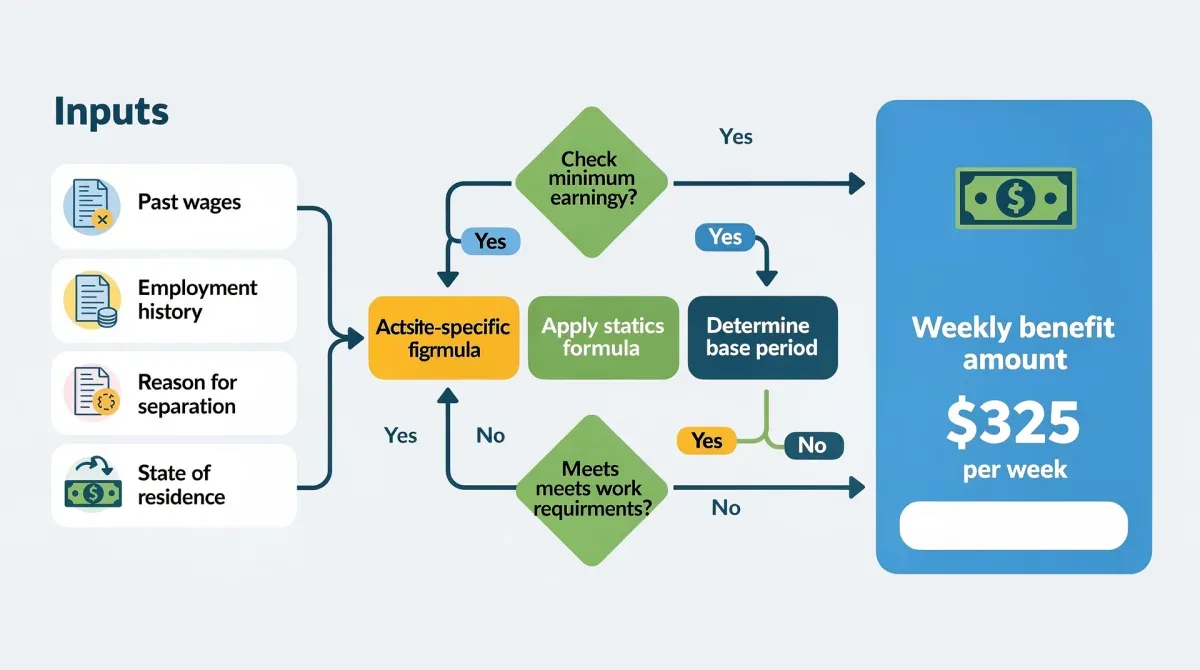
Unemployment insurance operates through a federal-state partnership in which individual states administer their own programs while following applicable federal requirements and established administrative guidelines.
The U.S. Department of Labor provides official information regarding unemployment insurance eligibility, application procedures, and resources for contacting the appropriate state unemployment agency.
Understanding this administrative structure is important because unemployment benefit rates, qualifying wage requirements, application procedures, and maximum payment durations are primarily determined under state law.
The Difference Between Weekly and Maximum Benefit Amounts
The weekly benefit amount represents the unemployment compensation an eligible claimant may receive for a qualifying week, subject to applicable adjustments and ongoing eligibility requirements.
The maximum benefit amount generally represents the total regular unemployment compensation available under an approved claim during the applicable benefit year and established program limitations.
Understanding these separate figures helps claimants develop realistic financial expectations rather than assuming that every approved application guarantees the maximum weekly payment for 26 weeks.
Key Factors Influencing Your Weekly Benefit Amount
Several factors influence unemployment benefit rates, including previous earnings, qualifying employment history, applicable state benefit limits, and other circumstances recognized under individual unemployment insurance programs.
Higher previous earnings may result in larger weekly payments until the applicable maximum benefit amount is reached, depending on the calculation method used by the state.
Some states also provide additional allowances for qualifying dependents, although these benefits are not universally available and may be subject to separate eligibility requirements.
The Base Period Explained
The base period represents the timeframe during which previous employment earnings are evaluated to determine monetary eligibility and calculate the potential weekly unemployment benefit amount.
In many states, the standard base period consists of the first four of the five most recently completed calendar quarters before an unemployment insurance claim begins.
Understanding the applicable base period is essential when researching unemployment benefit rates because wages earned outside this timeframe may not count toward the initial benefit calculation.
Understanding the Alternative Base Period
Some states offer an alternative base period for applicants whose employment earnings do not satisfy the monetary eligibility requirements established under the standard calculation period.
The alternative period may include more recent completed calendar quarters, potentially allowing individuals with recent qualifying employment to establish eligibility under different wage calculation arrangements.
Claimants should confirm whether their state provides this option and whether additional wage documentation is required before an alternative base period can be considered.
Previous Earnings and Qualifying Employment
State unemployment agencies generally evaluate wages earned through covered employment, meaning that not every type of income necessarily qualifies toward regular unemployment insurance benefit calculations.
Individuals who worked for multiple employers should provide accurate employment histories so the agency can identify qualifying wages and determine the appropriate monetary eligibility requirements.
Complete wage records can help ensure unemployment benefit rates reflect eligible employment earnings rather than incomplete information that could produce an incorrect monetary determination.
State Minimum and Maximum Weekly Payments
States establish their own minimum and maximum weekly unemployment benefit amounts, limiting the compensation available to eligible claimants regardless of their previous annual employment income.
These limits may change through legislative adjustments, statutory formulas, or periodic updates reflecting economic conditions and other factors considered by individual state unemployment insurance programs.
Claimants should review their state's current benefit schedule instead of relying on national averages or outdated payment figures when estimating available financial assistance.
Understanding State-Specific Benefit Formulas
Unemployment benefit rates differ considerably across the United States because individual state agencies apply distinct wage formulas, eligibility thresholds, payment limits, and other statutory requirements.
Some states emphasize earnings from the highest-paid calendar quarter, while others consider average weekly earnings or broader wage information collected throughout the qualifying base period.
Understanding which formula applies can help claimants estimate potential payments and identify possible discrepancies when reviewing official monetary determinations issued by their state unemployment agency.
The High-Quarter Wage Calculation Method
Under certain state formulas, wages earned during the highest-paying quarter of the applicable base period are used to calculate an individual's weekly unemployment benefit amount.
This approach may produce different results for workers whose earnings fluctuate seasonally, particularly when their employment income is concentrated within certain periods of the year.
The exact divisor, qualifying wage requirements, rounding procedures, and applicable benefit limitations depend on state regulations rather than a single nationwide unemployment insurance formula.
The Average Weekly Wage Calculation Method
Some unemployment insurance programs calculate benefits using a percentage of average qualifying wages earned during a specified period of employment before the individual's unemployment claim.
This approach connects potential unemployment compensation to previous earnings while applying statutory limits intended to determine the minimum and maximum payments available under state law.
Individuals researching unemployment benefit rates should review the calculation method established by their state because similar employment histories can produce different payments across jurisdictions.
Practical Examples of Unemployment Benefit Calculations
Illustrative benefit calculations can help workers understand how previous employment earnings might translate into weekly unemployment compensation under different hypothetical state benefit calculation arrangements.
These examples demonstrate basic mathematical concepts rather than representing the official unemployment benefit rates or currently applicable payment limits of any particular American state.
Actual payment amounts must be confirmed through the relevant state unemployment agency, which determines whether reported wages satisfy monetary eligibility and other statutory requirements.
Example 1: Calculating Benefits From Quarterly Earnings
Consider a hypothetical unemployment insurance formula that divides an individual's highest qualifying quarterly earnings by 26 to estimate the potential weekly unemployment compensation amount.
If the claimant earned $13,000 during their highest-paid qualifying quarter, this illustrative calculation would produce a preliminary weekly benefit amount of approximately $500.
Actual unemployment benefit rates would still depend on state-specific rules, maximum payment limits, qualifying wage requirements, and any other adjustments applicable to the individual claim.
Example 2: Calculating Benefits From Average Weekly Earnings
Consider a hypothetical claimant whose qualifying average weekly employment earnings were $900 before experiencing job loss and applying for regular state unemployment insurance benefits.
If an illustrative state formula replaced 50% of those earnings, the preliminary weekly unemployment compensation amount would equal approximately $450 before applicable adjustments.
This example demonstrates how wage replacement formulas operate, although actual percentages and calculation procedures vary between individual state unemployment insurance programs.
Example 3: Estimating a Full 26-Week Benefit Period
A claimant receiving an approved weekly unemployment benefit amount of $400 could potentially receive $10,400 over 26 fully payable weeks if all eligibility requirements remain satisfied.
However, this example assumes that the state permits 26 weeks of benefits and that the claimant's approved maximum benefit amount supports the entire payment period.
Taxes, reported earnings, eligibility interruptions, benefit offsets, and other applicable adjustments may reduce the actual amount received compared with the initial gross payment estimate.
Maximizing Your Lawful Unemployment Benefits
Receiving the full unemployment compensation available under state law requires accurate applications, complete employment records, timely certifications, and compliance with applicable ongoing eligibility requirements.
Understanding unemployment benefit rates can help claimants identify incorrect wage information and ensure their monetary determination reflects all qualifying employment earnings recognized by the state.
The objective should be obtaining the correct legally authorized benefit amount rather than attempting to manipulate earnings information, eligibility conditions, or required unemployment insurance reporting procedures.
Accurate Wage Reporting and Documentation
Providing complete and accurate wage information helps state unemployment agencies determine monetary eligibility and calculate benefits using the appropriate employment history and qualifying earnings.
Collect relevant pay stubs, W-2 forms, employment records, and other documents that may help establish earnings during the applicable unemployment insurance base period.
Compare these records with the agency's monetary determination and promptly report discrepancies through official procedures if qualifying wages appear missing or incorrectly recorded.
Filing Your Unemployment Claim Promptly
Workers should contact the appropriate state unemployment insurance agency promptly after losing employment to obtain current information regarding application procedures and eligibility requirements.
Delaying an application may affect the claim's effective date or available benefits, depending on state regulations and whether backdating is permitted under qualifying circumstances.
Submitting accurate information during the initial application can help reduce administrative delays while allowing the agency to evaluate relevant employment and wage records.
Reviewing Your Monetary Determination
After processing an unemployment insurance application, the state agency generally provides information explaining the applicable wage records, monetary eligibility, and potential benefit entitlement.
Reviewing this determination carefully allows claimants to identify missing employers, incorrect earnings, or other discrepancies that may have affected their calculated unemployment benefit rates.
A monetary determination does not necessarily establish final eligibility, since additional requirements involving job separation circumstances and ongoing availability for employment may also apply.
Understanding the Standard 26-Week Payout
Many state unemployment insurance programs establish a maximum regular benefit duration of 26 weeks, although this period does not represent a guaranteed nationwide entitlement.
Individual payment duration depends on the claimant's monetary eligibility, applicable state benefit formulas, available maximum benefits, and continued satisfaction of weekly unemployment insurance requirements.
Understanding how unemployment benefit rates interact with benefit duration can help households establish realistic financial plans while avoiding assumptions about guaranteed long-term compensation.
Why Some Claimants Receive Fewer Than 26 Weeks
Some states provide regular unemployment benefits for shorter maximum periods, while others calculate individual benefit durations according to qualifying earnings or additional statutory factors.
A claimant may also receive fewer payments after returning to employment, exhausting available benefits, or failing to satisfy applicable ongoing unemployment insurance eligibility requirements.
Reviewing the approved maximum benefit amount and state-specific payment duration helps determine how long financial assistance may realistically remain available under individual circumstances.
Understanding the Benefit Year
The benefit year generally refers to the established period during which an approved unemployment insurance claim remains active under the applicable state program regulations.
Although this period commonly extends for approximately one year, it does not mean claimants automatically receive unemployment compensation during every week of that timeframe.
The actual number of payable weeks depends on available benefits, ongoing eligibility, reported employment earnings, and other conditions associated with the individual unemployment claim.
Extended Unemployment Benefits
Under certain economic conditions, extended unemployment benefit programs may provide additional assistance when established state or federal requirements and unemployment-related activation thresholds are satisfied.
These extensions are not necessarily available at all times, and eligibility depends on the applicable program rules and the claimant's individual employment circumstances.
Individuals approaching the end of regular benefits should check official announcements rather than assuming additional weeks of unemployment compensation will automatically become available.
Eligibility Requirements and Maintaining Unemployment Benefits
Receiving unemployment compensation requires meeting more than the monetary conditions used to establish unemployment benefit rates and determine the potential value of an individual claim.
Applicants generally must satisfy requirements involving qualifying employment history, reasons for unemployment, availability for suitable employment, and other conditions established under applicable state law.
Maintaining eligibility throughout the approved benefit period requires accurate certifications and continued compliance with the unemployment insurance program's reporting and participation requirements.
Understanding Qualifying Reasons for Job Loss
Workers who become unemployed because their employer reduces staffing or no longer has sufficient work may qualify for benefits if other applicable requirements are satisfied.
Individuals who voluntarily leave employment or are dismissed may face additional eligibility reviews depending on the circumstances and the standards established under state law.
Claimants should provide truthful information about their employment separation and allow the unemployment agency to determine whether the circumstances satisfy applicable eligibility requirements.
Active Job Search and Reporting Requirements
Many unemployment insurance programs require claimants to actively search for suitable employment while receiving benefits, although qualifying activities and reporting requirements vary across states.
Maintain accurate records of job applications, employer communications, interviews, approved employment services, and other activities recognized under the applicable state unemployment insurance program.
These records may be requested during eligibility reviews or audits, making consistent documentation important for maintaining compliance throughout the unemployment benefit period.
Completing Weekly or Biweekly Certifications
Claimants are generally required to complete recurring certifications confirming their unemployment status, employment earnings, availability for work, and other relevant eligibility information.
Certification schedules vary between programs, making it important to monitor state agency notifications and complete all required submissions within the applicable reporting deadlines.
Missing certifications or submitting inaccurate information can delay payments, interrupt eligibility, or require administrative reviews before additional unemployment compensation becomes available.
Remaining Available for Suitable Employment
Ongoing eligibility commonly requires claimants to remain available for suitable work and comply with state-specific requirements concerning employment opportunities and job search participation.
Refusing employment offers or becoming unavailable for work may affect benefit eligibility, although applicable exceptions and suitability standards depend on individual circumstances and state law.
Report significant changes affecting work availability accurately and consult the state unemployment agency when uncertain about how particular circumstances influence continued eligibility.
How Part-Time Work Affects Unemployment Benefit Rates
Some state unemployment insurance programs permit eligible individuals to receive partial benefits while working reduced hours or earning income below applicable program thresholds.
These arrangements can provide financial support during the transition toward new employment, although benefit reductions depend on state-specific earnings and work reporting requirements.
Understanding how partial employment affects unemployment benefit rates helps claimants manage income changes while maintaining compliance with applicable unemployment insurance regulations.
Understanding Partial Unemployment Benefits
Partial unemployment benefits may be available when individuals work reduced hours or earn less than the amount permitted under their state's unemployment insurance rules.
Some states disregard a portion of reported earnings before reducing weekly benefits, while others apply different formulas based on wages, hours worked, or employment circumstances.
Claimants should review the applicable partial benefit calculation before estimating combined income from unemployment compensation and temporary or part-time employment opportunities.
Reporting Employment Earnings Correctly
Individuals receiving unemployment compensation must report employment activity and applicable earnings according to the instructions provided by their state unemployment insurance agency.
Reporting requirements may include temporary employment, part-time wages, freelance assignments, or other forms of compensated work, depending on applicable state regulations.
Accurate reporting remains essential even when earnings appear insufficient to affect benefits, since the agency determines whether compensation adjustments or eligibility reviews are necessary.
Illustrative Partial Benefit Calculation
Consider a hypothetical claimant receiving $400 in weekly unemployment compensation who earns $150 through qualifying part-time employment during an otherwise eligible benefit week.
If an illustrative state formula disregards the first $100 of earnings and deducts the remaining $50, the adjusted unemployment payment would equal $350.
This example would produce $500 in combined weekly income before taxes, although actual state formulas and earnings reporting requirements may produce substantially different results.
Impact of Severance Pay and Other Income
Severance payments, retirement income, wages, and other forms of compensation may influence unemployment benefit rates or individual eligibility under certain state unemployment insurance arrangements.
The applicable treatment depends on the type of compensation received, payment timing, employment separation arrangements, and the rules established by the specific state program.
Claimants should accurately disclose all required income information instead of assuming that payments received after employment separation cannot affect unemployment insurance eligibility.
How Severance Payments May Affect Benefits
Some states consider certain severance payments when determining unemployment eligibility or weekly compensation, particularly when payments are allocated to specific periods after employment separation.
Other states may treat severance differently depending on contractual arrangements, payment structures, and whether the compensation represents continued wages or a separate termination payment.
Reviewing relevant state instructions helps claimants understand whether severance must be reported and whether it may affect unemployment compensation payments.
Vacation Pay, Pensions, and Additional Compensation
Payments involving unused vacation time, pensions, retirement distributions, or other employment-related compensation may receive different treatment under individual state unemployment insurance regulations.
Claimants should consult official reporting instructions when receiving additional income rather than assuming all forms of financial compensation receive identical unemployment insurance treatment.
Accurate disclosure allows state agencies to determine whether particular payments affect weekly eligibility, unemployment benefit rates, or the total compensation available through an approved claim.
Avoiding Benefit Overpayments
An unemployment insurance overpayment occurs when an individual receives benefits exceeding the amount they were eligible to receive under applicable program requirements.
Overpayments can result from reporting mistakes, administrative errors, incorrect earnings information, or eligibility determinations issued after previously authorized payments have been processed.
Individuals receiving an overpayment notice should review repayment requirements, available appeal procedures, and potential waiver options rather than ignoring official communications from the state agency.
Federal and State Taxation of Unemployment Benefits
Unemployment compensation is generally taxable for federal income tax purposes, although individual tax obligations depend on household income and other applicable taxation circumstances.
State income tax treatment varies, making it important to understand local taxation requirements when calculating the practical value of unemployment insurance payments.
When estimating household income using unemployment benefit rates, claimants should distinguish between gross approved payments and the amount available after applicable tax withholding.
Understanding Federal Income Tax Withholding
Eligible unemployment compensation recipients can generally request voluntary federal income tax withholding at a rate of 10% from unemployment benefit payments.
Withholding can help reduce potential tax obligations when filing a federal income tax return, although the amount withheld may not cover every individual's final liability.
Recipients should consider their broader annual income, available financial resources, and expected tax circumstances when determining whether voluntary withholding is appropriate.
Reviewing Form 1099-G
Unemployment compensation recipients generally receive Form 1099-G, documenting unemployment benefits paid during the applicable tax year and certain amounts withheld for income taxes.
Review this document carefully and compare the reported compensation with available payment records to identify potential discrepancies before submitting an annual income tax return.
Individuals receiving an incorrect form or documentation relating to unauthorized unemployment claims should contact the appropriate state agency to clarify the reported information.
Strategies for Navigating Appeals and Denials
Unemployment insurance applications may be denied or approved for lower amounts than expected when agencies identify monetary eligibility issues or other concerns requiring further evaluation.
Understanding applicable appeal procedures allows claimants to challenge determinations they believe are incorrect and present documentation supporting their employment history or eligibility circumstances.
Appeal deadlines, submission requirements, and hearing procedures vary between states, making prompt attention to official determination notices particularly important.
Understanding Why an Unemployment Claim Was Denied
Common eligibility issues may involve insufficient qualifying wages, disputed employment separation circumstances, incomplete documentation, availability for employment, or other state-specific unemployment insurance requirements.
Review the written determination carefully to identify the specific reason for denial and determine whether additional information or documentation may address the agency's concerns.
When disputes involve unemployment benefit rates, comparing the agency's recognized wages with personal employment records may help identify relevant issues requiring administrative review.
Preparing for an Unemployment Appeal Hearing
Preparing for an unemployment appeal hearing involves reviewing the disputed determination, organizing relevant documentation, and understanding the specific eligibility or monetary issues being considered.
Employment records, wage statements, termination notices, and relevant communications may help claimants present accurate information concerning their employment history and circumstances surrounding job separation.
Provide truthful explanations, follow hearing instructions, and focus on evidence relevant to the disputed determination rather than assuming that an appeal guarantees benefit approval.
Meeting Appeal Deadlines and Submission Requirements
States establish specific deadlines for challenging unemployment insurance determinations, making it important to review official notices immediately after receiving an adverse agency decision.
Follow the instructions concerning online submissions, written appeals, supporting documents, and any additional information required to initiate the appropriate administrative review process.
Claimants who require assistance may consider contacting legal aid organizations or qualified professionals familiar with their state's unemployment insurance regulations and administrative appeal procedures.
Continuing Certifications During an Appeal
Some unemployment insurance programs instruct claimants to continue submitting weekly or biweekly certifications while waiting for an administrative appeal or eligibility determination.
Maintaining these certifications may help preserve potential payment eligibility for relevant weeks if the original determination is subsequently reversed through the applicable appeal process.
Follow the instructions provided by the state agency throughout the appeal rather than assuming that certification requirements automatically stop after a claim is denied.
Practical Financial Planning While Receiving Unemployment Benefits
Unemployment compensation generally replaces only a portion of previous employment income, making temporary budget adjustments important for households experiencing reduced earnings after unexpected job loss.
Understanding approved unemployment benefit rates and available payment durations can help individuals estimate expected income while preparing for potential delays or interruptions.
Financial planning should prioritize essential living expenses, manageable debt obligations, and available resources while supporting continued efforts to obtain suitable employment.
Creating a Temporary Unemployment Budget
Begin by identifying essential monthly expenses, including housing, utilities, groceries, transportation, insurance, medical needs, and other necessary financial commitments.
Compare these expenses with expected unemployment compensation, household earnings, and accessible savings to determine whether temporary spending adjustments may be necessary.
Regularly reviewing the budget can help households respond to changes in employment income, weekly benefits, unexpected expenses, or other financial circumstances.
Exploring Additional Support Programs
Depending on household circumstances, individuals receiving unemployment insurance may also qualify for separately administered assistance programs involving food, healthcare, housing, or employment services.
Eligibility for these programs depends on their individual requirements, which may include household income, residency, family size, and other applicable qualification standards.
Review official program information and accurately disclose unemployment compensation when required, since these payments may influence eligibility for certain additional government assistance programs.
Preparing for the End of Regular Benefits
Claimants should periodically review their remaining unemployment benefit balance to understand when available compensation may be exhausted under the approved monetary determination.
Planning ahead allows individuals to evaluate alternative financial arrangements, available employment services, potential training opportunities, and other resources before regular benefits end.
Although unemployment benefit rates provide temporary financial assistance, maintaining realistic expectations about payment duration remains important for protecting household financial stability.
Future Outlook and Unemployment Insurance Policy Changes
Unemployment insurance regulations may evolve through legislative changes, administrative updates, economic conditions, and adjustments to state-specific benefit formulas or qualifying wage requirements.
Unemployment benefit rates may therefore change over time, depending on applicable state laws and the calculation methods used to determine maximum weekly compensation.
Individuals applying for benefits in 2026 should rely on current official state agency information rather than assuming that previous payment schedules and requirements remain unchanged.
Monitoring Updates to State Benefit Limits
State unemployment insurance agencies may periodically publish updated monetary eligibility requirements, maximum weekly compensation amounts, and other information relevant to current benefit calculations.
Claimants should review whether changes apply to newly established claims, existing benefit years, or other categories specified under the applicable legislative or administrative updates.
Understanding the effective dates of revised unemployment benefit rates can help individuals distinguish changes affecting their current claims from adjustments applicable to future applicants.
Understanding Potential Federal Program Adjustments

Federal legislation can influence unemployment insurance administration, funding arrangements, and the availability of certain supplemental or extended benefit programs under qualifying economic conditions.
However, proposed legislation and public policy discussions should not be treated as confirmed new benefits until the relevant requirements have been officially established.
Monitoring official federal and state announcements helps claimants remain informed without relying on unsupported predictions about additional compensation or guaranteed extensions of unemployment assistance.
Key Factors That Determine Unemployment Benefits
Understanding the different elements of unemployment insurance can help individuals evaluate their potential financial assistance and identify the requirements that influence continued compensation.
The following table summarizes important considerations associated with unemployment benefit rates, monetary eligibility, claim duration, employment reporting, and administrative appeal procedures.
These guidelines describe general unemployment insurance principles, while actual calculations and eligibility conditions must be confirmed through the claimant's applicable state unemployment insurance agency.
Key Point | Brief Description |
|---|---|
Benefit Calculation | State-specific formulas use qualifying base period wages to determine weekly benefit amounts. |
Standard Base Period | Commonly consists of the first four of the five most recently completed calendar quarters. |
Alternative Base Period | May allow qualifying applicants to use more recent earnings where permitted under state regulations. |
Maximize Lawful Payout | Provide accurate wage information, review monetary determinations, and follow applicable certification requirements. |
Maximum Weekly Benefit | Determined by individual state laws and applicable unemployment compensation limits. |
Benefit Duration | Many states provide up to 26 weeks, although individual entitlement and maximum durations vary. |
Eligibility & Maintenance | Claimants must satisfy applicable employment, availability, certification, and job search requirements. |
Part-Time Employment | May reduce weekly unemployment compensation according to state-specific earnings adjustment rules. |
Severance and Other Income | May affect eligibility or payment amounts, depending on the applicable state regulations. |
Tax Obligations | Unemployment compensation is generally federally taxable, while state income tax treatment varies. |
Appeals Process | Claimants can challenge disputed determinations through established state administrative procedures. |
Extended Benefits | Additional compensation may become available when qualifying program activation requirements are satisfied. |
Frequently Asked Questions About Unemployment Benefits
How are unemployment benefit rates calculated?
States generally calculate unemployment benefits using qualifying wages earned during an established base period. The specific formula may consider average earnings, the highest-paid quarter, or other wage information, subject to applicable state payment limits.
How is the base period defined for unemployment benefits?
In many states, the standard base period consists of the first four of the five most recently completed calendar quarters before the claim begins. Alternative base periods may be available under certain state regulations.
Can part-time work affect my unemployment benefits?
Yes. Part-time earnings may reduce unemployment compensation according to state-specific rules. Some programs disregard a portion of earnings before adjusting benefits, while others use different calculation methods.
What if my unemployment claim is denied?
You may challenge the determination through your state's established appeal procedures. Review the denial notice, follow the applicable submission deadlines, and provide supporting documentation relevant to the disputed eligibility issue.
How do I ensure my wages are accurately reported?
Collect relevant pay stubs, W-2 forms, and employment documentation. Compare these records with the agency's monetary determination and promptly report any identified discrepancies through the appropriate official procedures.
Are unemployment benefit rates the same across all states?
No. States establish their own wage formulas, monetary eligibility requirements, maximum weekly compensation amounts, and benefit durations. Consequently, workers with similar employment histories may receive different payments depending on the applicable state program.
Does every unemployed worker receive 26 weeks of benefits?
No. Although many states provide up to 26 weeks of regular unemployment compensation, actual entitlement depends on state regulations, qualifying wages, available benefits, and continued eligibility.
Can I receive unemployment benefits if I quit my job?
Possibly. Eligibility after voluntarily leaving employment depends on the reason for leaving and the requirements established under applicable state law. The unemployment agency will evaluate the circumstances of your individual claim.
How much would I receive with a weekly benefit of $400?
If you qualify for 26 fully payable weeks at $400 per week, your gross compensation would total $10,400. However, taxes, earnings adjustments, benefit offsets, and eligibility changes may affect the actual amount received.
Are unemployment benefits taxable?
Unemployment compensation is generally subject to federal income taxation. State income tax treatment varies, and recipients should review their applicable tax reporting and withholding requirements.
Can severance pay reduce my unemployment benefits?
Yes, in certain states and circumstances. The treatment of severance depends on applicable regulations, payment arrangements, and other factors. Report severance accurately when required by the unemployment agency.
What happens if I forget to certify my unemployment benefits?
Missing a certification may delay or interrupt payments. Contact your state unemployment insurance agency promptly to determine whether the missed certification can be corrected and what additional procedures are required.
Can unemployment benefit rates increase during an existing claim?
Changes to state benefit limits do not necessarily apply to existing claims. Whether an adjustment affects your payments depends on the effective date, applicable legislation, and individual program rules.
Can I receive benefits after my regular unemployment compensation ends?
Additional benefits may be available through extended or supplemental programs when applicable activation and eligibility requirements are satisfied. However, extensions are not automatically available to every claimant.
What should I do if my unemployment payment is incorrect?
Contact your state unemployment agency, review the relevant payment records and monetary determination, and provide supporting documentation. If necessary, follow the established appeal procedures within the applicable deadlines.
Where should I apply for unemployment benefits?
Generally, you should contact the unemployment insurance agency in the state where you worked. Individuals who worked in multiple states or moved after losing employment may require additional guidance concerning interstate claims.
Conclusion: Understanding Unemployment Benefit Rates in 2026
Understanding how unemployment benefit rates are calculated helps American workers evaluate potential financial assistance, identify inaccurate wage records, and prepare for changing household income.
Although many states offer up to 26 weeks of regular benefits, receiving the full authorized entitlement depends on accurate reporting, individual monetary eligibility, and continued compliance.
By monitoring official regulations, maintaining complete documentation, and preparing realistic financial plans, claimants can navigate unemployment insurance more effectively while pursuing suitable new employment opportunities.