6% 401(k) Employer Match: Unlock $240,000 Over 20 Years
Advertisements
A 6% 401(k) employer match can significantly increase retirement savings over 20 years through consistent contributions and potential investment growth, depending on salary, vesting requirements, investment performance, and individual retirement planning decisions.
Securing a 6% 401(k) employer match can provide American employees with a valuable opportunity to increase their retirement savings through additional workplace contributions.
When invested consistently over several decades, employer contributions may generate substantial financial growth through compounding, although investment returns are never guaranteed.
This guide explains matching contributions, vesting schedules, annual contribution limits, and realistic scenarios demonstrating how employer benefits may build long-term retirement wealth.
The Core Mechanics of a 6% 401(k) Employer Match
A 6% 401(k) employer match may represent a valuable component of workplace benefits packages, encouraging employees to save consistently for their retirement.
Under a dollar-for-dollar matching formula, employers contribute an equivalent amount when eligible employees contribute up to 6% of their qualifying compensation.
However, matching formulas vary between retirement plans, making it important to understand the specific conditions established by your employer before calculating potential benefits.
Understanding Different Employer Matching Formulas
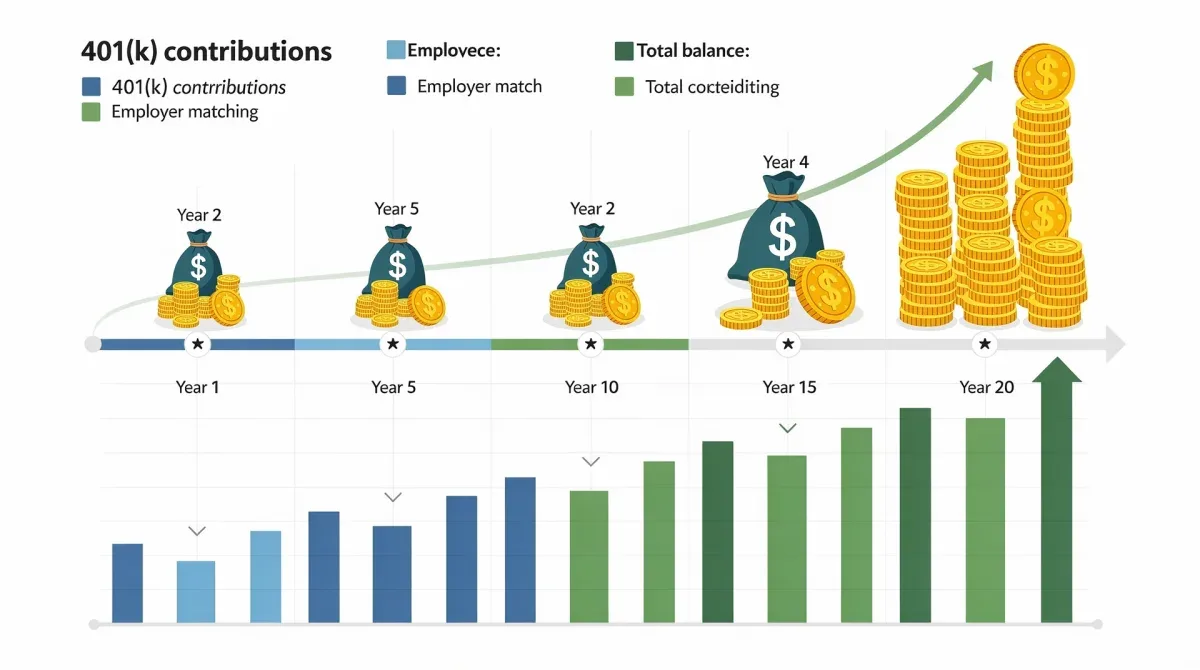
Some employers match employee contributions dollar for dollar, while others provide partial matching contributions according to percentages established within their retirement plans.
For example, matching 50% of employee contributions up to 6% of salary results in a maximum employer contribution equal to 3% of salary.
Employees should verify whether their 6% 401(k) employer match represents a full matching contribution or a different formula involving partial employer funding.
Understanding Vesting Schedules and Their Importance
Vesting determines when employees gain ownership of employer contributions deposited into their workplace retirement accounts according to the applicable retirement plan requirements.
Some plans provide immediate ownership, while others establish graduated vesting schedules or require employees to complete a specific period of eligible service.
Understanding these conditions helps employees evaluate their 6% 401(k) employer match when considering career changes, retirement planning, and future financial commitments.
Immediate, Graded, and Cliff Vesting
Immediate vesting provides full ownership of eligible employer contributions when deposited, without requiring employees to complete an additional qualifying employment period.
Graded vesting gradually increases ownership, while cliff vesting provides full ownership after completing a specified service period under the retirement plan.
Employees always retain ownership of their own salary deferrals, although unvested employer contributions may be forfeited when employment ends under certain circumstances.
The Compounding Power: How Retirement Savings Accumulate
The long-term potential of a 6% 401(k) employer match depends on consistent contributions, investment performance, applicable expenses, and the duration of participation.
Compounding occurs when investment earnings remain invested and potentially generate additional returns, allowing retirement balances to grow beyond the amount directly contributed.
However, market investments can also lose value, meaning projected retirement balances should be interpreted as hypothetical scenarios rather than guaranteed financial outcomes.
Illustrative Scenario: Annual Salary of $60,000
An employee earning $60,000 annually and contributing 6% of eligible compensation would deposit approximately $3,600 into their retirement account each year.
With a dollar-for-dollar 6% 401(k) employer match, annual employer contributions would add another $3,600, bringing total yearly contributions to $7,200.
Over twenty years, these consistent contributions would total $144,000 before accounting for investment gains, losses, administrative expenses, or changes in annual compensation.
Projected Growth With a 7% Annual Return
Assuming a constant hypothetical annual return of 7%, year-end contributions of $7,200 could accumulate to approximately $295,168 over twenty years.
Without employer matching, annual contributions of $3,600 under identical assumptions could grow to approximately $147,584 during the same investment period.
In this example, the 6% 401(k) employer match potentially adds approximately $147,584 to the employee's retirement balance before taxes and investment expenses.
How an Employer Match Could Generate Approximately $240,000
Consider an employee earning $100,000 annually who contributes 6% of eligible salary and receives an equivalent annual contribution from their employer.
The employee and employer would each contribute $6,000 annually, potentially accumulating approximately $491,946 together after twenty years at a hypothetical 7% return.
Under these assumptions, the 6% 401(k) employer match could generate approximately $245,973 in additional retirement savings, including hypothetical investment growth.
Understanding the Assumptions Behind These Projections
Both financial examples assume constant salaries, full employer matching, complete vesting, annual year-end contributions, and uninterrupted participation throughout the twenty-year investment period.
Actual retirement account balances may differ because investment performance fluctuates, compensation changes, employers modify benefits, and retirement accounts may incur ongoing expenses.
These examples illustrate the potential value of employer contributions without establishing that every participant will accumulate the same amount of retirement wealth.
Why Starting Early Can Make a Significant Difference
Starting retirement contributions early provides additional time for employer contributions and potential investment earnings to accumulate before an individual begins withdrawing retirement funds.
Employees who delay participating may miss matching contributions during those years and lose opportunities for potential growth on the amounts not deposited.
Making use of an available 6% 401(k) employer match can therefore support long-term planning when contributions remain affordable within your overall budget.
The Potential Cost of Delaying Contributions
An employee receiving $6,000 annually in employer contributions could accumulate approximately $245,973 over twenty years under a hypothetical 7% annual return assumption.
Receiving the same annual employer contribution for fifteen years instead could produce approximately $150,774, assuming identical investment conditions and year-end contribution timing.
This difference demonstrates how participation periods can influence projected retirement balances without implying that future market returns will remain constant throughout retirement planning.
Increasing Contributions as Your Salary Grows
When employee compensation increases, percentage-based retirement contributions may also increase automatically, depending on payroll elections and the employer's definition of eligible compensation.
Higher contributions can create opportunities for greater retirement accumulation, although individuals should consider essential living expenses, emergency savings, and existing financial obligations.
Regularly reviewing contribution percentages helps employees determine whether they continue receiving the full employer match while maintaining a manageable household financial plan.
Beyond the Match: Maximizing Overall Retirement Savings
While a 6% 401(k) employer match provides a useful foundation, employees may consider additional contributions when their financial circumstances allow greater retirement saving.
Understanding available retirement savings strategies can help individuals evaluate workplace plans alongside emergency funds, debt repayment, and other important long-term financial objectives.
Additional contributions should reflect individual priorities rather than assuming that every employee should immediately reach the maximum annual contribution permitted under federal rules.
Contributing Beyond the Employer Match
Employees may continue contributing beyond the percentage required to receive their full employer match, subject to applicable annual limits and retirement plan conditions.
Additional contributions can increase potential retirement accumulation even when the employer does not provide further matching amounts beyond its established contribution formula.
Individuals can explore ways to maximize 401(k) contributions in 2026 while maintaining sufficient resources for present financial responsibilities and unexpected household expenses.
Traditional Versus Roth 401(k) Contributions
Traditional 401(k) salary deferrals generally reduce current federal taxable income, while distributions from traditional accounts are typically subject to applicable income taxes.
Roth 401(k) contributions are made with after-tax income, and qualified withdrawals can provide tax-free access to eligible contributions and associated investment earnings.
Choosing between these options depends on current income, anticipated retirement tax circumstances, available plan features, and the individual's broader financial planning objectives.
How Employer Contributions Are Taxed
Employer matching contributions have traditionally been allocated to pre-tax retirement accounts, with associated amounts generally becoming taxable when distributed to the participant.
Some retirement plans may permit eligible vested employer contributions to receive Roth treatment, subject to applicable federal requirements and current taxation rules.
Employees should confirm how their 6% 401(k) employer match is allocated because contribution tax treatment can influence future withdrawal planning and current obligations.
Strategic Investment Choices Within Your 401(k)
Receiving employer contributions represents only one component of retirement planning because the subsequent investment choices can substantially influence long-term account performance.
Workplace retirement plans may provide access to different investment funds, each offering particular asset allocations, management approaches, expenses, and exposure to financial risks.
Employees should evaluate available investment options according to their time horizon, ability to tolerate losses, and preferences regarding retirement account management.
Understanding Target-Date Funds
Target-date funds generally invest across multiple asset categories and gradually adjust their allocation according to a retirement year selected by the investor.
These funds may provide a convenient investment approach for individuals who prefer delegating ongoing asset allocation decisions rather than managing individual holdings.
However, target-date funds differ in costs, investment strategies, and risk exposure, and they do not guarantee sufficient retirement income or protection against losses.
Index Funds and Actively Managed Funds
Index funds generally attempt to track a selected market benchmark, while actively managed funds use investment decisions intended to achieve particular performance objectives.
Management fees and other investment expenses vary between funds, potentially influencing the amount of retirement wealth accumulated over extended periods of participation.
Comparing investment objectives and expenses can help employees make informed decisions about how their 6% 401(k) employer match is invested over time.
The Importance of Portfolio Diversification
Diversification involves allocating investments across different assets, industries, or geographical markets to reduce excessive exposure to individual companies or particular financial market segments.
A diversified retirement portfolio may help manage concentration risk, although it cannot eliminate the possibility of losses during unfavorable economic and market conditions.
Employees should periodically evaluate whether their retirement investments continue reflecting their financial objectives, investment horizon, and ability to tolerate changes in account value.
Understanding Investment Fees and Administrative Expenses
Retirement plans may include investment management fees, recordkeeping expenses, administrative charges, and other costs that can influence participants' long-term investment results.
Even relatively small annual expenses may accumulate over several decades, reducing the amount of potential investment growth retained within an individual retirement account.
Reviewing available fee disclosures helps employees evaluate their investment options and understand how expenses could affect projected balances associated with employer matching contributions.
The Impact of Inflation and Market Volatility
Long-term retirement projections should account for inflation and market volatility because both factors can influence the future purchasing power of accumulated retirement savings.
A projected retirement balance of $240,000 in twenty years will not necessarily provide the same purchasing power that an equivalent amount provides today.
Understanding these economic factors helps employees interpret the potential growth of their 6% 401(k) employer match using more realistic financial planning assumptions.
Understanding Inflation and Future Purchasing Power
Inflation represents an increase in the general price level, potentially reducing the quantity of goods and services that future retirement savings can purchase.
For example, with hypothetical annual inflation of 3%, $240,000 received in twenty years would have purchasing power equivalent to approximately $132,882 today.
Considering inflation alongside projected investment returns allows employees to develop retirement expectations that better reflect their potential future living expenses and financial requirements.
Managing Retirement Savings During Market Volatility
Retirement accounts invested in stocks, bonds, and other financial assets may experience fluctuations in value as economic conditions and investor expectations change.
Consistent contributions can provide exposure to different market conditions, although this approach does not guarantee profits or prevent losses during extended market downturns.
Investment decisions should reflect individual circumstances and retirement timelines rather than automatically responding to temporary changes in financial market prices or economic headlines.
Adjusting for Economic Realities in Retirement Planning
Retirement projections should be reviewed periodically to account for changing income, financial responsibilities, inflation expectations, investment expenses, and adjustments to workplace retirement benefits.
Employees may consider increasing or modifying contributions when their circumstances change, provided these decisions remain compatible with essential expenses and other financial obligations.
The 6% 401(k) employer match remains a potentially valuable benefit, but its long-term financial impact depends on several variables that may change.
Employer Match as a Competitive Workplace Benefit
Employer matching contributions can represent an important component of total compensation when employees compare employment opportunities, salary offers, and workplace financial benefits.
A competitive retirement plan may provide additional value beyond direct wages, particularly when employees expect to remain eligible and satisfy applicable vesting requirements.
Understanding these arrangements helps workers evaluate employment opportunities according to broader compensation considerations rather than focusing exclusively on advertised annual salary amounts.
Comparing Job Offers With Different Employer Matches
Consider one job offering an annual salary of $100,000 with a full 6% match and another offering $105,000 without employer matching contributions.
The first position could provide $6,000 in annual employer retirement contributions when all applicable matching conditions are satisfied by the participating employee.
However, employees should also compare taxation, vesting, insurance benefits, working conditions, and the immediate accessibility of salary before selecting an employment opportunity.
Evaluating and Discussing Retirement Benefits
Employees can ask human resources representatives about matching formulas, eligibility periods, contribution schedules, vesting requirements, and other conditions affecting their workplace retirement benefits.
Retirement plan formulas generally follow established plan-wide rules rather than being individually negotiated in the same manner as personal salary arrangements.
Understanding available benefits allows employees to make more informed compensation decisions while identifying opportunities to participate fully in their existing retirement savings programs.
Government Regulations and 401(k) Compliance
American workplace retirement plans operate under federal requirements involving contribution limits, participant protections, plan disclosures, taxation, and the administration of eligible retirement benefits.
Understanding these requirements helps employees distinguish the maximum amounts they may contribute from additional employer contributions deposited according to established matching formulas.
Employees receiving a 6% 401(k) employer match should review official guidance and individual plan documentation when evaluating annual retirement contribution opportunities.
401(k) Employee Contribution Limits in 2026
According to the Internal Revenue Service, the standard employee elective deferral limit for most 401(k) retirement plans increased to $24,500 for 2026.
For eligible employees aged fifty or older, the standard additional catch-up contribution limit increased to $8,000, subject to applicable retirement plan conditions.
Eligible participants aged sixty through sixty-three may qualify for a higher catch-up limit of $11,250 under applicable federal retirement contribution rules.
Combined Employee and Employer Contribution Limits
The annual additions limit for applicable defined contribution retirement plans increased to $72,000 in 2026, generally excluding eligible catch-up contributions from this calculation.
This separate limit generally includes employee contributions, employer matching contributions, and other qualifying additions, subject to applicable compensation and retirement plan requirements.
A 6% 401(k) employer match does not count against the standard employee elective deferral limit, although combined annual contribution restrictions may still apply.
Understanding Catch-Up Contribution Opportunities
Eligible older employees may increase their retirement contributions through catch-up provisions intended to provide additional saving opportunities as individuals approach their anticipated retirement dates.
Individuals can review 2026 retirement catch-up contributions to better understand age-based contribution opportunities and the applicable conditions established for workplace retirement plans.
Additional requirements may affect the tax treatment of catch-up contributions for certain higher-income participants, making current plan guidance particularly important during 2026.
Understanding ERISA and Participant Protections
The Employee Retirement Income Security Act establishes important standards applicable to many private-sector workplace retirement plans operating throughout the United States.
These standards address areas including fiduciary responsibilities, participant disclosures, reporting requirements, and other protections related to the administration of covered retirement plans.
However, federal retirement plan protections do not guarantee investment returns or prevent participants from experiencing market-related losses within their individual retirement accounts.
Common Mistakes That Can Reduce Employer Matching Benefits
Employees may unintentionally receive less than their available employer match because of contribution timing, incomplete eligibility requirements, or misunderstandings concerning workplace retirement plan provisions.
Reviewing retirement plan documentation regularly can help identify whether contribution elections and employment arrangements continue meeting the conditions required for full employer matching.
Making informed decisions about a 6% 401(k) employer match requires understanding how the benefit operates beyond simply selecting a contribution percentage.
Missing Employer Matches by Reaching Annual Limits Early
Some employers calculate matching contributions during individual pay periods rather than evaluating employee contributions exclusively according to total annual retirement savings.
Employees reaching their annual contribution limit before the final pay periods may miss additional matching opportunities if their retirement plan lacks reconciliation provisions.
Understanding payroll-based matching rules can help workers coordinate contribution timing without unintentionally reducing the amount of employer funding available throughout the year.
Understanding the Employer Match True-Up
Some retirement plans provide a true-up contribution that reconciles employer matching amounts based on eligible contributions and compensation across the applicable annual period.
This provision may help employees receive matching amounts that would otherwise be missed because of variations in contribution timing during individual pay periods.
Not every workplace plan provides a true-up, making it important to confirm whether your employer offers this feature and its associated eligibility conditions.
Leaving Employment Before Employer Contributions Become Vested
Changing employers before completing applicable vesting requirements may result in forfeiting some or all employer contributions that have not yet become fully owned.
Employees should review their vested account balances and remaining service requirements when evaluating the financial implications of accepting another employment opportunity.
However, retirement vesting should remain one consideration among many rather than the sole reason for remaining in or leaving a particular job.
The Future of Retirement Savings and Employer Matches
Workplace retirement benefits continue evolving alongside changes in federal regulations, employment arrangements, financial technology, and the retirement planning requirements of different workforce populations.
A 6% 401(k) employer match may remain an important consideration for employees evaluating the financial benefits available through established workplace retirement savings programs.
Future plan features and employer contribution formulas may change, making regular reviews of official guidance and individual retirement plan documentation particularly useful.
Emerging Trends in Retirement Benefits
Some employers provide financial education resources, retirement planning tools, automated contribution features, and investment guidance designed to improve participation within their retirement programs.
Federal provisions also allow certain employers to offer retirement matching contributions based on qualifying student loan payments when their plans adopt applicable arrangements.
These additional features may provide opportunities for eligible workers balancing educational debt and retirement planning, although employer participation and individual eligibility vary.
Using Retirement Planning Tools Effectively
Retirement calculators can help employees evaluate how different contribution percentages, investment assumptions, employment periods, and employer matches could influence projected future account balances.
Comparing conservative and more optimistic scenarios can provide a broader perspective than relying exclusively on one assumed annual investment return throughout retirement planning.
These tools remain most useful when their results are interpreted as estimates rather than promises concerning future retirement income or financial security.
How to Make the Most of Your Workplace Retirement Benefits
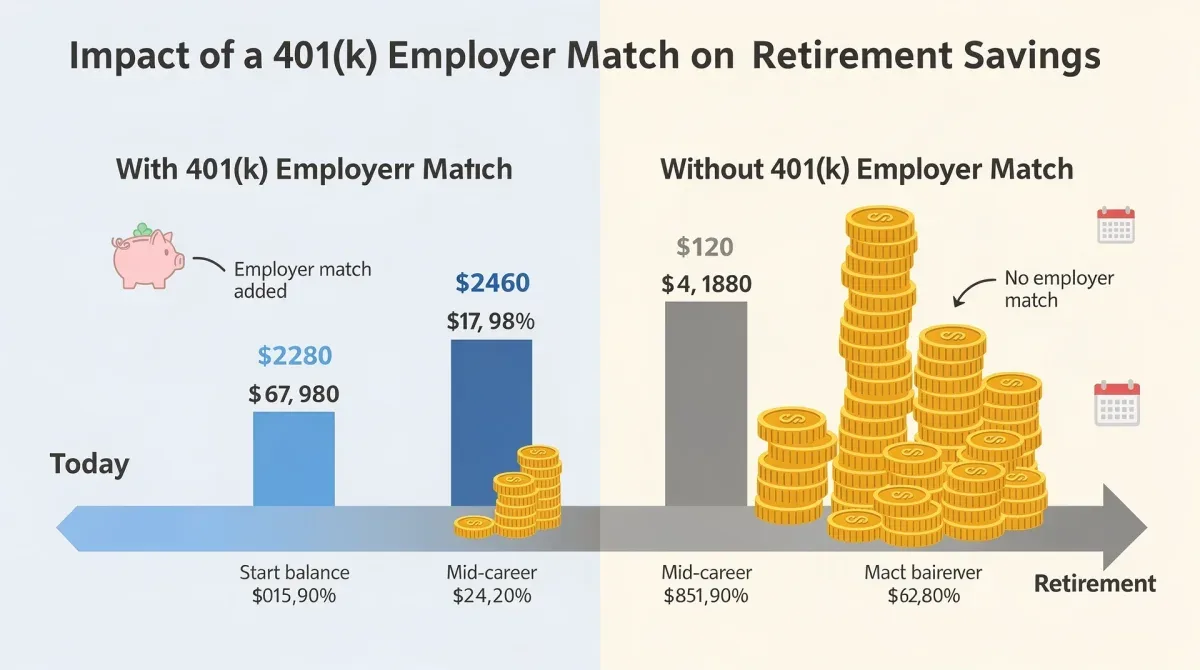
Begin by confirming your employer's matching formula, reviewing the required employee contribution percentage, and determining whether you currently receive the complete available match.
Evaluate investment choices, vesting requirements, applicable expenses, and contribution timing before making decisions about increasing or modifying existing workplace retirement savings arrangements.
Consistently reviewing available retirement benefits can help employees maintain financial strategies aligned with changing employment circumstances and personal long-term savings objectives.
Building a Sustainable Retirement Contribution Strategy
A sustainable retirement strategy balances long-term contributions with present financial responsibilities, including essential household expenses, emergency savings, insurance costs, and existing debt obligations.
Employees should consider whether their 6% 401(k) employer match can be fully utilized without creating financial pressure that undermines other important priorities.
Periodic financial reviews and appropriate professional guidance may help individuals maintain realistic retirement expectations while adapting their contributions to changing personal circumstances.
Key Point | Brief Description |
|---|---|
Employer Match Value | A full 6% 401(k) employer match could add approximately $245,973 over 20 years on a $100,000 salary, assuming a hypothetical 7% annual return. |
Compounding Effect | Consistent contributions and reinvested earnings may increase retirement balances over time, although investment growth is not guaranteed. |
Vesting Schedules | Understanding ownership timelines for employer contributions is crucial for maximizing benefits. |
Strategic Planning | Evaluate contributions, diversify investments, and understand tax implications according to your financial circumstances. |
Frequently Asked Questions About 401(k) Employer Matches
What exactly is a 6% 401(k) employer match?
Under a dollar-for-dollar matching formula, an employer contributes an amount equal to the employee's eligible contributions, up to 6% of qualifying compensation. However, some employers use partial matching formulas, so employees should confirm the specific conditions of their retirement plans.
How can a 6% 401(k) employer match generate approximately $240,000?
An employee earning $100,000 annually could receive $6,000 in yearly employer contributions under a full 6% matching formula. Assuming year-end contributions, full vesting, and a hypothetical annual investment return of 7%, these employer contributions could accumulate to approximately $245,973 over twenty years before taxes and expenses.
How much could an employee earning $60,000 accumulate?
With a full 6% employer match, the employer would contribute $3,600 annually. At a hypothetical annual return of 7%, those contributions could accumulate to approximately $147,584 over twenty years. Including equivalent employee contributions would produce a combined projected balance of approximately $295,168.
What if I leave my job before I am fully vested?
You may forfeit some or all unvested employer contributions, depending on the retirement plan's applicable rules. Your own salary deferrals remain fully vested. Review your plan documentation and vested account balance before evaluating the financial consequences of changing employment.
Should I contribute more than 6% to my 401(k)?
Additional contributions may be appropriate when they align with your financial circumstances and retirement objectives. Consider emergency savings, debt obligations, essential expenses, investment options, and applicable contribution limits before increasing your retirement savings percentage.
How does market volatility affect my 401(k) match?
Market volatility can change the value of invested employer contributions and employee savings. Although the matching formula determines the employer contribution amount, the subsequent account value depends on investment performance and applicable expenses.
What is the 401(k) contribution limit for 2026?
The standard employee elective deferral limit for most 401(k) plans is $24,500 in 2026. Eligible participants aged fifty or older may generally contribute an additional $8,000, while qualifying individuals aged sixty through sixty-three may use the higher $11,250 catch-up limit.
Does the employer match count toward the $24,500 contribution limit?
No. Employer matching contributions generally do not count toward the standard employee elective deferral limit. However, employee contributions and employer contributions are generally included within the separate annual additions limit of $72,000 for 2026, excluding eligible catch-up contributions.
Is a 6% 401(k) employer match guaranteed investment income?
No. Employer contributions represent a workplace benefit subject to plan conditions, eligibility, and vesting requirements. Once invested, their value can increase or decrease depending on investment performance, fees, and market conditions.
Can employers change their 401(k) matching contributions?
Employer matching formulas may change subject to applicable plan terms, legal requirements, and participant notification obligations. Employees should review official communications and retirement plan documentation to understand how changes may affect future contributions.
What happens if I contribute too much early in the year?
If your employer matches contributions each pay period and does not provide an applicable true-up, reaching your annual employee contribution limit early could cause you to miss matching contributions during later pay periods. Confirm the specific rules with your plan administrator.
Are retirement savings projections adjusted for inflation?
The investment projections in this article are expressed in nominal dollars and do not account for inflation, taxes, or investment expenses. Actual future purchasing power and available retirement income may therefore differ significantly from the projected account balances.
Conclusion
A 6% 401(k) employer match can provide valuable opportunities for American employees to strengthen retirement savings through additional contributions and potential long-term investment growth.
Understanding matching formulas, vesting schedules, investment expenses, and annual contribution limits helps employees evaluate this benefit using realistic financial expectations and retirement planning assumptions.
Consistent saving, informed investment decisions, and regular reviews of workplace benefits can support a sustainable retirement strategy without depending on guaranteed investment returns.