2026 Gift Tax Exclusion: Gifting Up To $18,000 Annually
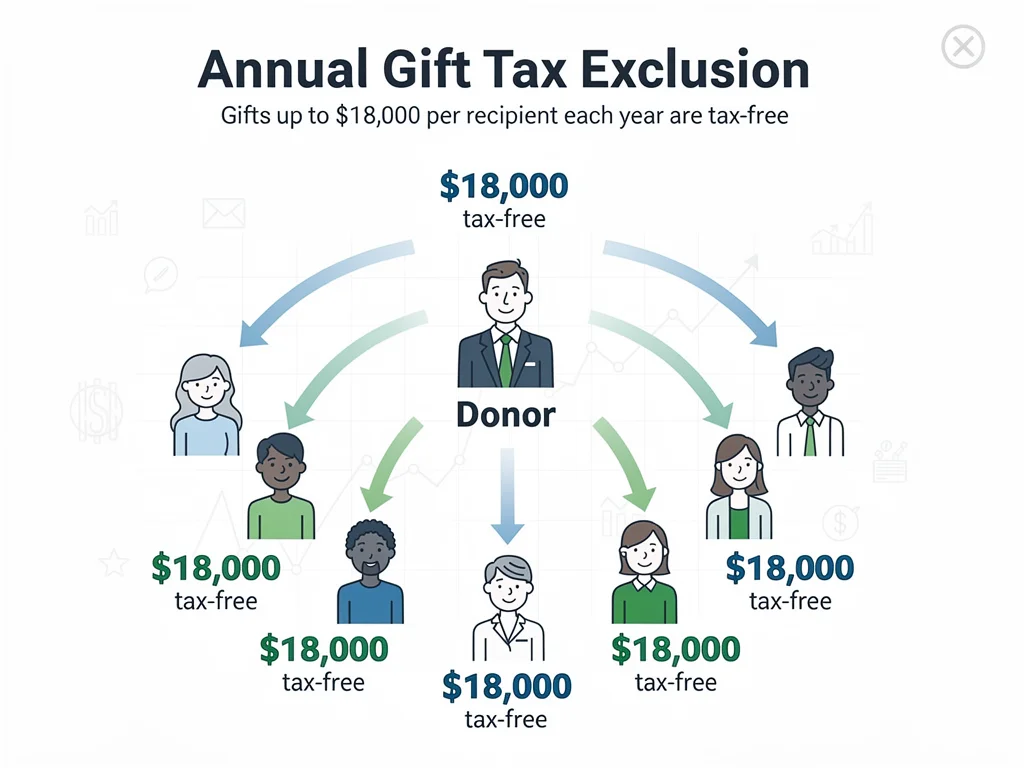
The 2026 Gift Tax Exclusion allows individuals to gift up to $18,000 annually per recipient without incurring gift tax or affecting their lifetime exemption, providing a key strategy for tax-efficient wealth transfer and estate planning.
Por: [email protected] em 21 de julho de 2026
Última atualização em: 13 de agosto de 2026
The 2026 Gift Tax Exclusion allows individuals to gift up to $18,000 annually per recipient without incurring gift tax or affecting their lifetime exemption, providing a key strategy for tax-efficient wealth transfer and estate planning.
Are you looking for smart ways to transfer wealth to loved ones without the burden of taxes? Understanding the 2026 Gift Tax Exclusion is crucial, as it allows individuals to gift up to $18,000 annually per recipient without triggering gift tax or utilizing their lifetime exemption.
understanding the annual gift tax exclusion
The annual gift tax exclusion is a cornerstone of estate planning, offering a powerful tool for individuals to transfer wealth efficiently and tax-free. Each year, the Internal Revenue Service (IRS) allows you to give a certain amount of money or property to as many individuals as you wish without incurring gift tax or needing to file a gift tax return. This exclusion amount is adjusted periodically for inflation, and for 2026, it is projected to be $18,000 per recipient. This means you can give $18,000 to your child, $18,000 to your grandchild, $18,000 to a friend, and so on, all within the same year, without any tax implications for you or the recipient.
This provision is incredibly valuable for families looking to reduce the size of their taxable estate over time. By consistently utilizing the annual exclusion, you can significantly diminish the value of your estate, potentially lowering future estate tax liabilities. It’s a strategic move for long-term financial planning, allowing for gradual wealth distribution while you are still alive, rather than through bequests after death, which might be subject to different tax rules.
what qualifies as a gift?
A gift, for tax purposes, is generally defined as any transfer to an individual, either directly or indirectly, where full consideration (measured in money or money’s worth) is not received in return. This can include a wide range of assets, not just cash. Understanding what constitutes a gift is essential to properly utilize the exclusion.
Cash: Direct monetary transfers are the most straightforward type of gift.
Property: Real estate, stocks, bonds, and other tangible assets can also be gifted.
Interest-free loans: If the IRS determines that the foregone interest on a loan is significant, it can be treated as a gift.
Forgiven debt: When you forgive a debt owed to you, that amount can be considered a gift.
However, not all transfers are considered gifts. Payments made directly to an educational institution for tuition or to a medical provider for healthcare expenses on behalf of someone else are generally exempt from gift tax, regardless of the amount. These payments are separate from the annual exclusion and do not count towards the $18,000 limit. This offers another powerful avenue for supporting loved ones without tax consequences.
The annual gift tax exclusion is a dynamic component of tax law, designed to provide flexibility in personal financial management. Its primary benefit lies in its ability to facilitate tax-free transfers that do not erode your lifetime gift and estate tax exemption. This makes it an indispensable tool for anyone engaged in serious estate planning, allowing for consistent, manageable transfers that build over time. By understanding and proactively applying these rules, individuals can strategically manage their wealth distribution to benefit their heirs and minimize future tax burdens effectively.
how the 2026 gift tax exclusion works
The mechanics of the 2026 Gift Tax Exclusion are relatively simple but powerful. Each individual donor can give up to $18,000 to any number of recipients in a calendar year without triggering gift tax. This means if you are married, you and your spouse can collectively give $36,000 to each recipient annually without tax implications. This doubling effect for married couples is a significant advantage for families looking to transfer substantial wealth over time. The exclusion applies per recipient, not per donor’s total gifts, which allows for broad distribution of assets.
For instance, if you have three children, you can give each child $18,000, totaling $54,000 in tax-free gifts for the year. If your spouse joins in, you can give each child $36,000, for a total of $108,000. These amounts do not count against your lifetime gift and estate tax exemption, which is a much larger figure. The lifetime exemption is the total amount an individual can gift or leave to heirs over their lifetime without incurring federal estate or gift taxes. By using the annual exclusion, you preserve your lifetime exemption for larger transfers or for your estate upon death.
filing requirements and implications
Generally, if your gifts to any one individual in a year do not exceed the annual exclusion amount, you do not need to file a gift tax return (Form 709). This simplifies the process considerably. However, there are specific situations where a return might be required even if no tax is due, such as when gifts are split between spouses or when certain types of property are gifted.
Gift Splitting: If you and your spouse elect to split gifts, even if only one spouse made the gift, a Form 709 must be filed. This allows the couple to combine their individual annual exclusions.
Gifts of Future Interests: The annual exclusion only applies to gifts of a ‘present interest,’ meaning the recipient has an immediate right to the use, possession, or enjoyment of the gifted property. Gifts of ‘future interests,’ where the recipient’s enjoyment is delayed, do not qualify for the annual exclusion and typically require a Form 709.
Gifts Exceeding Exclusion: If you make a gift to an individual that exceeds the annual exclusion amount, you must file Form 709, even if no tax is owed because your lifetime exemption covers the excess.
Understanding these filing requirements is crucial to avoid potential issues with the IRS. While the annual exclusion is designed to simplify small transfers, missteps in reporting can lead to complications. Consulting with a tax professional can help ensure all gifts are properly documented and reported, especially for complex situations involving significant assets or multiple recipients. The primary goal is to leverage the exclusion to its fullest while maintaining compliance with tax regulations.
strategic uses of the annual exclusion
The 2026 Gift Tax Exclusion is more than just a simple tax break; it’s a versatile tool for various financial strategies. Its consistent application over time can significantly impact long-term wealth accumulation for recipients and estate reduction for donors. One of the most common strategic uses is for direct wealth transfer to younger generations, helping them achieve financial milestones or build their own financial foundations. For example, parents or grandparents can contribute to college savings, fund down payments for homes, or provide seed money for new businesses, all while bypassing gift tax.
Beyond direct financial support, the exclusion can be integrated into more complex estate planning documents. For instance, it can be used to fund irrevocable trusts, particularly those designed for children or grandchildren. By making annual gifts to a trust, the donor removes assets from their taxable estate without triggering gift tax, and the assets within the trust can grow tax-efficiently for the beneficiaries. This strategy requires careful planning to ensure the gifts qualify as ‘present interests’ for the annual exclusion, often involving specific trust provisions like Crummey powers.
funding educational and medical expenses
As mentioned earlier, direct payments for tuition and medical expenses are not considered taxable gifts, regardless of the amount. This provides a separate and unlimited opportunity to support loved ones. However, combining this with the annual exclusion offers even greater flexibility.
Tuition Payments: You can pay for a child’s or grandchild’s college tuition directly to the institution without using your annual exclusion.
Medical Bills: Similarly, direct payments to a healthcare provider for medical care are not subject to gift tax.
Beyond Direct Payments: For other educational or medical costs not covered by direct payments (e.g., room and board, books, therapy not directly billed), the annual exclusion can be used to gift funds to the recipient, who can then use them for these expenses.
This dual approach allows donors to provide substantial financial assistance for critical life events without impacting their ability to make other annual gifts. It’s a powerful combination for supporting family members through significant life stages. The key is understanding the distinction between direct payments to institutions/providers and gifts made directly to individuals, ensuring each strategy is employed correctly to maximize tax benefits.
Ultimately, the strategic use of the annual gift tax exclusion requires foresight and often professional guidance. It’s about more than just avoiding taxes; it’s about optimizing wealth distribution, supporting family goals, and ensuring a smooth financial transition across generations. By thoughtfully integrating the annual exclusion into a broader financial plan, individuals can achieve significant and lasting benefits for their heirs and their estate.
coordinating with lifetime exemption and estate planning
While the 2026 Gift Tax Exclusion allows for tax-free annual transfers, it’s essential to understand how it coordinates with the much larger lifetime gift and estate tax exemption. The annual exclusion is a ‘use it or lose it’ provision for each year, meaning any unused portion cannot be carried over. However, gifts made within the annual exclusion amount do not diminish your lifetime exemption. This is a critical distinction for comprehensive estate planning, as it allows you to reduce your taxable estate over time without touching your lifetime allowance for larger, more significant transfers.
The lifetime exemption is the cumulative amount an individual can give away during their life or at death without incurring federal gift or estate taxes. For 2026, this amount is expected to be substantial, though subject to potential legislative changes. By utilizing the annual exclusion consistently, you can effectively transfer significant wealth out of your estate, preserving your lifetime exemption for major assets or for future use. This strategy is particularly effective for high-net-worth individuals aiming to minimize estate tax liabilities upon their passing.
the role of irrevocable trusts
Irrevocable trusts are powerful tools in estate planning that can work in tandem with the annual gift tax exclusion. Once assets are transferred into an irrevocable trust, they are generally removed from the donor’s taxable estate. However, for gifts to an irrevocable trust to qualify for the annual exclusion, they typically must be considered ‘present interests’ for the beneficiaries.
Crummey Powers: These provisions give trust beneficiaries a temporary right to withdraw gifted funds, thus converting what might otherwise be a ‘future interest’ into a ‘present interest’ that qualifies for the annual exclusion.
Strategic Funding: Annual gifts, up to the exclusion amount, can be made to these trusts each year, allowing the trust to grow tax-efficiently without consuming the donor’s lifetime exemption.
Asset Protection: Assets within an irrevocable trust are generally protected from creditors, lawsuits, and divorce proceedings, offering an additional layer of security for beneficiaries.
The combination of annual exclusion gifting and irrevocable trusts creates a robust framework for wealth transfer, offering both tax efficiency and asset protection. It’s a sophisticated strategy that requires careful drafting of trust documents and ongoing administration to ensure compliance with IRS rules. Consulting with an estate planning attorney and a financial advisor is paramount to properly implement such a plan, ensuring that the trust structure aligns with your specific goals and adheres to all legal requirements.
In essence, the annual gift tax exclusion serves as a continuous, incremental mechanism for wealth transfer, while the lifetime exemption acts as a larger, overarching safety net. By strategically coordinating these two provisions, individuals can construct a highly effective estate plan that minimizes tax burdens, provides for their loved ones, and ensures their legacy is preserved according to their wishes.
potential changes and future considerations
While the 2026 Gift Tax Exclusion provides a clear guideline for current planning, it’s crucial for individuals to remain aware of potential legislative changes that could impact future gift and estate tax laws. Tax laws, particularly those related to wealth transfer, are often subject to political discourse and economic shifts. Changes could affect not only the annual exclusion amount but also the lifetime exemption, tax rates, and rules surrounding various estate planning tools. Staying informed and adaptable is key to maintaining an effective financial strategy.
For instance, the Tax Cuts and Jobs Act of 2017 significantly increased the lifetime gift and estate tax exemption, but many of its provisions are set to expire at the end of 2025. This means that without new legislation, the lifetime exemption amount could revert to lower levels in 2026, adjusted for inflation. While the annual exclusion amount is generally adjusted for inflation independently, a significant reduction in the lifetime exemption could place greater emphasis on utilizing the annual exclusion to reduce taxable estates.
monitoring legislative developments
Given the dynamic nature of tax policy, proactive monitoring of legislative developments is essential for anyone engaged in estate planning. This involves more than just glancing at headlines; it means understanding the nuances of proposed changes and their potential impact on your specific financial situation.
Consultation with Professionals: Regularly discuss potential legislative changes with your financial advisor, tax attorney, and estate planner. They can provide insights into current proposals and their likely implications.
Review and Adjust Plans: Be prepared to review and adjust your estate plan in response to new tax laws. What is optimal today might not be optimal tomorrow.
Understanding Sunset Provisions: Pay close attention to ‘sunset’ provisions in existing tax law, which automatically revert to previous rules unless new legislation is passed.
The political landscape can profoundly influence tax planning. For example, depending on which party controls Congress and the presidency, there might be pushes for higher or lower estate tax exemptions, changes to gift tax rates, or alterations to how certain assets are valued for tax purposes. These considerations underscore the importance of flexibility in estate planning and the need for ongoing professional advice.
Ultimately, while the current 2026 Gift Tax Exclusion offers a stable point for immediate planning, a forward-looking approach demands vigilance. By staying informed about potential legislative shifts and working closely with financial experts, individuals can ensure their wealth transfer strategies remain effective and compliant, adapting to whatever future tax environment may emerge.
common mistakes to avoid with gift giving
Despite the apparent simplicity of the 2026 Gift Tax Exclusion, several common mistakes can undermine its effectiveness or lead to unintended tax consequences. Awareness of these pitfalls is crucial for anyone planning to make significant gifts. One frequent error is failing to understand the ‘present interest’ requirement. For a gift to qualify for the annual exclusion, the recipient must have immediate and unrestricted access to the gifted property. Gifting into certain types of trusts or making gifts with strings attached can inadvertently create a ‘future interest,’ making the gift ineligible for the exclusion and potentially requiring the use of your lifetime exemption or even incurring gift tax.
Another common mistake is neglecting to coordinate gifts between spouses. While married couples can effectively double the annual exclusion amount through gift splitting, this requires both spouses to consent and, in many cases, to file a Form 709, even if no tax is due. Failing to properly execute gift splitting means only the gifting spouse’s exclusion applies, potentially leading to excess gifts that reduce their lifetime exemption. This oversight can significantly limit the amount of wealth that can be transferred tax-free annually.
misunderstanding the scope of the exclusion
Many individuals also misunderstand what the annual exclusion covers and what it doesn’t. While it’s generous, it has specific boundaries.
Ignoring Indirect Gifts: Indirect gifts, such as paying a child’s mortgage or making payments to a third party on their behalf (that aren’t tuition or medical), can still be considered gifts and count towards the exclusion.
Not Documenting Gifts: While small cash gifts might not require extensive documentation, larger gifts of property or significant sums should be properly recorded. This helps in case of an IRS audit and ensures clarity for all parties involved.
Failing to Re-evaluate Annually: The annual exclusion amount can change due to inflation. Relying on outdated figures can lead to under-utilization or over-gifting beyond the tax-free limit.
Furthermore, some donors mistakenly believe that once they make a gift, they can continue to control the gifted asset. This is generally not the case for a true gift. To effectively remove assets from your taxable estate, you must relinquish control. Attempts to retain control over gifted assets can lead the IRS to include those assets back in your estate for tax purposes, negating the benefits of the gift. This is particularly relevant when gifting property or shares in a family business.
Avoiding these common mistakes requires careful planning, a clear understanding of IRS regulations, and often, the guidance of experienced financial and legal professionals. By being diligent and informed, individuals can maximize the benefits of the annual gift tax exclusion, ensuring their wealth transfer strategies are effective, compliant, and free from unintended tax consequences.
leveraging the exclusion for long-term wealth building
The 2026 Gift Tax Exclusion, when used consistently and strategically, can become a powerful engine for long-term wealth building for younger generations and a significant component of intergenerational wealth transfer. By regularly making gifts up to the annual exclusion limit, donors can help their beneficiaries accumulate assets that benefit from compounding growth over many years. This approach is particularly effective for funding investment accounts, educational trusts, or even providing capital for entrepreneurial ventures, all while minimizing the donor’s taxable estate.
Consider the impact of consistent annual gifts on a child’s or grandchild’s investment portfolio. An $18,000 gift invested annually, even with modest returns, can grow into a substantial sum over two or three decades. This early capital injection can significantly jumpstart their financial journey, providing a foundation that would be difficult to achieve through earned income alone. Moreover, by gifting appreciating assets like stocks or real estate, you remove their future appreciation from your taxable estate, further enhancing the tax efficiency of the transfer.
setting up investment accounts for beneficiaries
Using the annual exclusion to fund investment accounts for beneficiaries is a popular and effective strategy. Several types of accounts are suitable for this purpose, each with its own advantages.
Custodial Accounts (UGMA/UTMA): These accounts are simple to set up and manage, allowing you to gift assets to a minor. The assets are managed by a custodian (often the donor) until the child reaches the age of majority, at which point they gain full control.
529 Plans: For educational savings, 529 plans are highly advantageous. Contributions to these plans are considered gifts and qualify for the annual exclusion. You can even front-load five years of annual exclusions into a 529 plan in a single year (e.g., $90,000 in 2026) without using your lifetime exemption.
Trusts: As discussed, irrevocable trusts can be established to hold gifted assets, offering greater control over how and when the beneficiaries receive the funds, while also providing asset protection.
Each of these options allows for the strategic deployment of annual exclusion gifts to foster long-term financial security and growth for beneficiaries. The choice of account depends on the donor’s objectives, the age of the beneficiary, and the desired level of control and flexibility. The key is to start early and be consistent, leveraging the power of time and compounding returns.
Ultimately, the 2026 Gift Tax Exclusion is not merely a technical tax provision; it’s an opportunity to actively participate in the financial well-being of future generations. By thoughtfully planning and utilizing this exclusion, individuals can create a lasting legacy of financial empowerment, helping their loved ones achieve their dreams while efficiently managing their own estate.
Key Point
Brief Description
Annual Exclusion Amount
For 2026, individuals can gift up to $18,000 per recipient annually without gift tax.
No Impact on Lifetime Exemption
Gifts within the annual exclusion do not reduce your lifetime gift and estate tax exemption.
Gift Splitting for Couples
Married couples can combine their exclusions to gift $36,000 per recipient annually.
Strategic Estate Planning
Use the exclusion to reduce taxable estate, fund trusts, and support beneficiaries.
frequently asked questions about the 2026 gift tax exclusion
What is the 2026 annual gift tax exclusion amount?▼
For 2026, the annual gift tax exclusion is projected to be $18,000 per recipient. This means you can give up to this amount to as many individuals as you wish without incurring gift tax or needing to file a gift tax return.
Does the annual gift exclusion reduce my lifetime exemption?▼
No, gifts made within the annual exclusion amount do not reduce your lifetime gift and estate tax exemption. This allows you to transfer wealth tax-free annually while preserving your larger lifetime exemption for future significant transfers or your estate.
Can married couples combine their annual gift exclusions?▼
Yes, married couples can elect to ‘gift split,’ allowing them to combine their individual annual exclusions. This means they can jointly give up to $36,000 (2 x $18,000) to each recipient annually without tax implications.
Do I need to file a gift tax return if my gifts are within the exclusion?▼
Generally, no. If your gifts to any one individual do not exceed the annual exclusion amount and you are not gift-splitting, you typically do not need to file Form 709. However, exceptions exist for certain types of gifts or if gift-splitting is elected.
Are direct payments for tuition or medical expenses considered gifts?▼
No, direct payments made to an educational institution for tuition or to a medical provider for healthcare expenses on behalf of someone else are generally exempt from gift tax. These payments do not count towards the annual exclusion amount.
conclusion
The 2026 Gift Tax Exclusion, projected at $18,000 per recipient, represents a fundamental and exceptionally valuable tool in the realm of personal finance and estate planning. It offers a clear, consistent pathway for individuals to transfer wealth to loved ones without triggering immediate tax liabilities or eroding their lifetime exemption. By understanding its nuances, such as the ‘present interest’ rule, the benefits of gift splitting for married couples, and the distinct treatment of tuition and medical expense payments, donors can craft highly effective strategies. Leveraging this exclusion allows for gradual, tax-efficient wealth distribution, helping beneficiaries achieve financial milestones while simultaneously reducing the donor’s taxable estate. While legislative changes remain a possibility, the core principles of the annual exclusion provide a stable foundation for proactive financial management, emphasizing the importance of informed planning and professional guidance to maximize its benefits for generations to come.
I'm a content creator fueled by the idea that the right words can open doors and spark real change. I write with intention, seeking to motivate, connect, and empower readers to grow and make confident choices in their journey.