Reskilling the U.S. Workforce: Government Programs for Career Changes
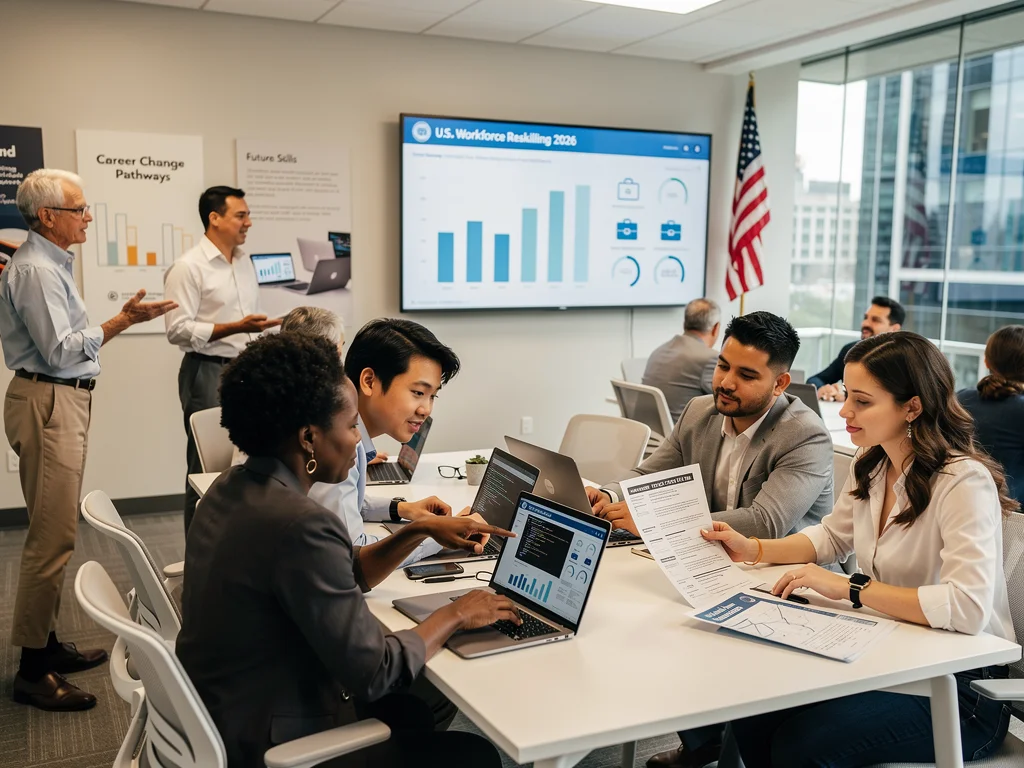
Government-funded programs are pivotal in enabling U.S. workers to reskill for career changes by 2026, offering vital training and support to meet the demands of an evolving job market.
Government-funded programs are pivotal in enabling U.S. workers to reskill for career changes by 2026, offering vital training and support to meet the demands of an evolving job market.
The landscape of work is changing at an unprecedented pace, driven by technological advancements and shifting economic demands. For many, this means a need to adapt, acquire new skills, and even embark on entirely new career paths. Understanding the critical need for a flexible and adaptable labor force, the U.S. government has intensified its efforts to support workers through various initiatives. This article will explore the government-funded programs available to facilitate U.S. workforce reskilling and career changes in 2026, offering a pathway to new opportunities and a more secure future.
Understanding the Need for Workforce Reskilling
The U.S. economy is in a constant state of flux, with automation, artificial intelligence, and global competition reshaping industries and job roles. Many traditional occupations are declining or being transformed, necessitating a proactive approach to skill development. This isn’t just about finding a new job; it’s about ensuring economic resilience and personal growth in a dynamic environment.
The imperative for reskilling extends beyond individual benefit. A skilled workforce is crucial for national competitiveness and innovation. As industries evolve, so too must the capabilities of the labor force. Without adequate reskilling initiatives, the U.S. risks significant unemployment in sectors undergoing rapid change, and a shortage of talent in emerging fields. This delicate balance underscores the importance of accessible and effective training programs.
The Impact of Technological Advancements
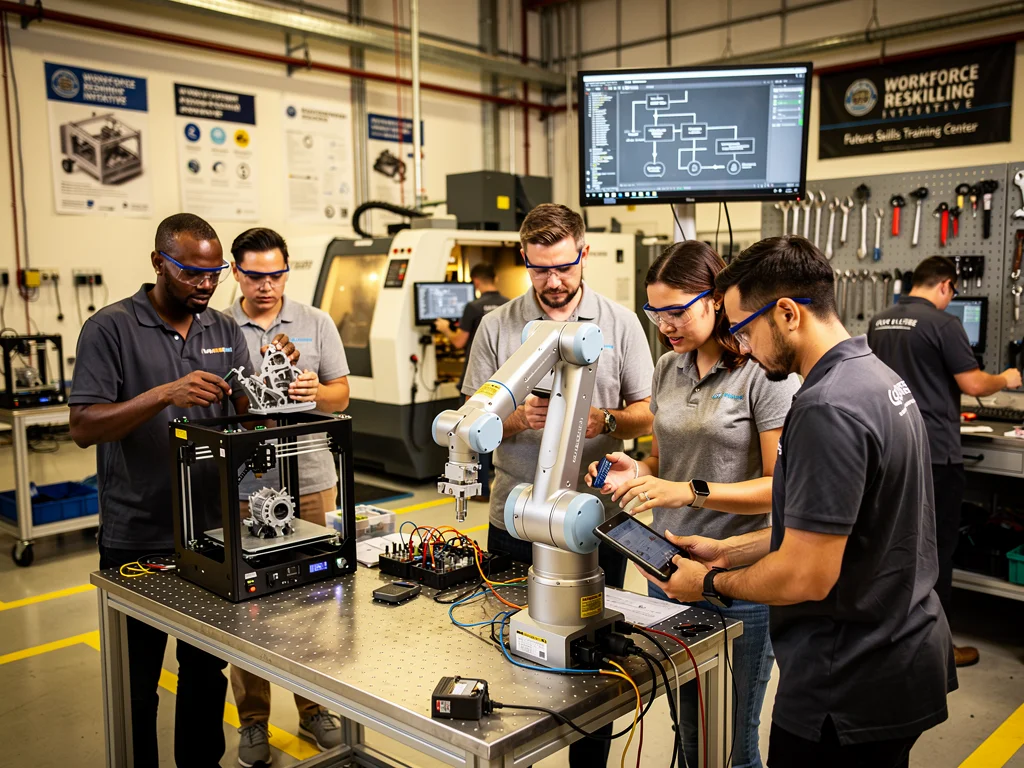
Technology is a double-edged sword. While it displaces some jobs, it simultaneously creates new ones, often requiring advanced digital and analytical skills. The rise of data science, cybersecurity, renewable energy, and advanced manufacturing are prime examples of sectors with growing demand for specialized talent.
Automation: Repetitive tasks are increasingly being automated, freeing human workers for more complex, creative, and interpersonal roles.
Artificial Intelligence (AI): AI is transforming industries from healthcare to finance, creating demand for AI specialists, data engineers, and ethical AI developers.
Digital Transformation: Nearly every sector is undergoing digital transformation, requiring a workforce proficient in digital tools, platforms, and strategies.
Green Economy: The push towards sustainability is generating new jobs in renewable energy, energy efficiency, and environmental management.
These shifts mean that workers who might have spent decades in one industry now need to consider how their skills can be transferred or augmented to fit new roles. Government-funded programs play a vital role in bridging this skill gap, providing the necessary resources for individuals to adapt and thrive.
The evolving job market demands continuous learning. Without accessible pathways to acquire new skills, a significant portion of the workforce could be left behind. Reskilling initiatives are therefore not just a luxury, but a fundamental component of a healthy, adaptable economy and a robust social safety net.
Key Government-Funded Programs for Career Change
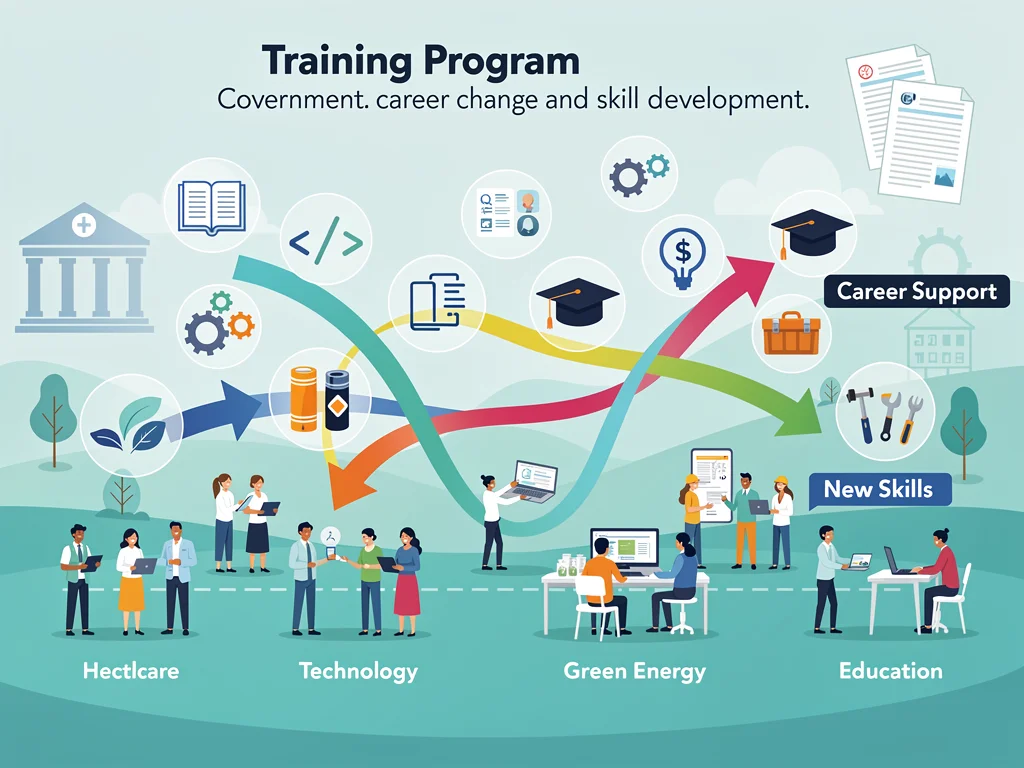
The U.S. government has established a variety of programs aimed at supporting individuals through career transitions, making education and training more accessible. These initiatives often work in conjunction with state and local agencies, as well as educational institutions and private sector partners, to provide comprehensive support.
These programs are designed to address different needs, from basic skill enhancement to advanced technical training, and often include provisions for financial aid, counseling, and job placement assistance. Understanding the scope and focus of each program is key to leveraging these opportunities effectively for U.S. workforce reskilling.
Workforce Innovation and Opportunity Act (WIOA)
The Workforce Innovation and Opportunity Act (WIOA) is a cornerstone of federal efforts to improve workforce development. WIOA provides funding to states for employment and training services, primarily through local American Job Centers. These centers offer a range of services designed to help job seekers find employment and access training.
Career Services: Includes job search assistance, resume writing, interview coaching, and career counseling.
Training Services: Provides funding for occupational skills training, often through Individual Training Accounts (ITAs) which allow eligible individuals to choose their training provider.
Youth Programs: Focuses on helping young people (ages 14-24) prepare for employment and post-secondary education.
Business Services: Assists employers with recruiting, training, and retaining skilled workers.
WIOA is particularly effective because it allows for localized implementation, meaning programs can be tailored to the specific economic needs and industries prevalent in different regions. This flexibility ensures that training aligns with actual job market demands, making participants more employable.
Trade Adjustment Assistance (TAA) Program
The Trade Adjustment Assistance (TAA) program offers support to workers who have lost their jobs or whose hours and wages have been reduced as a result of increased imports or shifts in production out of the U.S. It aims to help these workers find new employment by providing funding for training, job search allowances, and relocation allowances.
TAA is a critical safety net for those directly impacted by global trade dynamics, ensuring that economic shifts do not lead to long-term unemployment. The program recognizes that certain industries are more vulnerable to international competition and provides targeted assistance to those affected.
Pell Grants and Federal Student Aid
While not exclusively for reskilling, Pell Grants and other forms of federal student aid play a crucial role in making education and training affordable for individuals looking to change careers. These grants do not need to be repaid and are typically awarded to undergraduate students who demonstrate exceptional financial need.
For many adults considering a career change, returning to school for a certificate, associate’s, or even a bachelor’s degree can be financially daunting. Pell Grants can significantly reduce this burden, making it possible for individuals to pursue the education required for new career paths. They are often combined with other forms of aid, including federal student loans and work-study programs, to cover the full cost of attendance.
These overarching programs form the backbone of the U.S. government’s strategy to support a dynamic and adaptable workforce. By providing funding, resources, and guidance, they empower individuals to navigate career transitions and contribute to a thriving economy.
State and Local Initiatives Supporting Reskilling
Beyond federal programs, many states and local governments have developed their own initiatives to address specific regional workforce needs. These programs are often highly specialized, targeting industries that are growing within their specific geographic areas, and thus offer highly relevant training opportunities.
These localized efforts are vital because they can respond more quickly to immediate labor market demands and can foster stronger partnerships with local businesses and educational institutions. This ensures that the training provided directly leads to employment within the community, strengthening local economies and providing clear pathways for career changers.
State-Specific Training Programs
Many states offer their own versions of workforce development programs, often complementing federal initiatives or filling gaps that federal programs might not fully cover. These can include grants for specific industry training, apprenticeships, or partnerships with community colleges.
California’s Employment Training Panel (ETP): Funds job training to improve the skills of California’s workforce, supporting businesses in remaining competitive.
Michigan’s Skilled Trades Training Fund (STTF): Provides awards to employers to assist in training, developing, and retaining current and newly hired employees.
New York’s Workforce Development Initiative (WDI): Supports regional economic development by providing resources for workforce training, with a focus on high-demand industries.
These state-level programs are often designed to be highly responsive to local economic conditions and industry demands. They frequently involve close collaboration between state workforce agencies, employers, and educational providers to ensure that training is directly aligned with job openings.
Community College and Vocational School Partnerships
Community colleges and vocational schools are critical partners in the reskilling ecosystem. They often receive state and federal funding to offer affordable, high-quality training programs that lead to certifications, associate degrees, or direct employment. Many have strong ties to local industries, ensuring their curricula are up-to-date and relevant.
These institutions are particularly effective for career changers because they offer flexible scheduling, hands-on learning experiences, and direct pathways to local employers. They are often more accessible and less expensive than four-year universities, making them an ideal choice for individuals seeking to quickly acquire new, in-demand skills for U.S. workforce reskilling.
The combination of federal, state, and local programs creates a robust network of support for individuals seeking to change careers. By exploring these various avenues, workers can find the specific resources and training opportunities that best fit their personal and professional goals, navigating the complexities of the modern job market with greater confidence.
As the U.S. economy continues its rapid evolution, certain sectors are experiencing significant growth and creating a surge in demand for specialized skills. Identifying these emerging fields is crucial for anyone considering a career change, as focusing on these areas can maximize the return on investment in reskilling efforts.
Government-funded programs are increasingly aligning their offerings with these high-growth sectors, ensuring that the training provided leads to viable employment opportunities. This strategic alignment helps to address skill shortages and supports overall economic development, making U.S. workforce reskilling more effective.
Technology and Digital Skills
The technology sector remains a powerhouse of job creation. Roles in software development, cybersecurity, data analytics, and cloud computing are consistently in high demand. Proficiency in these areas is not just for tech companies; nearly every industry now requires digitally savvy professionals.
Cybersecurity Analysts: Protecting digital assets is paramount, leading to a critical need for cybersecurity experts.
Data Scientists/Analysts: The ability to interpret and leverage data is essential for informed decision-making across all sectors.
Cloud Architects/Engineers: As businesses migrate to cloud platforms, specialists in cloud infrastructure are highly sought after.
AI/Machine Learning Specialists: Developing and implementing AI solutions is a rapidly expanding field.
Many government-funded programs offer bootcamps, certifications, and degree programs specifically tailored to these digital skills, often in partnership with leading tech companies or educational institutions. This ensures that participants gain industry-recognized credentials.
Healthcare and Allied Health Professions
The healthcare sector continues its steady growth, driven by an aging population and advancements in medical technology. Beyond doctors and nurses, there’s a significant demand for allied health professionals, technicians, and administrative support staff.
Roles such as medical assistants, phlebotomists, medical coders, and health information technologists are experiencing high demand. These positions often require shorter training periods compared to traditional medical degrees, making them attractive for career changers seeking quicker entry into a stable field.
Green Economy Jobs
The transition to a sustainable economy is creating a new wave of jobs in renewable energy, energy efficiency, and environmental conservation. This includes roles in solar panel installation, wind turbine maintenance, sustainable agriculture, and environmental engineering.
Government incentives and investments in green infrastructure are fueling this growth. Reskilling programs are emerging to train workers for these specialized roles, contributing to both economic development and environmental sustainability. These jobs often blend technical skills with an understanding of environmental principles, making them a unique opportunity for U.S. workforce reskilling.
By focusing on these emerging sectors and acquiring relevant skills, individuals can strategically position themselves for success in the evolving job market. Government programs provide the crucial support needed to access these opportunities, ensuring a skilled and adaptable workforce for the future.
Accessing and Applying for Reskilling Programs
Navigating the various government-funded reskilling programs can seem complex, but understanding the general application process and available resources can simplify the journey. The key is to start with a clear understanding of your career goals and then identify the programs that best align with those aspirations.
Most programs emphasize accessibility and support, offering guidance through each step of the application process. Taking advantage of these resources can significantly increase your chances of securing funding and enrolling in the right training program for your U.S. workforce reskilling needs.
Finding Your Local American Job Center
American Job Centers (AJCs) are often the first and most comprehensive point of contact for individuals seeking workforce development assistance. Operated by the U.S. Department of Labor, these centers provide a wide array of services under the WIOA framework.
At an AJC, you can typically find:
Career Counseling: Guidance on career exploration, skill assessments, and goal setting.
Information on Training Programs: Details about local, state, and federal training opportunities, including eligibility requirements.
Job Search Resources: Access to job boards, resume workshops, and interview coaching.
Financial Aid Information: Assistance in applying for Pell Grants, ITAs, and other funding sources.
Visiting an AJC allows you to speak with experienced counselors who can help you understand your options and guide you through the application process for various programs. They are invaluable resources for anyone looking to make a career change.
Eligibility Requirements and Application Process
Eligibility for government-funded reskilling programs varies depending on the specific program and the individual’s circumstances. Common factors include:
Residency: Most programs require U.S. citizenship or legal residency.
Income Level: Some programs are needs-based, requiring applicants to meet certain income thresholds.
Employment Status: Programs like TAA are specifically for dislocated workers, while others may be open to employed individuals seeking to upskill.
Educational Background: Certain training programs may have prerequisites in terms of prior education or experience.
The application process typically involves submitting personal information, proof of eligibility, and sometimes an assessment of skills or career aptitude. It’s crucial to gather all necessary documentation in advance and to carefully follow all instructions provided by the program administrators. Don’t hesitate to ask questions if anything is unclear, as program staff are there to assist you.
By proactively seeking out information and utilizing available resources, individuals can successfully navigate the application process and gain access to the training and support needed for effective career transitions. The government’s commitment to U.S. workforce reskilling means these opportunities are readily available for those willing to pursue them.
Success Stories and Impact on the U.S. Economy
The effectiveness of government-funded reskilling programs is best illustrated by the countless success stories of individuals who have transformed their careers and improved their livelihoods. These personal triumphs collectively contribute to a stronger, more resilient U.S. economy, demonstrating the profound impact of strategic investment in human capital.
These stories highlight not only individual achievements but also how a skilled workforce can drive innovation, attract new businesses, and ensure the U.S. remains competitive on a global stage. The ripple effect of successful U.S. workforce reskilling extends far beyond the individual, benefiting communities and industries alike.
Real-World Examples of Career Transformation
Consider the story of Maria, a former manufacturing worker in Ohio whose plant closed due to automation. Through a WIOA-funded program, she enrolled in a cybersecurity bootcamp at a local community college. Within six months, she secured a position as a junior cybersecurity analyst, earning significantly more than her previous role and finding new purpose in a high-demand field.
Another example is David, a retail manager in Texas who, with the help of a state-funded grant, completed training in solar panel installation. He quickly found employment with a growing renewable energy company, contributing to his state’s clean energy goals while building a sustainable career for himself and his family. These narratives are powerful testaments to the transformative power of accessible training and support.
Economic Benefits of a Reskilled Workforce
The broader economic benefits of a reskilled workforce are substantial. When workers acquire new, in-demand skills, they:
Increase Productivity: A skilled workforce is more efficient and innovative, boosting overall economic output.
Reduce Unemployment: Reskilling helps minimize the duration and impact of job displacement, keeping more people employed and contributing to the economy.
Attract Investment: Regions with a highly skilled labor pool are more attractive to businesses, fostering job creation and economic growth.
Enhance Competitiveness: A dynamic workforce ensures the U.S. remains a leader in emerging industries and technological advancements.
Furthermore, increased earning potential for individuals leads to greater consumer spending and a stronger tax base, further fueling economic prosperity. The investment in U.S. workforce reskilling is not merely an expenditure; it is an investment in the nation’s future economic stability and global standing.
These success stories and economic impacts underscore the vital role that government-funded reskilling programs play. They are not just about helping individuals; they are about building a stronger, more adaptable, and more prosperous nation capable of meeting the challenges and opportunities of the 21st century.
Future Outlook and Continuous Adaptation
Looking ahead to 2026 and beyond, the pace of technological change and economic evolution is only expected to accelerate. This necessitates a continuous and adaptive approach to workforce development. Government-funded reskilling programs will need to remain agile, responsive, and forward-thinking to effectively meet the needs of both workers and industries.
The goal is not just to react to current skill gaps but to anticipate future demands, proactively preparing the U.S. workforce for upcoming shifts. This foresight ensures that individuals are equipped with relevant skills before significant disruptions occur, making U.S. workforce reskilling a continuous process rather than a one-time event.
Anticipating Future Skill Demands
Predicting the exact skills needed five or ten years from now is challenging, but trends suggest a continued emphasis on:
Advanced Digital Literacy: Beyond basic computer skills, this includes understanding data analytics, cloud infrastructure, and AI principles.
Soft Skills: Critical thinking, problem-solving, adaptability, creativity, and emotional intelligence will become even more valuable as routine tasks are automated.
Interdisciplinary Knowledge: The ability to combine knowledge from different fields (e.g., healthcare and technology, engineering and environmental science) will be crucial.
Continuous Learning Mindset: The most important skill will be the willingness and ability to continuously learn and adapt throughout one’s career.
Government programs will need to incorporate these forward-looking perspectives into their curriculum development and funding allocations, ensuring that training investments yield long-term benefits for individuals and the economy.
The Role of Public-Private Partnerships
The future success of U.S. workforce reskilling initiatives will increasingly rely on strong public-private partnerships. Collaboration between government agencies, educational institutions, and private sector companies is essential for:
Curriculum Development: Ensuring that training programs are aligned with industry needs and taught using relevant technologies.
Internships and Apprenticeships: Providing hands-on experience and direct pathways to employment.
Funding and Resources: Pooling resources to expand the reach and impact of reskilling efforts.
Job Placement: Facilitating direct connections between program graduates and employers.
These partnerships create a more integrated and efficient system for workforce development, leveraging the strengths of each sector to provide comprehensive support for career changers. By fostering these collaborations, government-funded programs can maximize their impact and ensure a sustainable future for the U.S. workforce.
The journey of career change and reskilling is a continuous one, reflecting the dynamic nature of the modern economy. With robust government support and a commitment to lifelong learning, the U.S. workforce can not only adapt to future challenges but also lead the way in innovation and economic growth, securing a prosperous future for all.
Key Program
Brief Description
WIOA
Provides federal funding for employment and training services through American Job Centers, offering career counseling, job search assistance, and skill training.
TAA Program
Assists workers who lost jobs due to foreign trade with training, job search, and relocation allowances to transition into new careers.
Pell Grants
Federal grants for undergraduate students with financial need, making education and training for career changes more affordable without repayment.
State/Local Initiatives
Specific programs tailored to regional needs, often partnering with community colleges to offer targeted training for local high-demand industries.
Frequently Asked Questions About Reskilling Programs
What is the primary goal of U.S. government reskilling programs?▼
The main goal is to equip workers with new skills to adapt to evolving job market demands, facilitating career changes and ensuring the U.S. workforce remains competitive and resilient in the face of technological advancements and economic shifts. These programs aim to reduce unemployment and fill skill gaps in emerging industries.
How can I find out which programs are available in my state?▼
The best starting point is your local American Job Center (AJC), which provides comprehensive information on federal, state, and local workforce development programs. You can also visit your state’s Department of Labor or workforce development agency website for specific program listings and eligibility criteria.
Are these programs only for unemployed individuals?▼
While many programs, like TAA, target dislocated workers, others are accessible to employed individuals looking to upskill or transition careers. Programs like Pell Grants and WIOA can support both unemployed and underemployed workers, depending on specific eligibility requirements related to income and need.
What types of careers are these reskilling programs focused on?▼
Programs increasingly focus on high-demand sectors such as technology (cybersecurity, data science), healthcare (allied health professions), and the green economy (renewable energy). They aim to align training with industries showing significant growth and future job potential, ensuring relevance and employability for participants.
How do public-private partnerships enhance reskilling efforts?▼
Public-private partnerships are crucial as they ensure training curricula align with industry needs, provide hands-on experience through internships, pool resources for broader program reach, and facilitate direct job placement for graduates. This collaboration creates a more effective and responsive workforce development ecosystem for U.S. workforce reskilling.
Conclusion
The drive to reskill the U.S. workforce is more critical than ever, with government-funded programs providing essential lifelines for individuals seeking career changes in 2026 and beyond. These initiatives, spanning federal, state, and local levels, offer diverse pathways to acquire new, in-demand skills, ensuring that workers can adapt to the evolving economic landscape. By leveraging resources like American Job Centers, WIOA, TAA, and Pell Grants, individuals can confidently navigate career transitions, ultimately contributing to a more robust, innovative, and resilient U.S. economy. The commitment to continuous learning and strategic investment in human capital will undoubtedly shape a prosperous future for the nation’s workforce.
I'm a journalist with a passion for creating engaging content. My goal is to empower readers with the knowledge they need to make informed decisions and achieve their goals.