Future of Vocational Training: Adapting U.S. Skills for 2026
The future of vocational training in the U.S. is rapidly transforming to align with 2026 job market demands, emphasizing technological literacy, adaptable skills, and robust industry collaborations to prepare a highly competent workforce.
The future of vocational training in the U.S. is rapidly transforming to align with 2026 job market demands, emphasizing technological literacy, adaptable skills, and robust industry collaborations to prepare a highly competent workforce.
The Future of Vocational Training: How U.S. Skill Programs Are Adapting for 2026 Job Market Demands is not just a topic of academic interest; it’s a critical examination of how American education is responding to an ever-evolving economic landscape. As industries shift and technology advances at an unprecedented pace, the need for a highly skilled and adaptable workforce has become paramount. This article delves into the proactive measures being taken by vocational training programs across the United States to equip students with the competencies required to thrive in the job market of 2026 and beyond. We will explore the innovative strategies, technological integrations, and collaborative efforts shaping the next generation of skilled professionals.
The Shifting Landscape of U.S. Job Markets
The U.S. job market is undergoing a profound transformation, driven by automation, artificial intelligence, and global economic shifts. Traditional roles are being redefined, and new occupations are emerging with specific skill requirements. This dynamic environment necessitates a vocational training system that is agile and responsive, capable of anticipating future demands rather than merely reacting to current ones. Understanding these shifts is the first step in effectively preparing the workforce of tomorrow.
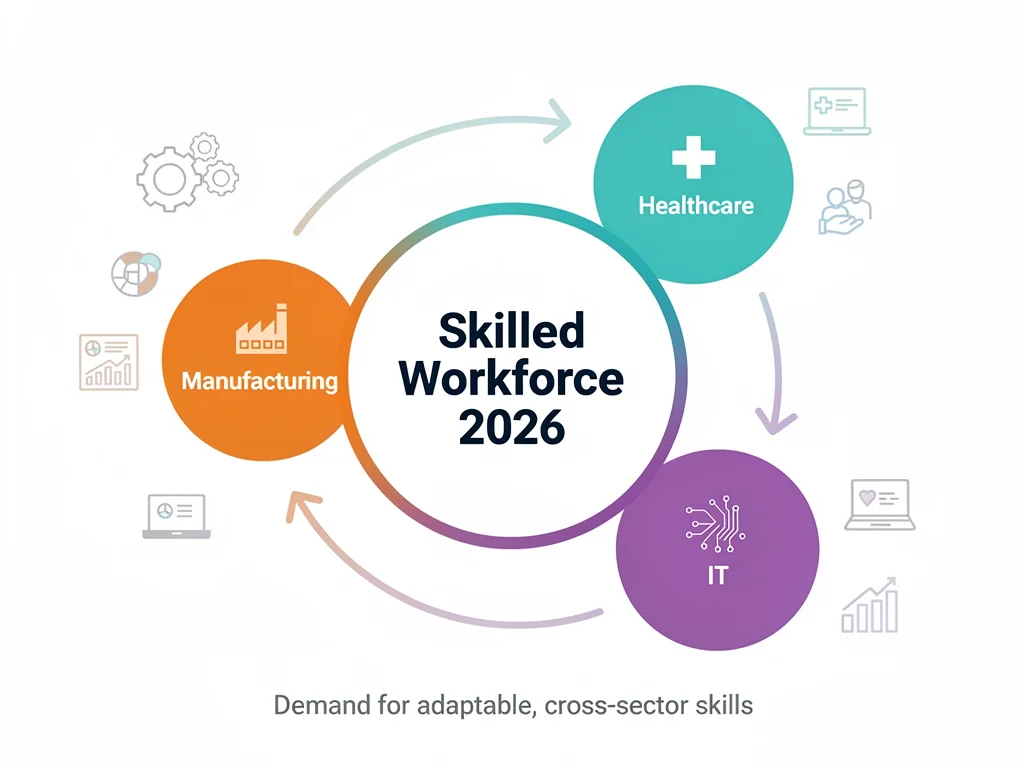
Several key trends are shaping this landscape, impacting everything from manufacturing to healthcare. The integration of advanced technologies means that even seemingly traditional trades now require a strong foundation in digital literacy and data analysis. This isn’t just about operating machinery; it’s about understanding the underlying software, troubleshooting complex systems, and adapting to continuous innovation.
Automation and AI Integration
The rise of automation and artificial intelligence is perhaps the most significant factor reshaping the job market. While concerns about job displacement are valid, the reality is more nuanced. Many jobs are not being eliminated but rather augmented, requiring workers to collaborate with AI systems and automated processes. Vocational programs are increasingly focusing on teaching students how to manage, maintain, and even program these advanced technologies.
Robotics Technicians: Demand for individuals who can install, repair, and program industrial robots is surging.
AI-Assisted Diagnostics: Healthcare professionals need training in using AI tools for more accurate diagnoses and personalized treatment plans.
Automated Logistics Specialists: Managing complex supply chains now involves sophisticated software and automated warehousing systems.
The Gig Economy and Flexible Work
Another significant trend is the expansion of the gig economy and the increasing demand for flexible work arrangements. This requires vocational training to not only impart technical skills but also foster entrepreneurship, self-management, and adaptability. Graduates must be prepared to navigate a less traditional career path, often working as independent contractors or taking on multiple roles.
In conclusion, the U.S. job market is not static; it’s a vibrant, evolving ecosystem. Vocational training programs must continually assess these changes and proactively adjust their curricula to ensure graduates are not just employable but also resilient and capable of continuous learning throughout their careers. This forward-thinking approach is crucial for maintaining a competitive workforce.
Embracing Technology: Digital Skills at the Core
At the heart of modern vocational training is the profound integration of technology. Gone are the days when vocational education was solely about manual dexterity. Today, digital literacy and proficiency in advanced software and hardware are indispensable across nearly all trades. U.S. skill programs are rapidly adapting to make technology a central pillar of their curriculum, ensuring students are fluent in the digital tools that define contemporary workplaces.
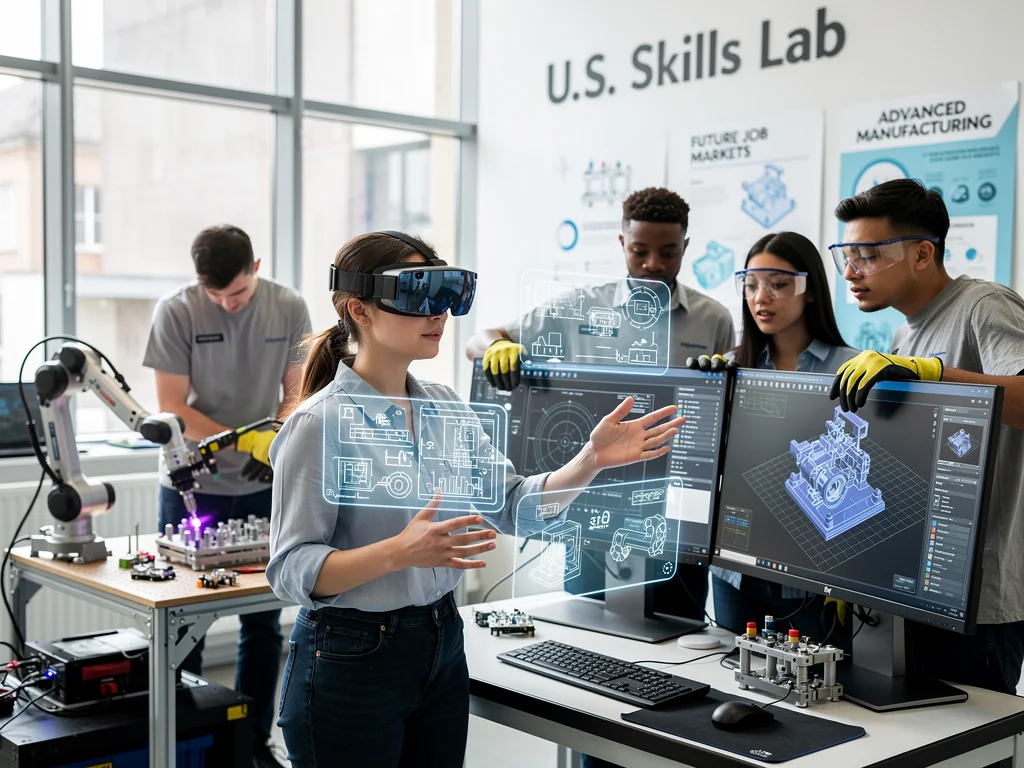
This means moving beyond basic computer skills to encompass specialized software, data analytics, cybersecurity fundamentals, and even virtual reality (VR) and augmented reality (AR) applications for training and operational tasks. The goal is to create a workforce that is not only competent in their specific trade but also technologically savvy and capable of leveraging digital innovations to enhance efficiency and problem-solving.
Curriculum Modernization and Digital Tools
Vocational schools are overhauling their curricula to embed digital skills directly into every program. For example, aspiring electricians might learn to use building information modeling (BIM) software, while automotive technicians train with diagnostic tools that rely on complex data analysis. This ensures that theoretical knowledge is immediately applicable in a digital context.
CAD/CAM Proficiency: Essential for manufacturing, design, and even construction trades.
Data Analytics for Trades: Understanding performance metrics, predictive maintenance, and operational efficiency.
Cybersecurity Awareness: Protecting sensitive data and systems in all professional environments.
Virtual and Augmented Reality in Training
VR and AR technologies are revolutionizing how vocational skills are taught. These immersive tools provide safe, cost-effective environments for students to practice complex procedures, simulate dangerous scenarios, and gain hands-on experience without the need for expensive physical equipment or real-world risks. This innovative approach accelerates learning and improves retention.
For instance, welding students can practice their craft in a virtual environment, receiving instant feedback on their technique. Healthcare trainees can perform simulated surgeries or patient assessments. This technological leap makes training more engaging and accessible.
In summary, the embrace of technology is not merely an option but a necessity for U.S. vocational training programs. By placing digital skills at the core of their offerings, these programs are ensuring that graduates are not only ready for the current job market but are also prepared to adapt to future technological advancements, making them invaluable assets to any industry.
Cultivating Soft Skills for Future Workforce Success
While technical proficiency remains crucial, the modern job market places an equally high value on soft skills. Employers consistently report that attributes such as critical thinking, problem-solving, communication, and teamwork are essential for success, often outweighing technical expertise alone. U.S. vocational training programs are increasingly recognizing this need and are actively integrating soft skill development into their curricula.
These skills are not easily automated and are transferable across various industries, making them vital for adaptability and career longevity. The future workforce will navigate complex challenges that demand more than just rote knowledge; they will require the ability to collaborate, innovate, and communicate effectively in diverse settings.
Emphasis on Communication and Teamwork
Effective communication, both verbal and written, is fundamental in any professional setting. Vocational programs are incorporating projects and assignments that require students to present their work, articulate ideas clearly, and engage in constructive dialogue. Teamwork is fostered through group projects that simulate real-world collaborative environments, teaching students how to work effectively with others toward a common goal.
Problem-Solving and Critical Thinking
The ability to identify problems, analyze situations, and devise effective solutions is a hallmark of a valuable employee. Vocational training is moving away from purely prescriptive instruction towards methodologies that encourage students to think critically and apply their knowledge to solve practical, often ambiguous, problems. This prepares them for the unexpected challenges that inevitably arise in the workplace.
Scenario-Based Learning: Students tackle realistic work challenges in a controlled environment.
Case Studies: Analyzing past situations to understand effective and ineffective approaches.
Design Thinking Workshops: Fostering creative problem-solving and innovation.
Adaptability and Resilience
The rapid pace of change in the job market means that adaptability is no longer a desirable trait but a necessary one. Vocational programs are instilling a mindset of continuous learning and resilience, preparing students to embrace new technologies, learn new processes, and adjust to evolving job roles. This includes teaching them how to cope with setbacks and pivot their skills as needed.
In conclusion, the cultivation of soft skills is a strategic investment in the future workforce. By prioritizing communication, teamwork, problem-solving, and adaptability, U.S. vocational training programs are ensuring that their graduates are not only technically proficient but also well-rounded, emotionally intelligent, and capable of thriving in dynamic professional environments, making them highly sought-after in the 2026 job market.
Strengthening Industry Partnerships and Apprenticeships
One of the most effective ways U.S. vocational training programs are adapting for 2026 job market demands is by strengthening their ties with industry. Robust partnerships with businesses and the expansion of apprenticeship programs are proving instrumental in ensuring that education remains relevant, responsive, and directly aligned with employer needs. These collaborations create a synergistic relationship where education informs industry, and industry guides education.
Such partnerships provide invaluable benefits, including access to cutting-edge equipment, real-world work experience for students, and direct feedback loops that allow curricula to be updated quickly. Apprenticeships, in particular, offer a proven model for hands-on learning combined with theoretical instruction, leading to highly skilled and immediately employable graduates.
Collaborative Curriculum Development
Many vocational institutions are now actively involving industry leaders in the curriculum development process. This ensures that the skills being taught are precisely those demanded by employers. Companies provide insights into emerging technologies, new operational procedures, and the specific competencies they seek in new hires, directly shaping the content and focus of training programs.
Advisory Boards: Composed of industry experts who provide guidance on program relevance.
Employer Surveys: Gathering data on skill gaps and hiring preferences.
Joint Training Initiatives: Developing specialized courses in partnership with businesses.
Expansion of Apprenticeship Programs
Apprenticeships are experiencing a resurgence as an effective pathway to skilled employment. These programs offer paid, on-the-job training combined with related classroom instruction, allowing apprentices to earn while they learn and gain practical experience directly applicable to their chosen trade. The expansion of registered apprenticeships is a key strategy for building a highly competent workforce.
The benefits extend beyond the individual, as businesses gain a pipeline of skilled workers tailored to their specific needs, reducing recruitment costs and improving employee retention. Government initiatives and industry associations are actively promoting and funding these programs to meet growing demand.
In conclusion, strengthening industry partnerships and expanding apprenticeship opportunities are vital components of the evolving vocational training landscape. By fostering these connections, U.S. skill programs ensure that their graduates are not only equipped with theoretical knowledge but also possess practical, real-world experience, making them highly attractive candidates in the competitive 2026 job market.
The traditional one-size-fits-all approach to education is becoming increasingly obsolete in a rapidly changing job market. U.S. vocational training programs are recognizing the diverse needs and learning styles of their students, moving towards more personalized learning paths and the implementation of micro-credentials. This shift allows individuals to tailor their education to specific career goals, acquire in-demand skills more efficiently, and demonstrate their competencies in a modular fashion.
Personalized learning leverages technology and flexible instructional methods to adapt to each student’s pace and preferences, while micro-credentials offer granular, verifiable proof of specific skills, making them highly relevant for both job seekers and employers seeking targeted expertise.
Adaptive Learning Technologies
Adaptive learning platforms utilize artificial intelligence to assess a student’s current knowledge and learning style, then deliver customized content and exercises. This ensures that students spend their time efficiently, focusing on areas where they need the most improvement and progressing quickly through concepts they already understand. This technology significantly enhances learning outcomes and engagement.
Micro-credentials, also known as digital badges or nanodegrees, are becoming increasingly popular. These are certifications that validate mastery of a specific skill or competency, often acquired through short, focused training modules. They offer a flexible and stackable alternative to traditional degrees, allowing individuals to quickly gain and demonstrate expertise in niche areas that are highly valued by employers.
Specific Skill Validation: Certifying proficiency in areas like cloud computing, specific software, or advanced manufacturing techniques.
Career Advancement: Allowing current workers to upskill or reskill without committing to a full degree program.
Employer Confidence: Providing clear, verifiable evidence of a candidate’s abilities.
In essence, personalized learning paths and micro-credentials represent a flexible and efficient approach to vocational education. They empower individuals to take ownership of their learning journey, acquire precisely the skills needed for the 2026 job market, and effectively communicate their competencies to potential employers, thereby accelerating career progression and workforce readiness.
Addressing Equity and Accessibility in Vocational Training
As U.S. vocational training programs adapt to future job market demands, a critical component of their evolution is ensuring equity and accessibility for all learners. The benefits of a skilled workforce must extend to every segment of society, regardless of socioeconomic background, geographic location, or prior educational attainment. Addressing disparities in access and opportunity is not just a matter of social justice; it’s an economic imperative to build a robust and diverse talent pipeline.
This involves proactive strategies to reach underserved communities, provide necessary support services, and overcome systemic barriers that might prevent individuals from pursuing valuable vocational pathways.
Reaching Underserved Communities
Efforts are being made to expand vocational training opportunities to urban and rural areas that have historically lacked access to quality programs. This includes establishing satellite campuses, offering mobile training units, and partnering with community organizations to identify and recruit potential students. The goal is to ensure that talent is nurtured wherever it resides.
Community Outreach Programs: Informing residents about available training and career opportunities.
Scholarships and Financial Aid: Reducing the financial burden of education for low-income students.
Flexible Scheduling: Accommodating individuals with work or family commitments.
Support Services and Barrier Reduction
Beyond tuition, many students face non-academic barriers to success, such as childcare, transportation, and lack of basic digital access. Progressive vocational programs are offering comprehensive support services to address these challenges, ensuring students can focus on their studies and complete their training successfully. This holistic approach recognizes that education occurs within a broader life context.
For example, some institutions provide career counseling, mental health services, and even assistance with job placement post-graduation. These support systems are crucial for student retention and overall program effectiveness.
Ultimately, addressing equity and accessibility is fundamental to the future success of vocational training in the U.S. By actively working to dismantle barriers and provide inclusive opportunities, these programs are not only fostering individual growth but also strengthening the national workforce, ensuring that the benefits of a skilled economy are shared broadly across all communities.
The Role of Government and Policy in Skill Development
Government and policy play an indispensable role in shaping the future of vocational training in the U.S. for 2026 job market demands. While educational institutions and industries drive much of the innovation, supportive policies and strategic funding from federal, state, and local governments are crucial for scaling effective programs, ensuring quality, and promoting equitable access. Without a coherent policy framework, efforts can be fragmented and less impactful.
These policies often involve funding mechanisms, regulatory oversight, and initiatives designed to bridge the gap between education and employment, creating an ecosystem where skill development thrives and meets national economic objectives.
Funding and Investment in CTE
Increased government investment in Career and Technical Education (CTE) is a cornerstone of modern skill development. This funding supports the acquisition of cutting-edge equipment, the development of innovative curricula, and the professional development of instructors. Federal acts, alongside state appropriations, are directing resources towards programs that demonstrate alignment with high-demand industries and produce measurable outcomes.
Perkins V Act: Provides significant federal funding for CTE programs nationwide.
State-level Grants: Supporting specific regional workforce development initiatives.
Public-Private Partnerships: Leveraging government funds to attract private sector investment.
Policy to Promote Apprenticeships and Industry Standards
Government policies are actively promoting the expansion of registered apprenticeship programs by offering incentives to employers and standardizing program quality. By establishing clear industry-recognized credentials and ensuring that vocational training meets rigorous standards, policymakers help build trust and ensure the portability of skills across different employers and regions. This standardization is vital for workforce mobility and employer confidence.
Furthermore, policies that encourage collaboration between educational institutions and local businesses, such as tax credits for companies that host apprentices or provide training equipment, are essential for creating a responsive and dynamic skill development ecosystem. These measures help align vocational education directly with the needs of the labor market.
In conclusion, the proactive engagement of government and effective policy frameworks are critical enablers for the successful adaptation of U.S. vocational training. By providing strategic funding, promoting proven models like apprenticeships, and ensuring high standards, government bodies are helping to cultivate a skilled, adaptable, and equitable workforce ready to meet the demands of the 2026 job market and beyond, securing America’s economic future.
Key Aspect
Impact on 2026 Job Market
Technology Integration
Ensures graduates are proficient in AI, automation, and digital tools, crucial for modern industries.
Soft Skills Development
Cultivates critical thinking, communication, and adaptability, essential for navigating dynamic workplaces.
Industry Partnerships
Aligns training directly with employer needs, providing relevant skills and real-world experience.
Personalized Learning
Offers flexible, tailored education and micro-credentials, allowing rapid upskilling for specific roles.
Frequently asked questions about vocational training
How are U.S. vocational programs adapting to new technologies?▼
U.S. vocational programs are integrating advanced technologies like AI, automation, VR, and AR into their curricula. This ensures students gain hands-on experience with the tools and systems prevalent in modern industries, preparing them for tech-driven roles and future innovations across various sectors.
What soft skills are emphasized in future vocational training?▼
Future vocational training places significant emphasis on soft skills such as critical thinking, problem-solving, effective communication, and teamwork. These transferable skills are crucial for adaptability, collaboration, and success in dynamic work environments that demand more than just technical expertise.
How do industry partnerships benefit vocational students?▼
Industry partnerships provide vocational students with access to real-world experience, up-to-date equipment, and curricula directly shaped by employer needs. These collaborations often lead to internships, apprenticeships, and direct job placement opportunities, enhancing graduates’ employability and career readiness.
What are micro-credentials and why are they important?▼
Micro-credentials are certifications validating specific skills or competencies, often gained through short, focused training. They are important because they offer flexible, verifiable proof of specialized expertise, allowing individuals to quickly acquire and demonstrate in-demand skills for specific job roles and career advancement.
How is accessibility being improved in vocational education?▼
Accessibility is being improved through community outreach, financial aid, flexible scheduling, and comprehensive support services like childcare and transportation assistance. These efforts aim to reduce barriers for underserved communities, ensuring equitable access to quality vocational training and diverse talent pipelines.
Conclusion
The transformation of U.S. vocational training programs is a testament to their dynamic nature and commitment to preparing a workforce capable of thriving in the 2026 job market and beyond. By integrating cutting-edge technology, prioritizing essential soft skills, fostering robust industry partnerships, and embracing personalized learning, these programs are not just adapting; they are leading the charge in redefining what it means to be a skilled professional. The proactive involvement of government and a keen focus on equity and accessibility further solidify vocational education’s role as a cornerstone of American economic resilience and individual opportunity. As the demands of the modern economy continue to evolve, the adaptability and foresight of vocational training will remain critical in shaping a prosperous future for all.
I'm a journalist with a passion for creating engaging content. My goal is to empower readers with the knowledge they need to make informed decisions and achieve their goals.