2026 Digital AP Exam: 5-Week Study for 4+ Score
Advertisements
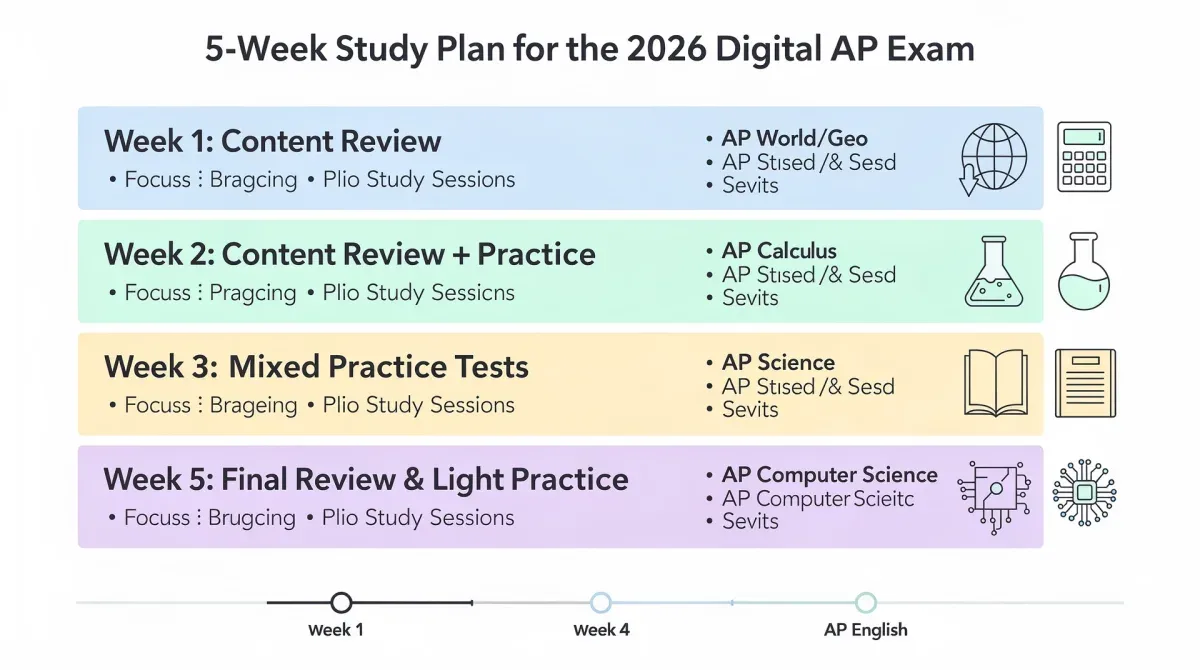
Preparing for the 2026 Digital AP Exam Format requires a clear understanding of subject-specific testing procedures, academic expectations, and effective study strategies. This five-week framework helps students organize their preparation, practice with official materials, and work toward a score of 4 or higher without promising a guaranteed result.
Digital AP Exam Format provides a practical approach to Advanced Placement exam preparation. Students can combine subject review, realistic practice, and test-day planning to strengthen readiness.
The 2026 AP administration included fully digital, hybrid digital, and other examination formats. Understanding the differences is particularly important because some students completed free-response questions on a computer, while others answered them on paper.
This guide explains how to prepare over five weeks, use the College Board's Bluebook application where applicable, and improve time management. The objective is consistent academic progress supported by accurate information about examination requirements.
Understanding the 2026 Digital AP Exam Landscape
The 2026 Digital AP Exam Format represented an expansion of computer-based testing, but it did not eliminate every paper-based component. College Board administered 16 fully digital exams, 12 hybrid exams, and 12 examinations through other formats.
Students taking fully digital exams completed applicable responses through Bluebook. Those taking hybrid examinations used the application for multiple-choice questions and to view free-response prompts, while writing their answers in paper booklets.
Because requirements differ among subjects, preparation should begin with the official course and exam description. Knowing the exact response method helps students develop appropriate testing habits before examination day.
Key Changes in Exam Delivery
Bluebook provides a structured testing environment for participating Advanced Placement examinations. Students interact with digital questions, review available instructions, and use tools permitted for their particular subject.
Some examinations support features such as highlighting, question navigation, and subject-specific references. However, calculator access, response methods, and review options depend on official exam policies.
Students should explore the appropriate Bluebook practice resources before testing. Familiarity with the interface can reduce avoidable confusion, although understanding the academic content remains the primary preparation priority.
Understanding Fully Digital and Hybrid Exams
Fully digital examinations require students to enter responses directly through the testing application. These subjects demand familiarity with digital navigation and the permitted methods for completing free-response questions.
Hybrid examinations combine digital question delivery with handwritten responses. Students preparing for subjects such as AP Calculus or AP Biology should therefore maintain confidence in written calculations, diagrams, and explanations.
The most useful practice matches the actual testing format. Preparing only to type responses would be inappropriate for an examination that requires students to complete its free-response section on paper.
Week 1: Foundations and Diagnostic Assessment
Week one establishes the foundation of the five-week AP exam study framework. Students should identify the examination's content requirements and evaluate their existing understanding through an initial practice assessment.
Begin with the official AP course and exam description, paying attention to major units, skills, and question formats. This information helps identify which topics deserve attention during the following weeks.
A diagnostic assessment provides an opportunity to discover weaknesses before committing to an intensive review schedule. The results should guide future preparation rather than serve as a prediction of the final AP score.
Familiarizing With the Digital Interface
Students using Bluebook should explore the available practice environment and become comfortable locating questions, reading instructions, and using permitted navigation features. Early familiarity can make the testing experience feel more predictable.
Pay attention to subject-specific procedures, particularly whether free-response answers are entered digitally or written separately. Students should also understand the restrictions on moving between examination sections.
Practice with the application under realistic conditions whenever appropriate. However, digital familiarity should complement academic preparation rather than consume most of the available study time.
Taking a Meaningful Diagnostic Test
Select representative practice questions covering important areas of the AP course. Include multiple-choice and free-response exercises whenever these formats apply to the particular examination.
Complete the assessment with reasonable time limits and record the topics that create difficulties. Separate mistakes caused by missing knowledge from those resulting from misreading questions or managing time poorly.
After reviewing the results, identify three or four priority areas for improvement. This creates a manageable starting point and prevents students from treating every subject unit as equally challenging.
Week 2: Content Review and Digital Skill Integration
The second week focuses on strengthening the subjects and skills identified during the diagnostic assessment. Students should combine targeted review with practice questions that require applying knowledge rather than repeating memorized information.
Use reliable materials, including textbooks, classroom notes, official practice questions, and teacher explanations. Resources should match the current AP course framework and the expectations of the examination.
For the 2026 Digital AP Exam Format, students should also integrate the correct response method into their practice. Depending on the subject, this may involve typing explanations or producing handwritten answers.
Targeted Content Deep Dive
Start with the units that caused the greatest difficulty during week one. Review their essential concepts before attempting more complex questions that combine several skills.
Use active recall by explaining ideas without consulting notes and solving problems independently. This process helps reveal whether information is understood or merely recognizable when reading study materials.
Whenever an answer is incorrect, examine the reasoning behind the mistake. Identifying the underlying misunderstanding is more useful than repeating the same practice questions without evaluating performance.
Building Stronger Free-Response Answers
Free-response questions often assess the ability to explain reasoning, analyze evidence, or apply course concepts. The requirements vary by subject, making official scoring guidelines particularly valuable.
Practice organizing answers so that the requested information is clear. In mathematics and science, show appropriate calculations or explanations; in writing-based subjects, focus on argument development and relevant evidence.
Review previously scored student responses when available. Understanding how points are awarded can help students improve the completeness and accuracy of their answers.
Week 3: Strategic Practice and Time Management
Week three emphasizes applying knowledge within realistic time constraints. Students should practice answering questions efficiently while maintaining accuracy and following the examination's rules.
Review how much time different question types require and identify situations where excessive attention to one problem affects the remaining section. Adjustments should reflect the actual structure of the examination.
For students working toward an AP exam score of 4 or higher, this stage can improve familiarity with testing conditions. However, faster completion alone does not guarantee stronger academic performance.
Mastering Digital Pacing and Navigation
Practice navigating Bluebook according to the restrictions of the relevant examination. Students should understand when questions can be reviewed and when moving forward prevents returning to an earlier section.
Use available time thoughtfully, beginning with careful reading and leaving appropriate opportunities to check answers where the testing rules permit. Avoid assuming that every subject provides identical navigation features.
Timed practice can help reveal whether difficulties come from content knowledge or examination pacing. Use these findings to refine your approach without relying on prohibited tools or unsupported shortcuts.
Recognizing Common Timing Mistakes
Some students spend too much time on difficult questions and leave insufficient time for easier opportunities. Others answer quickly without carefully considering what the question requires.
During practice, identify which situations affect your accuracy and adjust your method accordingly. A balanced approach combines efficient progress with appropriate attention to instructions.
Time-management improvements are most effective when paired with stronger subject knowledge. Understanding the content reduces the need to spend excessive time working through familiar concepts.
Week 4: Advanced Strategies and Mock Exam Simulation
Week four brings academic review and testing skills together through realistic examination practice. A representative mock exam can reveal remaining weaknesses that shorter exercises may not expose.
Students should follow the applicable response format and timing whenever suitable practice materials are available. A hybrid exam simulation should include handwritten free-response work instead of treating every section as fully digital.
Use the results to identify the final improvements that can realistically be made before examination day. The value of a mock test comes from reviewing performance, not simply completing another assessment.
Refining Digital Test-Taking Tactics
Practice interpreting multiple-choice questions, identifying relevant information, and eliminating incorrect alternatives when appropriate. These strategies require understanding the academic content rather than depending entirely on guessing.
For free-response exercises, organize the explanation or calculation according to the scoring expectations. Digital and handwritten answers should both communicate reasoning clearly.
Review available practice tools and official instructions before the simulation. Consistency with actual exam procedures helps prevent the development of habits that cannot be used during the examination.
Evaluating Mock Exam Results
After completing the practice examination, review incorrect answers alongside the appropriate course resources. Identify whether errors were related to content knowledge, question interpretation, or time management.
Compare free-response work with available scoring guidelines and sample responses. This can reveal missing explanations or steps that may affect the amount of credit awarded.
Create a short list of weaknesses to address during the final week. Focused correction is more practical than attempting to repeat the entire course immediately before testing.
Week 5: Review, Rest, and Readiness
The final week of the five-week AP exam study framework should emphasize consolidation and practical readiness. Students can review essential concepts, address recurring mistakes, and confirm the requirements for examination day.
Avoid introducing an overwhelming volume of new information at the last moment. Short, focused sessions can help reinforce knowledge while leaving sufficient time for sleep and other responsibilities.
The objective is to arrive prepared, familiar with the examination process, and ready to apply what has been learned. No study schedule can guarantee a particular score, but appropriate preparation supports a more organized approach.
Final Content Consolidation
Review high-priority concepts and questions that caused difficulties during earlier practice. Use concise notes and retrieval exercises rather than attempting to reread every study resource.
Check essential formulas, historical relationships, scientific principles, or analytical techniques according to the subject. Focus on information that can be applied to the examination's expected skills.
If important uncertainties remain, consult a teacher or appropriate official resource. Clear explanations and targeted practice are more useful than extensive last-minute memorization.
Managing the Final 48 Hours
In the final two days, concentrate on light review and confirming examination logistics. Avoid exhausting practice schedules that interfere with rest or normal routines.
Check the required materials, testing location, and instructions from the AP coordinator. Students using Bluebook should verify that the approved device and application arrangements are ready.
Use the remaining time to address practical questions rather than attempting to predict the exact examination content. Maintaining realistic expectations can help reduce unnecessary pressure.
Logistical Preparations for Digital Exam Day
Technical and administrative preparation is an important part of taking AP examinations through Bluebook. Students should follow instructions provided by College Board and their testing school.
Device requirements, permitted materials, and check-in procedures can vary according to the examination. Students should verify the correct arrangements rather than relying on general assumptions about digital testing.
Understanding these requirements can prevent avoidable confusion on examination day. However, students should not independently change school-managed technology or attempt unapproved troubleshooting procedures.
Ensuring Technical Readiness
Students using Bluebook should confirm that their assigned device meets the applicable requirements and that the testing application is available. School-provided devices should be managed according to official instructions.
Check battery charging requirements and bring the approved power adapter when requested. Students should also know their College Board account credentials to avoid unnecessary login difficulties.
Testing locations and internet arrangements are generally coordinated by the school. Follow the instructions of the AP coordinator rather than assuming a personal network connection or backup device is required.
Understanding Permitted Exam Materials
The materials allowed during AP testing depend on the subject and examination format. Some subjects permit approved calculators or reference materials, while others have different restrictions.
Students completing hybrid examinations may need writing supplies for paper free-response booklets. Fully digital students should review the specific device and accessory requirements established for their tests.
Consult the official materials list before examination day and avoid bringing unauthorized resources into the testing room. Questions about specific requirements should be directed to the AP coordinator.
Maximizing Your Score: Beyond the 5-Week Plan
A five-week schedule can organize preparation, but strong examination performance usually reflects learning developed throughout the academic course. Consistent classroom participation and regular practice provide an important foundation.
Students can strengthen their preparation by seeking feedback, reviewing earlier topics, and applying concepts in unfamiliar situations. Understanding the reasoning behind answers is often more useful than memorizing isolated details.
For students targeting a score of 4 or higher on AP exams, improvement should be measured through realistic practice and feedback. The objective is to demonstrate subject mastery rather than depend on a promised result.
Continuous Learning and Feedback Loops
Use practice results to identify recurring misunderstandings and establish specific improvement goals. Reviewing past mistakes can reveal patterns that are easy to overlook during ordinary studying.
Seek explanations from teachers, official scoring guidelines, and reliable academic resources. Feedback is most valuable when it identifies why an answer did not meet the required expectations.
Return to previously challenging topics after additional study and assess whether performance improves. This process supports continuous learning throughout the preparation period.
Using Official Practice Resources
College Board provides subject-specific course descriptions, practice materials, and scoring information that can guide preparation. These resources help clarify which content and skills are expected.
Bluebook test previews provide an opportunity to explore aspects of the digital environment, although they should not be treated as scored assessments or performance predictions.
Students can also benefit from classroom practice and feedback provided by their teachers. Supplementary resources should remain consistent with the applicable AP course framework.
The Role of Mental Wellness in Digital Exam Success

AP exam preparation can feel demanding when students balance coursework, personal responsibilities, and examination expectations. A manageable study schedule can reduce confusion about what needs to be completed.
Sleep, regular meals, movement, and appropriate breaks can support general well-being during preparation. However, no single habit guarantees improved academic performance or eliminates examination stress.
Students preparing for the 2026 Digital AP Exam Format should balance their academic goals with personal needs. Persistent stress or significant anxiety may warrant support from a school counselor or another qualified professional.
Strategies for Managing Exam Stress
Short breaks between study sessions can provide time to rest and return with renewed attention. Some students find walking, relaxing activities, or gentle breathing exercises helpful.
Setting achievable goals may also make a large study schedule feel more manageable. Focus on personal progress and avoid assuming that classmates must follow identical preparation routines.
If anxiety interferes with sleep, schoolwork, or everyday activities, seek support from a trusted adult or qualified professional. Appropriate assistance can complement academic preparation.
Building Confidence Through Preparation
Confidence can develop when students understand examination requirements and recognize improvement in practice performance. Familiarity with the test format may reduce uncertainty about what to expect.
However, confidence should remain connected to realistic self-assessment. Practice results can reveal both strengths and areas requiring additional attention.
Students should approach the examination with a clear plan for using their knowledge. The goal is to demonstrate preparation rather than expect a specific outcome based solely on confidence.
2026 Digital AP Exam: Key Preparation Takeaways
The 2026 Digital AP Exam Format required students to prepare for different administration methods according to subject. Understanding whether an examination was fully digital, hybrid, or administered through another format was essential.
The five-week framework offers a sequence of diagnostic testing, content review, timed practice, mock examinations, and final readiness. These activities provide structure without promising a score of 4 or higher.
The following table summarizes the main considerations. Students should always follow the most recent official College Board guidance applicable to their examination and administration year.
Key Point | Brief Description |
|---|---|
Digital Format Shift | The 2026 administration included 16 fully digital exams, 12 hybrid exams, and 12 examinations using other formats. |
5-Week Framework | Organize preparation into diagnostics, targeted review, timed practice, mock examination, and final readiness. |
Digital Skill Integration | Practice with Bluebook when applicable and prepare handwritten responses for hybrid examinations. |
Score 4 or Higher | The framework supports preparation toward a strong AP score but does not guarantee any specific result. |
Frequently Asked Questions About the 2026 Digital AP Exam
What are the most significant changes for the 2026 Digital AP Exam?
The 2026 AP administration expanded the use of Bluebook while retaining different examination methods. Sixteen exams were fully digital, twelve were hybrid, and twelve used other formats. Fully digital students completed applicable responses in Bluebook, while hybrid students used digital question delivery and handwritten free-response booklets. Students needed to verify the requirements of their specific subject before preparing.
How does the 5-week study framework help achieve a score of 4 or higher?
The framework provides structured preparation through diagnostic testing, content review, timed question practice, mock examinations, and final readiness. These activities can help students identify weaknesses and improve their understanding of examination expectations. However, no five-week plan guarantees a score of 4 or higher. Actual performance depends on academic preparation, exam execution, and subject-specific scoring requirements.
What kind of digital skills are essential for the new exam format?
Students taking Bluebook exams should understand basic navigation, permitted testing tools, and the response procedures applicable to their subjects. Fully digital students may need to practice entering written responses electronically, while hybrid students must prepare handwritten answers. Students should also follow the examination's navigation restrictions and avoid assuming that every subject offers identical digital features.
Are there specific resources recommended for digital AP exam preparation?
Official College Board materials provide the most reliable foundation for exam preparation. These include course and exam descriptions, scoring guidelines, available sample responses, previously released free-response questions, and Bluebook test previews. Teachers may provide additional resources through AP Classroom. Supplementary materials can help when they accurately reflect the relevant course framework and examination procedures.
What should be done in the final week before the 2026 Digital AP Exam?
The final week should emphasize targeted review, adequate sleep, and confirmation of examination logistics. Students should check their testing location, approved materials, device arrangements, and Bluebook requirements where applicable. Avoid excessive last-minute studying and focus on recurring weaknesses identified during earlier practice. Realistic preparation and familiarity with official procedures are more useful than expecting a guaranteed examination score.
Looking Ahead: The Future of AP Testing
The expanded use of the 2026 Digital AP Exam format illustrates how technology continues influencing academic assessment. However, AP examinations did not all adopt an identical fully digital structure.
Students preparing for future administrations should verify the current requirements because examination methods and technical procedures may change. Official College Board guidance remains the primary reference for testing rules.
Combining consistent academic study, realistic practice, and familiarity with the applicable testing format can support stronger readiness. A structured five-week framework offers a useful starting point without guaranteeing a particular AP score.